Table of Contents
Can you die from sleep apnea? Yes. Untreated sleep apnea can increase the risk of serious health complications, including heart disease, stroke, heart failure, and sudden cardiac death. The good news is that early diagnosis and proper treatment can significantly reduce these risks. If you experience symptoms such as loud snoring, breathing pauses, or excessive daytime sleepiness, speak with a healthcare professional and consider a sleep evaluation.
What Is Sleep Apnea and Why Is It a Silent Killer?
Sleep apnea is a condition where breathing repeatedly stops and starts during sleep, which lowers oxygen levels and forces the body to work harder all night. The most common type is obstructive sleep apnea, but central sleep apnea can also be serious, especially in people with heart failure.
Research from the American Academy of Sleep Medicine (AASM), Mayo Clinic, and the National Institutes of Health (NIH) shows that untreated sleep apnea is associated with a higher risk of cardiovascular disease, stroke, and premature death. Sleep specialists commonly evaluate patients only after family members notice loud snoring, repeated breathing pauses, or excessive daytime sleepiness, highlighting why early diagnosis and treatment are important.
How Untreated Sleep Apnea Becomes Life-Threatening
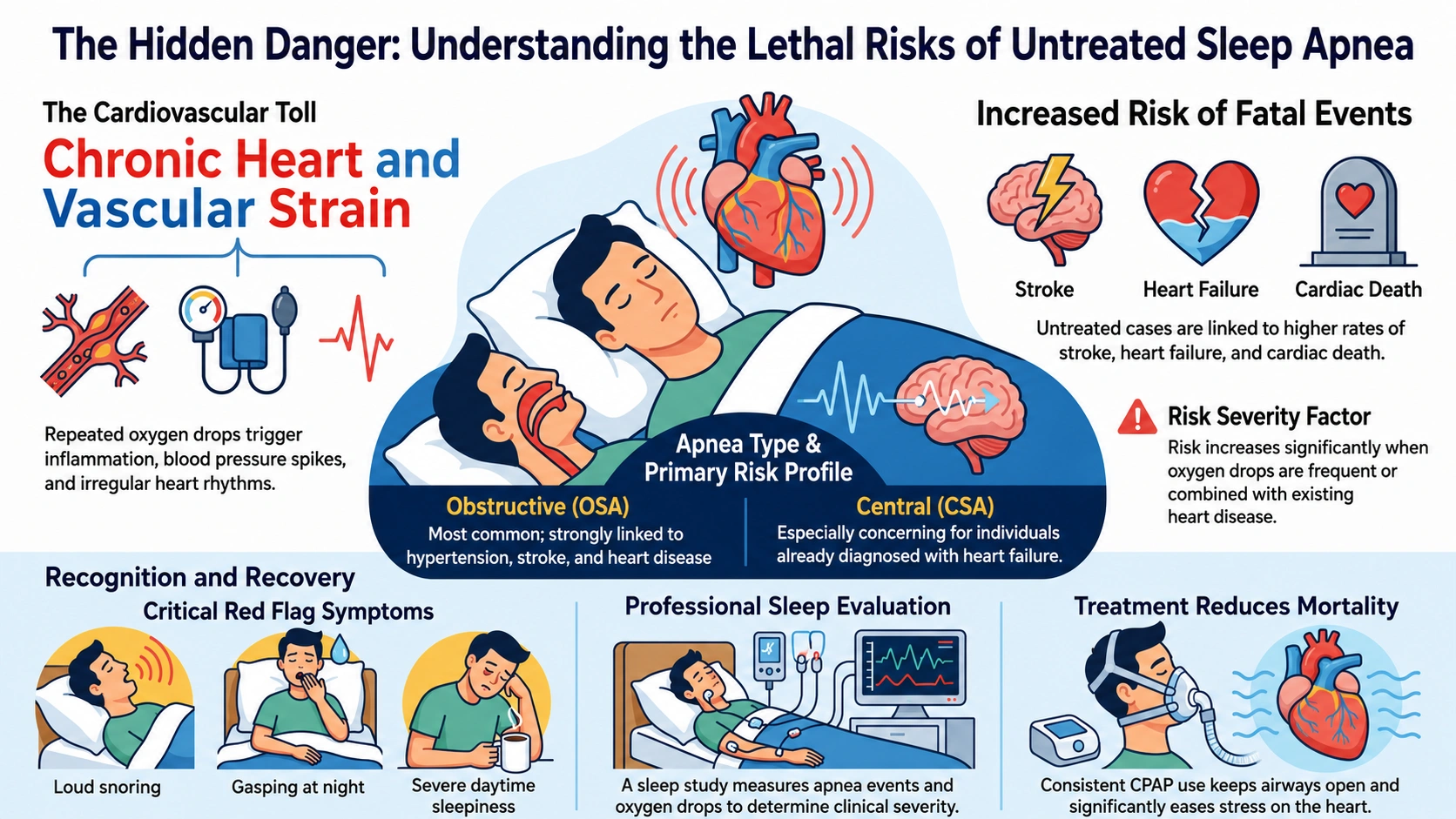
Untreated sleep apnea can stress the cardiovascular system night after night. Repeated drops in oxygen can trigger inflammation, blood pressure spikes, and irregular heart rhythms, which is why it is linked to heart failure, stroke, and sudden cardiac death.
The danger is not that everyone with sleep apnea will die from it. Rather, the risk of death from untreated sleep apnea increases significantly when the condition is moderate to severe, oxygen levels drop frequently, or a person already has heart disease. In people with heart failure, sleep apnea is associated with a higher risk of mortality, and central sleep apnea is particularly concerning.
5 Serious Untreated Sleep Apnea Complications to Know
Untreated sleep apnea complications can affect both short-term safety and long-term health. Common complications include daytime sleepiness, poor concentration, morning headaches, and waking up gasping or choking during sleep.
More serious complications include:
- High blood pressure.
- Atrial fibrillation and other arrhythmias.
- Heart failure progression.
- Stroke risk.
- Increased risk of sudden cardiac death in severe cases.
A useful way to think about it is this: sleep apnea does not always kill directly, but it can raise the chance of fatal events over time by damaging the heart and blood vessels.
Can Untreated Sleep Apnea Shorten Your Life Expectancy?
People with both sleep apnea and heart failure generally have a higher risk of reduced life expectancy than those without these conditions. Research suggests that untreated sleep-disordered breathing may worsen outcomes, particularly in people with central sleep apnea, highlighting the importance of early diagnosis and treatment.
For people without major heart disease, untreated obstructive sleep apnea still raises risk, but the outcome is not the same for everyone. That is why doctors focus on severity, oxygen drops, and comorbid conditions rather than using a one-size-fits-all prediction.
Can Sleep Apnea Kill You in Your Sleep? The Truth
The short answer to can sleep apnea kill you in your sleep is yes, but that is not the typical outcome. The more realistic danger is repeated oxygen deprivation, strain on the heart, and a higher chance of a fatal cardiac event during sleep or later from cumulative damage.
If someone is waking up gasping, has very loud snoring, stops breathing repeatedly, or has severe daytime sleepiness, that needs medical evaluation. Mayo Clinic and NHS both describe these as warning signs of a potentially serious sleep disorder.
Understanding these risks is only useful if you also know what to do next — how sleep apnea is diagnosed, what severity actually means, and which treatments genuinely lower these risks. Our sleep apnea complete guide covers all of that in full detail.
FAQ's
Can sleep apnea kill you?
Yes, untreated sleep apnea can contribute to death by increasing the risk of heart disease, stroke, and sudden cardiac death. It usually does not act alone; it often raises risk over time by worsening cardiovascular health. Severe cases and people with existing heart problems are at the highest risk.
Does sleep apnea shorten life expectancy?
Yes, untreated sleep apnea can shorten life expectancy, especially when it is moderate to severe or combined with heart disease. Research links it to higher all-cause and cardiovascular mortality, though the exact risk varies based on severity, oxygen drops, age, and other conditions.
Is obstructive sleep apnea more dangerous than central sleep apnea?
Both are serious, but central sleep apnea can be especially concerning in people with heart failure. Obstructive sleep apnea is more common, and it is strongly linked to hypertension, stroke, and heart disease. The most dangerous type depends on the person’s overall health.
What are the biggest untreated sleep apnea complications?
The biggest complications are high blood pressure, irregular heartbeat, heart failure, stroke, and increased risk of sudden cardiac death. It can also cause daytime sleepiness, poor concentration, and a higher risk of accidents. These problems build gradually, which is why untreated cases are often underestimated.
Can sleep apnea cause heart failure?
Sleep apnea does not always cause heart failure, but it can worsen it and may contribute to its development in some people. In patients who already have heart failure, sleep apnea is associated with higher mortality. That is why cardiology and sleep medicine often overlap in treatment planning.
How do I know if sleep apnea is severe?
Severe sleep apnea often causes frequent breathing pauses, loud snoring, gasping, choking, and major daytime sleepiness. A sleep study is the best way to measure severity, usually by counting apnea events and tracking oxygen drops during sleep. Symptoms alone are not enough to judge the full risk.
Can treatment lower the death risk?
Yes, treatment can lower the risk by keeping the airway open, reducing oxygen drops, and easing stress on the heart. CPAP is the most common treatment for obstructive sleep apnea, and studies suggest treated patients generally do better than untreated ones. The key is consistent use and proper follow-up.
When should someone see a doctor urgently?
Someone should seek medical help soon if they have loud snoring plus witnessed breathing pauses, morning headaches, choking at night, or severe daytime sleepiness. Urgent evaluation is especially important if they also have chest pain, fainting, known heart failure, stroke symptoms, or dangerous driving sleepiness. Those signs suggest higher risk and need prompt testing.
Conclusion
Can you die from sleep apnea? Yes. Untreated sleep apnea can increase the risk of heart disease, stroke, heart failure, and sudden cardiac death. However, early diagnosis and proper treatment can significantly reduce these risks. If you experience symptoms such as loud snoring, breathing pauses, or excessive daytime sleepiness, speak with a healthcare professional and consider a sleep evaluation.
If you’ve been diagnosed with sleep apnea or need help choosing the right treatment, CPAPRX offers CPAP machines, masks, at-home sleep testing solutions, and expert support to help you sleep better with confidence.
Resources & Further Reading
- NHS: Sleep apnoea
- Mayo Clinic: Sleep apnea symptoms and causes
- AASM Sleep Education: Untreated sleep apnea puts heart health at risk
- NIH/PMC review on sleep apnea and cardiovascular consequences
- PubMed: sleep apnea and heart failure
Medical Disclaimer: The information provided on this page is for educational purposes only and should not be considered medical advice. Always consult a qualified healthcare provider or sleep specialist for diagnosis, treatment, or medical recommendations related to sleep apnea or other health conditions. Product information is not intended to replace professional medical guidance.