Table of Contents
Home remedies can reduce sleep apnea symptoms by improving airway stability, sleep position, nasal breathing, weight control, and lifestyle habits, but they do not replace medical treatment for moderate or severe cases.
What Is Sleep Apnea and Can Home Remedies Help?
Sleep apnea is a condition where breathing repeatedly slows or stops during sleep, often because the airway becomes too narrow or collapses. Many people first notice loud snoring, gasping, dry mouth, morning headaches, and daytime tiredness, then start looking for home remedies for sleep apnea before trying a machine. That search is reasonable, especially if symptoms seem mild or happen mainly in certain sleep positions.
The important thing to understand is that home strategies may help reduce sleep apnea symptoms, but they do not always treat the underlying cause. Research suggests that combining multiple lifestyle changes, such as side sleeping, maintaining a healthy weight, improving nasal breathing, and exercising regularly, may be more effective than relying on a single remedy.
While many people search for a natural sleep apnea treatment without CPAP, the most appropriate approach depends on the severity of the condition, the type of sleep apnea, and the factors contributing to airway obstruction.
If you are wondering can sleep apnea be cured without a machine, the honest answer is that some mild cases can improve a lot with lifestyle changes, but many cases still need medical evaluation. The goal is to make breathing easier, improve sleep quality, and lower risk, not to promise a miracle fix.
How Do You Know If Home Remedies May Be Enough?
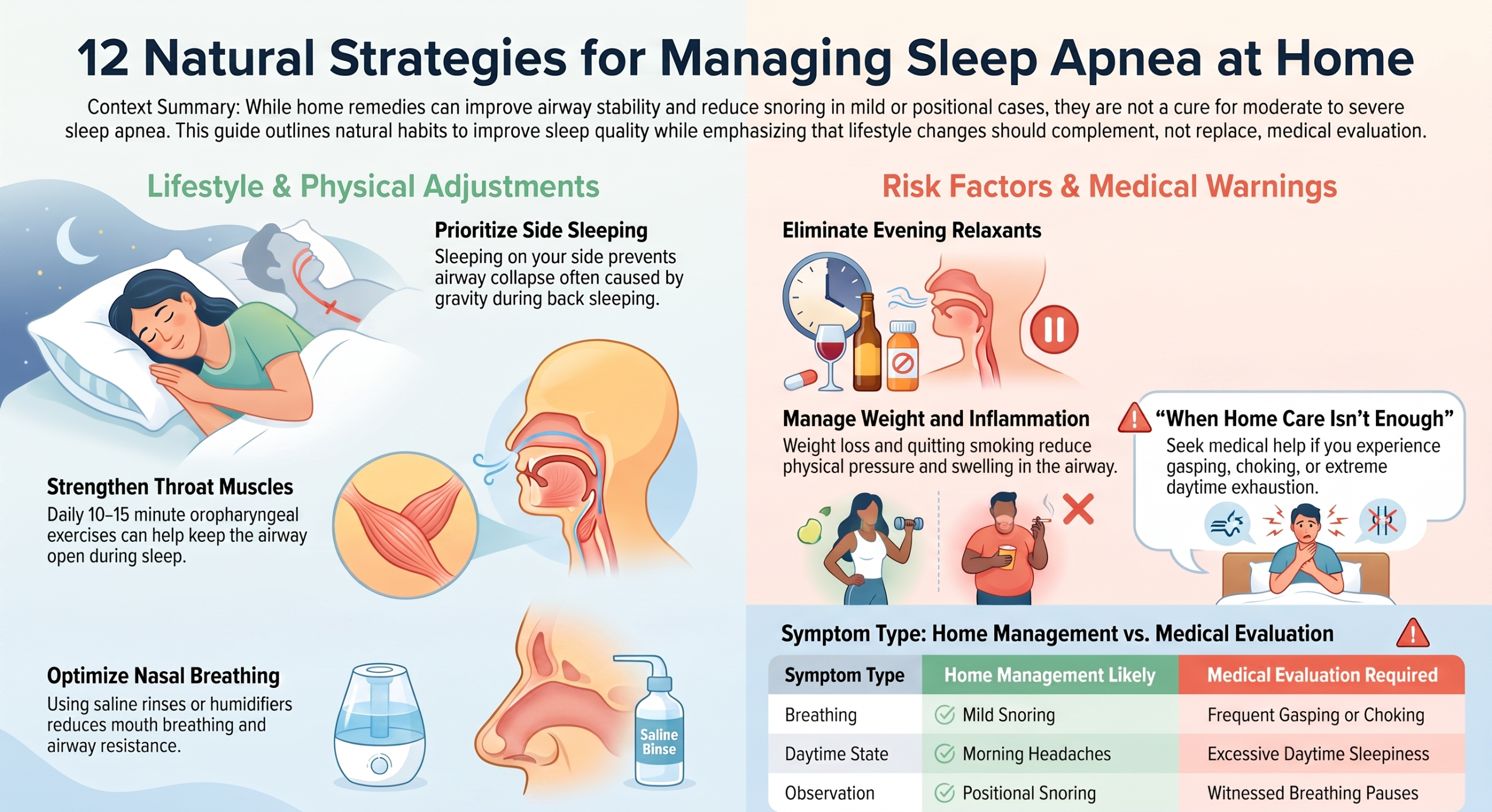
Home remedies are generally most suitable for people with mild or positional sleep apnea, especially when symptoms occur mainly while sleeping on the back. If you experience frequent breathing pauses, loud gasping, excessive daytime sleepiness, or have existing heart or blood pressure problems, it is important to seek medical evaluation instead of relying on lifestyle changes alone.
12 Home Remedies That May Help Reduce Sleep Apnea Symptoms
1. Sleep on Your Side to Keep Your Airway Open
Side sleeping is one of the most effective home strategies for people with positional obstructive sleep apnea, where breathing interruptions occur mainly when sleeping on the back. Sleeping on your side can help keep the airway more open and reduce airway collapse during the night.
Using a body pillow, placing a pillow behind your back, or trying a positional sleep device can make it easier to maintain this position while you sleep. For many people with mild positional sleep apnea, this simple habit may help reduce snoring and improve sleep quality as part of a broader treatment plan. It is also one of the most practical ways to reduce sleep apnea naturally at home.
2. Keep Your Nasal Passages Clear for Better Breathing
If your nose is blocked, breathing through the mouth becomes more likely, and that can worsen snoring and airway resistance. Saline rinses, a humidifier, or managing allergies may help you breathe more comfortably at night. Clear nasal breathing can make other remedies work better too.
3. Maintain a Healthy Weight to Reduce Airway Pressure
Excess weight, particularly around the neck and upper airway, can increase the risk of airway narrowing during sleep and make obstructive sleep apnea symptoms worse. For people who are overweight or obese, even a modest weight loss may help reduce breathing interruptions, snoring, and daytime fatigue.
While weight loss is not a cure for everyone, it is one of the most effective long-term lifestyle strategies for improving sleep apnea symptoms and overall health. Combining healthy eating, regular physical activity, and medical guidance can provide the best results over time.
4. Avoid Alcohol before Bedtime
Alcohol relaxes the muscles in the throat, which can increase airway collapse during sleep. If you drink in the evening, your snoring and breathing interruptions may be worse. Cutting alcohol closer to bedtime is a practical change that often helps faster than people expect.
5. Quit Smoking to Reduce Airway Inflammation
Smoking irritates the airways and can increase inflammation, swelling, and mucus production. That makes airflow harder and can worsen nighttime breathing problems. Stopping smoking supports better sleep and overall breathing health, even if improvements take time.
6. Practice Mouth and Throat Exercises for Sleep Apnea
Often called oropharyngeal exercises or sleep apnea mouth and throat exercises, these movements are designed to strengthen the tongue, soft palate, cheeks, and throat muscles that help keep the airway open during sleep.
Simple exercises, such as pressing the tongue against the roof of the mouth, repeating vowel sounds, or strengthening the soft palate, may help reduce snoring and improve mild obstructive sleep apnea when practiced consistently.
Most studies suggest performing these exercises for 10–15 minutes daily over 6–12 weeks to notice gradual improvements. While they are not a replacement for CPAP therapy in moderate or severe cases, they can be a valuable part of a broader sleep apnea management plan.
7.Build Healthy Sleep Habits
Poor sleep habits can make fatigue feel worse and may reduce how well your body handles disrupted sleep. Go to bed and wake up at the same time every day, keep the room dark and cool, and avoid heavy meals late at night. Better sleep hygiene will not cure apnea, but it can improve how rested you feel.
8. Manage Acid Reflux to Improve Sleep Quality
Acid reflux can irritate the throat and make nighttime breathing less comfortable. Avoiding large late-night meals, sleeping with the head slightly elevated, and identifying trigger foods may help. If reflux is frequent, it is worth discussing with a clinician because it can add to sleep disruption.
9. Sleep with Proper Head and Neck Support
A pillow that keeps your head and neck aligned can make side sleeping easier and reduce strain on the airway. Some people breathe better with a slightly elevated upper body, especially if nasal congestion or reflux is also present. Small position changes can have a surprisingly large effect on sleep comfort.
10. Exercise Regularly to Support Better Sleep
Regular physical activity supports weight management, improves cardiovascular fitness, and strengthens the muscles involved in breathing, all of which can help reduce sleep apnea symptoms over time. Aim for at least 150 minutes of moderate-intensity exercise per week, such as brisk walking, cycling, swimming, or light strength training.
While exercise alone is unlikely to cure sleep apnea, especially in moderate or severe cases, it can improve overall sleep quality, reduce daytime fatigue, and support other treatments like weight loss and CPAP therapy. The greatest benefits come from making exercise a consistent part of your long-term routine.
11. Avoid Sedatives Unless Your Doctor Recommends Them
Some sleep aids and calming medications can relax throat muscles too much during sleep. That can make breathing interruptions more frequent or more severe in certain people. Never stop prescribed medication on your own, but do talk to a clinician if you suspect a medicine is making symptoms worse.
12. Track Your Sleep Apnea Symptoms and Progress
Keep notes about snoring, gasping, morning headaches, daytime sleepiness, and what makes symptoms better or worse. Tracking patterns helps you see whether changes are actually working. It also gives a doctor better information if you later need testing or treatment.
Bonus Tip: Create a Sleep-Friendly Environment
A comfortable sleep environment can support better breathing and improve overall sleep quality. Keep your bedroom cool, dark, and quiet to promote uninterrupted sleep, and avoid screen time for at least an hour before bed, as blue light can interfere with your natural sleep cycle.
If you have allergies, wash your bedding regularly and reduce dust or pet dander in the bedroom, since allergens can worsen nasal congestion and make breathing more difficult during sleep. While these changes won’t treat sleep apnea on their own, they can complement other lifestyle strategies and help you get more restorative sleep.
What Works Best for Managing Sleep Apnea Naturally?
The most useful approach is to combine several habits instead of testing one remedy at a time. Side sleeping, weight management, nasal care, and throat exercises often work better together than separately. If symptoms are mild, these changes may reduce snoring and breathing pauses enough to make sleep feel more restful.
If symptoms are frequent, loud, or linked to choking, high blood pressure, or extreme daytime sleepiness, home care alone is usually not enough. That is when a sleep evaluation becomes important. The goal is to improve symptoms safely, not to guess your way through a condition that affects breathing.
When Should You See a Doctor for Sleep Apnea?
Home remedies may help reduce symptoms in people with mild or positional sleep apnea, but they are not appropriate for everyone. If you frequently wake up gasping or choking, experience excessive daytime sleepiness, have high blood pressure, or someone notices that you repeatedly stop breathing during sleep, it is important to seek medical evaluation.
These symptoms may indicate moderate or severe sleep apnea, which can increase the risk of heart disease, stroke, and other serious health complications if left untreated.
If you’re concerned about the long-term risks of untreated sleep apnea, learn more in our guide, Can You Die From Sleep Apnea?. A healthcare provider may recommend a home sleep test or an overnight sleep study to determine the most appropriate treatment. Depending on your diagnosis, treatment may include CPAP therapy, oral appliance therapy, or other medically recommended options.
Common Mistakes to Avoid When Treating Sleep Apnea at Home
A common mistake is thinking a loud snore means a harmless snore. Sleep apnea can exist even when people do not realize they are waking up repeatedly through the night. Another mistake is trying random tips for a few days and then quitting before any pattern can emerge.
People also expect one remedy to solve everything. In reality, home remedies for sleep apnea work best when they match the cause of the problem. For example, side sleeping may help position-related apnea, while weight loss or reflux control may matter more for someone else.
Matching the right remedy to the right cause makes all the difference — but that starts with understanding sleep apnea as a whole, not just the symptoms you’re trying to manage. Our sleep apnea complete guide covers the full picture: symptoms, causes, diagnosis, and every treatment option available.
Frequently Asked Questions About Home Remedies for Sleep Apnea
Can sleep apnea be cured without a machine?
Sometimes mild sleep apnea can improve enough with lifestyle changes that a machine is not needed. Weight loss, side sleeping, nasal care, and throat exercises may reduce symptoms in selected cases. However, moderate or severe sleep apnea often still needs medical treatment because breathing pauses can remain dangerous even if they feel less obvious.
What are the best home remedies for sleep apnea?
The best remedies are usually side sleeping, weight control, reducing alcohol, treating nasal congestion, and doing mouth and throat exercises consistently. These steps work because they target airway narrowing, muscle relaxation, and breathing comfort. They are most helpful when used together rather than as isolated one-off fixes.
Do sleep apnea exercises mouth throat really help?
Yes, they can help some people, especially if the apnea is mild or snoring is the main problem. These exercises strengthen the tongue, soft palate, and surrounding muscles that support the airway. Results usually take time and regular practice, so they work best as part of a broader sleep plan rather than as a quick cure.
How to reduce sleep apnea naturally at home?
Start by sleeping on your side, avoiding alcohol before bed, keeping your nose clear, and maintaining a healthy weight. Add regular exercise and a consistent bedtime routine to improve overall sleep quality. Natural strategies can ease symptoms, but they should not replace a sleep evaluation if breathing pauses are frequent.
Is snoring always a sign of sleep apnea?
No, snoring is not always sleep apnea, but loud or frequent snoring can be a warning sign. If snoring comes with gasping, choking, morning headaches, or daytime fatigue, sleep apnea becomes more likely. The safest move is to look at the whole pattern, not just the sound.
Which sleep position is best for sleep apnea?
Side sleeping is often the best position because it can keep the airway more open than sleeping flat on the back. Many people notice fewer breathing interruptions when they avoid back sleeping. A body pillow or positional support can help you stay on your side through the night.
When should someone get medical help?
Medical help is important if you wake gasping, feel very sleepy during the day, have high blood pressure, or are told that you stop breathing during sleep. These signs suggest the problem may be more than mild. A proper evaluation can confirm what is happening and help prevent long-term complications.
Can lifestyle changes replace CPAP?
Lifestyle changes can improve symptoms, but they do not always replace CPAP. Some people with mild cases may do well with natural strategies alone, while others need a machine because airway collapse remains significant. The right answer depends on the cause and severity of the condition.
What are some effective home remedies for sleep apnea?
Sleeping on your side, maintaining a healthy weight, keeping your nasal passages clear, avoiding alcohol before bed, and doing mouth and throat exercises may help reduce mild sleep apnea symptoms. If symptoms continue, consider a CPAPRx home sleep test for proper evaluation.
Natural remedies to improve sleep apnea symptoms?
Natural remedies include side sleeping, regular exercise, weight management, nasal care, good sleep hygiene, and throat exercises. These strategies may improve mild symptoms but should not replace medical treatment for moderate or severe sleep apnea.
Which over-the-counter products help with sleep apnea relief at home?
Saline nasal sprays, nasal strips, humidifiers, wedge pillows, and body pillows may improve comfort and reduce snoring. However, they do not treat obstructive sleep apnea. Persistent symptoms should be evaluated through a CPAPRx home sleep test or by a healthcare provider.
TAKE THE NEXT STEP TOWARD BETTER SLEEP
If your symptoms don’t improve with home remedies or you suspect you have sleep apnea, consider getting evaluated instead of self-diagnosing. CPAPRx provides FDA-approved home sleep testing and expert support to help you understand your sleep health and determine the most appropriate treatment plan.
Early diagnosis and the right treatment can improve your sleep quality and help reduce the risk of long-term health complications.
Trusted Resources and Medical References
- National Heart, Lung, and Blood Institute for sleep apnea basics.
- Mayo Clinic for trusted information on sleep apnea symptoms, diagnosis, and treatment options.
- American Academy of Sleep Medicine for sleep disorder guidance.
- NIH PubMed for research on mouth and throat exercises.
- FDA for safety information on sleep-related medical devices.
Medical Disclaimer: This content is for educational purposes only and is not a substitute for professional medical advice, diagnosis, or treatment. Always consult a qualified healthcare provider regarding any medical condition or symptoms.