
Table of Contents
What causes snoring in females is usually airway narrowing, hormone shifts, weight changes, congestion, pregnancy, or sleep apnea. The pattern matters because snoring can be harmless, but it can also be an early sign that breathing is being disrupted at night.
Why do women snore
Snoring occurs when the passage of air through the nose or throat is partially blocked, causing surrounding tissues to vibrate. In women, that narrowing can occur from the same conditions that a man would get, but life-stage differences such as pregnancy and menopause may make snoring in women more prevalent or readily recognized.
Because at cpapRX we see a lot of snorers who think that snoring is just “annoying” until they start to hear from their partners about poor sleep, headaches or daytime fatigue. That is typically where it goes from an annoyance to a health matter.
If you’re trying to understand whether snoring could be something more serious, read this first: Snoring vs Sleep Apnea: The Shocking Difference You Shouldn’t Ignore
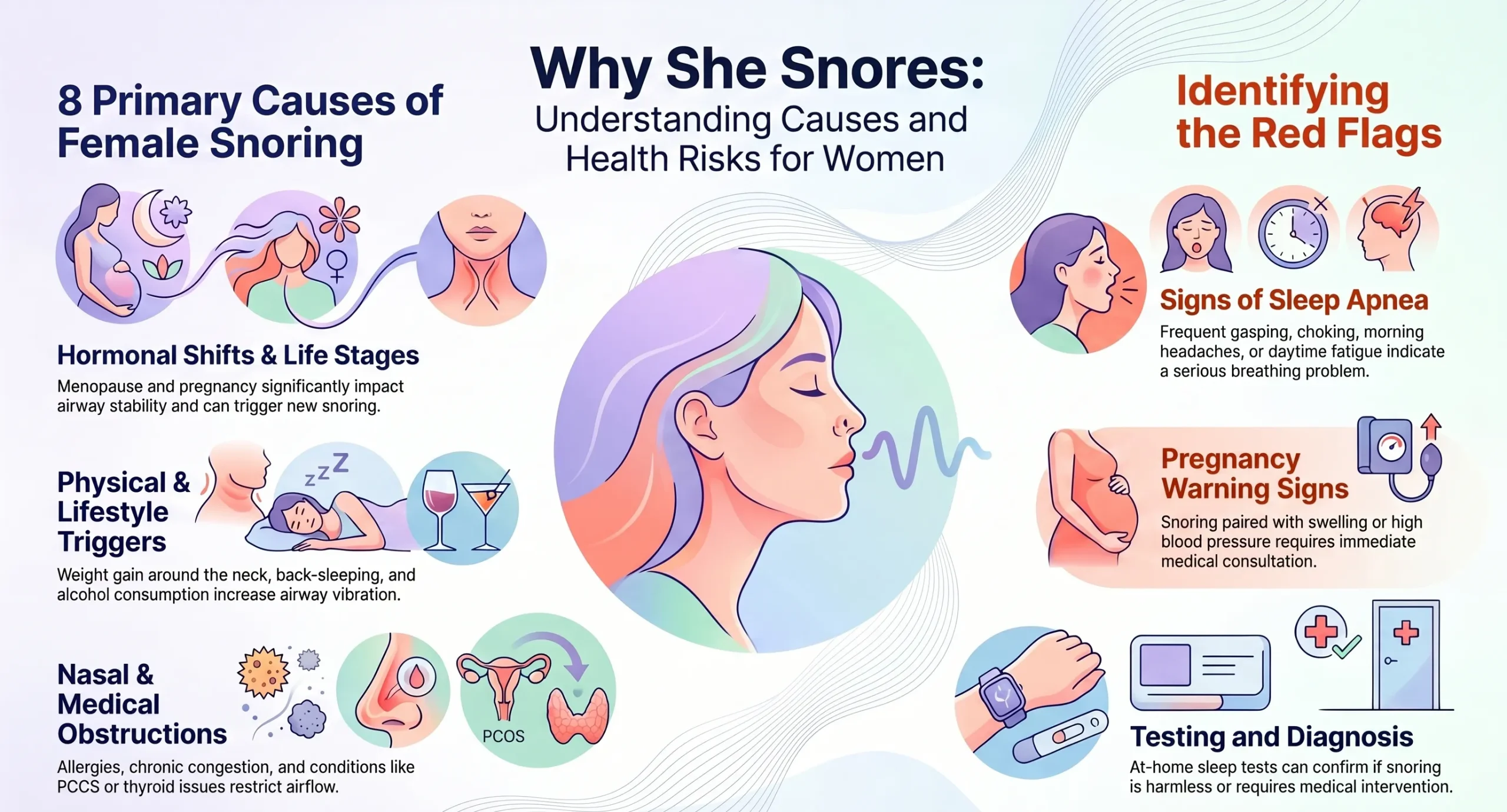
8 Real Causes of Snoring in Females
1. Weight gain around the neck
Extra weight around the neck can narrow the airway and make snoring more likely. Even a small increase in weight can affect breathing during sleep, especially when lying on the back.
2. Menopause and hormone changes
During perimenopause and menopause, estrogen and progesterone levels decline. These hormonal changes can affect airway stability and make snoring more common, especially for women who never snored before.
3. Pregnancy
Pregnancy can trigger snoring because of hormonal changes, fluid retention, nasal congestion, and weight gain. Snoring often starts in the second or third trimester and usually improves after delivery.
4. Nasal congestion
Nasal congestion can make it harder to breathe through the nose, which often leads to mouth breathing and snoring. Allergies, sinus infections, and chronic congestion are common reasons this happens.
5. Sleeping on the back
Sleeping on your back can make snoring worse because the tongue and soft tissues may fall backward and block the airway slightly. A few simple changes can help: try sleeping on your side, use a body pillow to stay in position, and raise your head slightly with a supportive pillow or wedge pillow.
6. Alcohol or sedatives at night
Alcohol and some sedatives relax the throat muscles, which makes the airway more likely to vibrate or partially collapse during sleep. This is especially common when they are taken close to bedtime.
7. Thyroid problems or PCOS
Thyroid issues and PCOS can be linked to snoring because hormonal imbalance may affect breathing and sleep quality. Mayo Clinic notes that PCOS and other hormonal disorders can raise the risk of obstructive sleep apnea: Mayo Clinic.
8. Sleep apnea
Sometimes snoring is more than just a noise — it can be a sign of obstructive sleep apnea. If snoring comes with gasping, choking, morning headaches, or daytime sleepiness, the underlying breathing problem should be checked.
cpapRX offers at-home sleep testing that can help confirm a diagnosis from your own home — Order Your WatchPAT Test.
What women often miss
Many women dismiss what causes snoring in females because it seems embarrassing rather than medical. The bigger problem is that snoring can hide a deeper issue, especially when it comes with gasping, poor sleep quality, or waking up tired.
In our experience, the most common mistake is assuming “I only snore a little” means there is no real issue. A person can snore lightly and still have disrupted breathing or poor-quality sleep.
If you’re unsure where to start, talk to the cpapRX team — they can help you figure out the next step.
When to see a doctor
A doctor visit is a good idea if snoring is new, getting louder, or happening with daytime sleepiness, morning headaches, choking at night, high blood pressure, or witnessed pauses in breathing. Pregnancy-related snoring, especially when paired with swelling or blood pressure concerns, should also be taken seriously.
If the snoring is frequent and affecting sleep quality, a sleep evaluation can help determine whether the cause is nasal congestion, anatomy, hormone changes, or sleep apnea.
You can start with an at-home sleep test — no clinic visit needed.”
Real-world examples
A woman in her 50s who never snored before may notice it after menopause because airway tone changes and weight distribution shifts. Another woman may only snore during allergy season because congestion and mouth breathing narrow the airway at night.
Customers also tell us they first notice the problem when a partner hears snoring plus pauses or choking sounds, which is a strong reason to get checked.
FAQ's
Is snoring in women always a sign of sleep apnea?
No, snoring in females is not always a sign of sleep apnoea. It also may stem from things like congestion, your sleeping position, alcohol consumption, as well as pregnancy and menopause related changes. However, if snoring occurs often or is associated with fatigue, morning headaches, or gasping for breath at night, a sleep study should be considered.
Why do women start snoring later in life?
Women may start snoring later in life because hormone levels change during perimenopause and menopause. These changes can affect airway stability and sleep quality.
Can pregnancy cause snoring even if a woman never snored before?
Yes, pregnancy can cause snoring even in women who never snored before. Hormonal changes, nasal congestion, fluid retention, and weight gain can all narrow the airway. This usually gets better after delivery, but it should be referred to a doctor during pregnancy.
Does sleeping on your back really make snoring worse?
Correct, back sleeping can make snoring worse. The position makes the tongue and throat tissues more likely to collapse and narrow the airway. Since position changes are often one of the first things doctors recommend as many people snore less when sleeping on their side instead, be careful and try it.
Can allergies cause snoring in women?
Yes, allergies can cause snoring in women by blocking the nose and forcing mouth breathing. Sinus congestion and swelling make it harder for air to move smoothly. If snoring gets worse during allergy season or with a cold, the nose may be part of the problem.
When should a woman get checked for snoring?
A woman should get checked for snoring if it is new, loud, frequent, or linked to tiredness, morning headaches, choking, or breathing pauses. Snoring during pregnancy, or snoring plus blood pressure concerns, also deserves medical attention. A doctor can help figure out the cause.
Can cpapRX help if snoring is linked to sleep apnea?
Yes, cpapRX can help if snoring is connected to sleep apnea because the site focuses on CPAP solutions, sleep-apnea guidance, and specialist-backed support. If testing shows sleep apnea, treatment can reduce the nighttime breathing disruption that often causes snoring in the first place.
Related Sleep Apnea Products and Resources
If snoring is affecting sleep quality, cpapRX.com can help you take the next step.
- Start with an at-home sleep apnea test if snoring is frequent, loud, or linked to tiredness.
- Explore CPAP machines and masks if a diagnosis confirms sleep apnea.
- Add comfort accessories such as nasal masks, cushions, or replacement parts to make therapy easier to use every night.
Resources & Further Reading