Table of Contents
Quick Answer: Key Sleep Apnea Facts
Sleep apnea facts show that millions of people stop breathing repeatedly during sleep, often without knowing it, and untreated cases can raise the risk of heart disease, stroke, accidents, and daytime exhaustion.
What Is Sleep Apnea?
Sleep apnea is a sleep-breathing disorder where the airway repeatedly narrows or closes, causing breathing pauses, loud snoring, gasping, and poor-quality sleep. The most common type is obstructive sleep apnea, which happens when the upper airway is blocked during sleep.
What makes it easy to miss is that many people do not notice their own symptoms. While the individual with sleep apnea only experiences fatigue, dizziness, irritability, or diminished alertness during the day, a bed partner may notice the breathing pauses first.
This hidden pattern is why sleep apnea is often mistaken for “just snoring” or “bad sleep.” In reality, repeated breathing interruptions can affect cardiovascular health, concentration, driving safety, and overall quality of life.
Sleep Apnea at a Glance
Quick Fact | Details |
Most Common Type | Obstructive Sleep Apnea (OSA) |
Main Symptoms | Loud snoring, breathing pauses, gasping during sleep, morning headaches, and daytime sleepiness |
Who Can Get It? | Adults and children of any body weight, although some people have a higher risk |
How It’s Diagnosed | An at-home sleep test or an overnight sleep study |
Common Treatments | CPAP therapy, oral appliances, lifestyle changes, and surgery in selected cases |
Why Early Diagnosis Matters | Early treatment may improve sleep quality and help reduce the risk of long-term health complications |
9 Sleep Apnea Facts Everyone Should Know
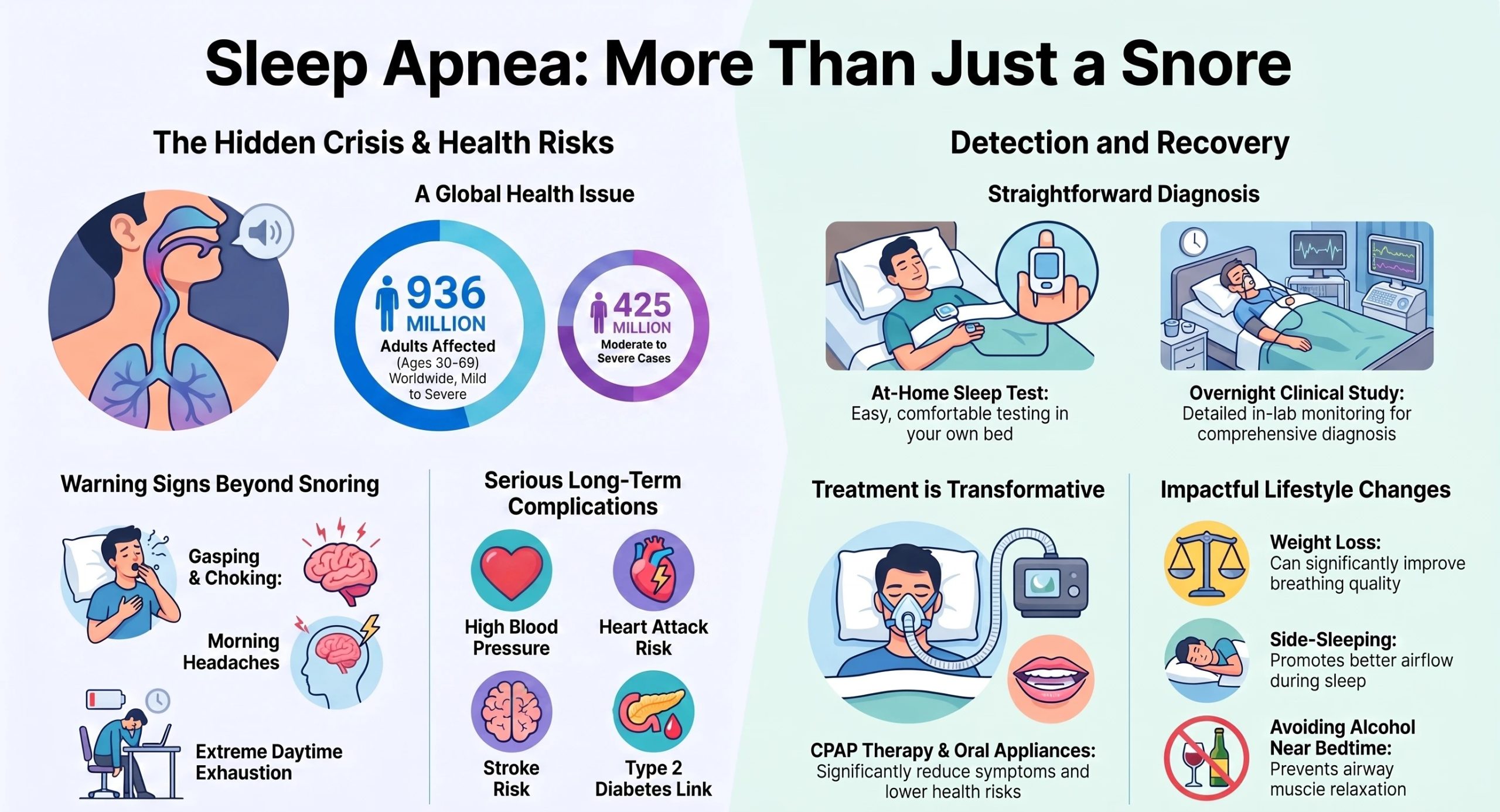
- Sleep apnea is far more common than most people think. A major global analysis estimated that about 936 million adults aged 30 to 69 had mild-to-severe obstructive sleep apnea, with about 425 million having moderate-to-severe disease.
- Many Cases Are Never Diagnosed. Research shows that a large proportion of people with sleep apnea remain undiagnosed or do not receive appropriate treatment. This means a significant percentage of the population may be living with sleep apnea without realizing it, often experiencing symptoms such as loud snoring, daytime fatigue, and poor-quality sleep for years before seeking medical help.
- Snoring is not the same thing as sleep apnea. Loud snoring can be a clue, but simple snoring alone does not prove airway collapse or breathing pauses during sleep.
- Daytime sleepiness is a major warning sign. Common symptoms include waking unrefreshed, concentration problems, morning headaches, mood changes, and excessive sleepiness during the day.
- It can affect people who do not think they are “at risk.” While excess weight, age, male sex, smoking, alcohol use, and a narrow airway increase risk, sleep apnea can still appear outside the stereotype people expect.
- Untreated sleep apnea is linked to serious health problems. Authorities and medical references connect it with high blood pressure, heart attack, stroke, arrhythmias, diabetes risk, and accidents.
- The condition can be dangerous on the road. Because sleep apnea reduces alertness and increases daytime sleepiness, it can increase the risk of motor vehicle crashes and work-related accidents. Early diagnosis and appropriate treatment may help improve alertness and reduce these risks.
- Diagnosis is usually straightforward once suspicion exists. Sleep testing measures breathing, airflow, oxygen levels, and sleep disruption, and severity is often graded using the apnea-hypopnea index.
- Treatment can make a real difference. Lifestyle changes, sleep-position strategies, and therapies such as CPAP can reduce symptoms and lower risk when used consistently.
Common Sleep Apnea Myths Debunked
Many surprising sleep apnea statistics and myths show why this condition is often misunderstood. Recent medical research has debunked several common misconceptions, including the belief that only loud snorers or overweight people develop sleep apnea. Someone can have repeated breathing pauses, fragmented sleep, and oxygen drops even if snoring is not dramatic.
Another common myth is that sleep apnea is only a weight problem. Extra weight is a strong risk factor, but airway anatomy, age, sex, smoking, alcohol, nasal blockage, and other factors also matter.
A third myth is that tiredness is just part of a busy life. If fatigue is paired with gasping, choking, morning headaches, or poor concentration, it deserves medical attention rather than being brushed off.
Real-Life Signs of Sleep Apnea You Shouldn’t Ignore
In practice, the most revealing symptoms are often the ones other people notice first. Partners may report pauses in breathing, choking sounds, or loud snoring, while the patient notices brain fog, irritability, or falling asleep too easily during the day.
If you are evaluating sleep apnea facts for a blog or patient education page, it helps to frame the condition as a hidden but common health issue. The question is not only how bad the snoring sounds, but whether breathing is being interrupted repeatedly through the night.
Common Mistakes People Make About Sleep Apnea
People often assume they can self-diagnose from snoring alone, but snoring is only one possible clue. Others wait until symptoms become severe, even though earlier testing is usually simpler and safer than waiting for long-term complications.
Another mistake is ignoring the partner’s observations. Because sleep apnea happens during sleep, the person affected may not recognize the pattern, while someone else can describe it clearly and help speed up diagnosis.
Recognizing these mistakes is a good start, but knowing the full picture — how sleep apnea is diagnosed, which treatments actually work, and what the different types mean for you — makes it much easier to act on the facts above. Our sleep apnea complete guide covers all of that in one place.
When Should You Get Tested for Sleep Apnea?
You should consider speaking with a healthcare provider if you regularly snore loudly, wake up gasping for air, or feel unusually tired despite getting enough sleep. Many people assume these symptoms are harmless, but they may indicate obstructive sleep apnea, a condition that can affect both your sleep quality and overall health.
A sleep evaluation is especially important if you experience any of the following:
- Loud, frequent snoring
- Breathing pauses noticed by a bed partner
- Waking up choking or gasping for air
- Morning headaches
- Excessive daytime sleepiness
- Difficulty concentrating or memory problems
- High blood pressure that is difficult to control
If these symptoms sound familiar, an At-Home Sleep Test may be an easy first step to determine whether sleep apnea could be affecting your breathing during sleep. Early diagnosis allows treatment to begin sooner and may help reduce the risk of heart disease, stroke, and other complications.
If you’re also experiencing ongoing nasal blockage or difficulty breathing through one nostril, read our Deviated Septum Self Test: 5 Signs You Can Check at Home in Under 2 Minutes to learn whether a structural nasal issue could be contributing to your sleep problems.
Frequently Asked Questions About Sleep Apnea Facts
How Common Is Sleep Apnea Globally, and How Many Cases Go Undiagnosed?
Sleep apnea is very common worldwide, and many cases remain undiagnosed. A global analysis estimated that approximately 936 million adults aged 30 to 69 have mild-to-severe obstructive sleep apnea.Research also shows that a significant proportion of cases remain undiagnosed or are not adequately treated.
What are the most important sleep apnea symptoms to watch for?
The most important symptoms are loud snoring, breathing pauses, gasping or choking during sleep, daytime sleepiness, morning headaches, and trouble concentrating. These symptoms matter because they often point to repeated sleep disruption, not just a poor night’s rest.
Can a person have sleep apnea without snoring?
Yes, a person can have sleep apnea without obvious snoring. Snoring is common, but it is not required for the diagnosis, and some people mainly show daytime symptoms such as fatigue, poor focus, or waking unrefreshed.
Is sleep apnea only a problem in older or overweight people?
No, sleep apnea is not limited to older or overweight people. Those factors increase risk, but airway shape, family history, smoking, alcohol use, and nasal congestion can also contribute, so younger or lean people can still have it.
How is sleep apnea diagnosed?
Sleep apnea is usually diagnosed with a sleep test that tracks breathing, airflow, oxygen levels, and sleep disruption. The results are often summarized using the apnea-hypopnea index, which helps classify how mild, moderate, or severe the condition is.
Can sleep apnea improve with lifestyle changes?
Yes, lifestyle changes can improve symptoms for some people, especially weight loss, regular exercise, avoiding alcohol near bedtime, and sleeping on the side instead of the back. These steps can reduce airway collapse and support other treatment approaches.
When should someone see a doctor about possible sleep apnea?
Someone should see a doctor if they have breathing pauses during sleep, loud snoring with gasping or choking, or strong daytime sleepiness. It is especially important to get checked if a partner has noticed the symptoms, because that external observation can be a key clue.
Can sleep apnea go away on its own?
Sleep apnea rarely goes away on its own. While weight loss, regular exercise, and other lifestyle changes may improve symptoms for some people, moderate to severe sleep apnea usually requires medical treatment. If symptoms continue, a healthcare provider may recommend an at-home sleep test, CPAP therapy, or another treatment based on the underlying cause.
Explore CPAP Therapy Products and Sleep Apnea Solutions
For readers who need next steps, CPAP therapy, masks, and other sleep-apnea support products are usually explored after diagnosis and treatment guidance from a clinician. Keep this section brief and action-focused so it supports the educational content without overpowering it.
Trusted Medical Resources and References
- NHS: Sleep Apnoea
- NIH/NHLBI: Sleep Apnea – Causes and Risk Factors
- Government of Canada: Sleep Apnea Overview
- PubMed: Worldwide Prevalence of Obstructive Sleep Apnea
- PubMed Central (PMC): Global Burden of Sleep Apnea – Review
Medical Disclaimer: This article is for informational and educational purposes only and should not be considered medical advice, diagnosis, or treatment. If you experience loud snoring, breathing pauses during sleep, excessive daytime sleepiness, or other symptoms of sleep apnea, consult a qualified healthcare provider or sleep specialist for an accurate diagnosis and personalized treatment plan.