Table of Contents
Quick Answer: Can a Deviated Septum Cause Sleep Apnea?
A deviated septum does not usually cause sleep apnea by itself, but it can make breathing harder, worsen snoring, and reduce CPAP comfort. If nasal blockage and sleep symptoms occur together, a proper evaluation with an ENT specialist or sleep provider can help identify the right treatment.
What Is a Deviated Septum and How Does It Affect Breathing?
The septum is the wall of cartilage and bone that separates the two sides of your nose. When it is off-center, airflow through one or both nostrils can become restricted. Some people barely notice it during the day, while others deal with chronic congestion, mouth breathing, or a constant feeling of blockage.
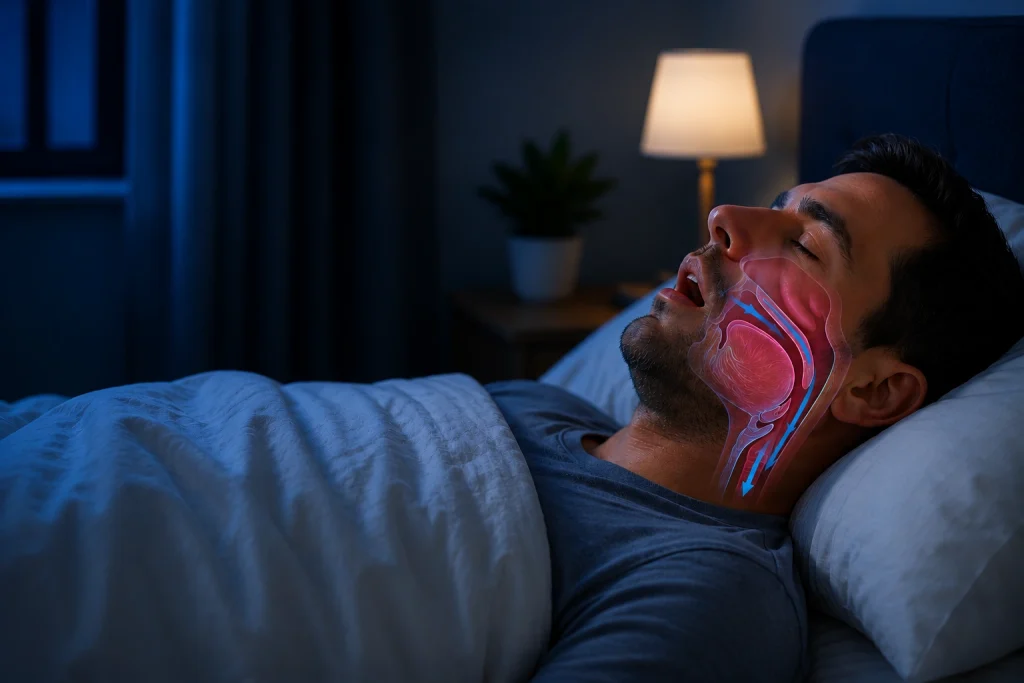
That matters at night because nasal breathing plays a major role in comfortable sleep. When the nose is blocked, the body often compensates by breathing through the mouth. This can dry out the throat, disturb sleep, and make snoring worse. In people already at risk for obstructive sleep apnea, a narrow nasal passage can add another layer of difficulty.
Signs and Symptoms of a Deviated Septum
A deviated septum can cause a variety of symptoms depending on how much it restricts airflow. Common signs include difficulty breathing through one nostril, chronic nasal congestion, frequent mouth breathing, recurring sinus infections, occasional nosebleeds, loud snoring, and poor sleep quality. Some people also wake up feeling tired despite getting enough sleep because blocked nasal airflow can affect normal breathing throughout the night. If these symptoms persist or interfere with your daily life, it’s a good idea to consult a healthcare provider or ENT specialist for a proper evaluation.
How Is a Deviated Septum Diagnosed?
A deviated septum is usually diagnosed through a physical examination by an ear, nose, and throat (ENT) specialist. During the evaluation, the doctor may use a nasal endoscope—a thin, lighted instrument—to examine the inside of your nose and assess the severity of the deviation.
Some people also use wearable devices to monitor sleep before seeking medical advice. If you’re wondering whether a smartwatch can help identify sleep apnea, read our guide on Can Apple Watch Detect Sleep Apnea? to understand what wearable sleep tracking can and cannot tell you before getting a proper sleep evaluation.
If you also have symptoms such as loud snoring, excessive daytime sleepiness, or witnessed pauses in breathing during sleep, your healthcare provider may recommend a home sleep test or an overnight sleep study to check for sleep apnea. An accurate diagnosis helps determine the underlying cause of your symptoms and ensures you receive the most appropriate treatment.
How Is a Deviated Septum Connected to Sleep Apnea?
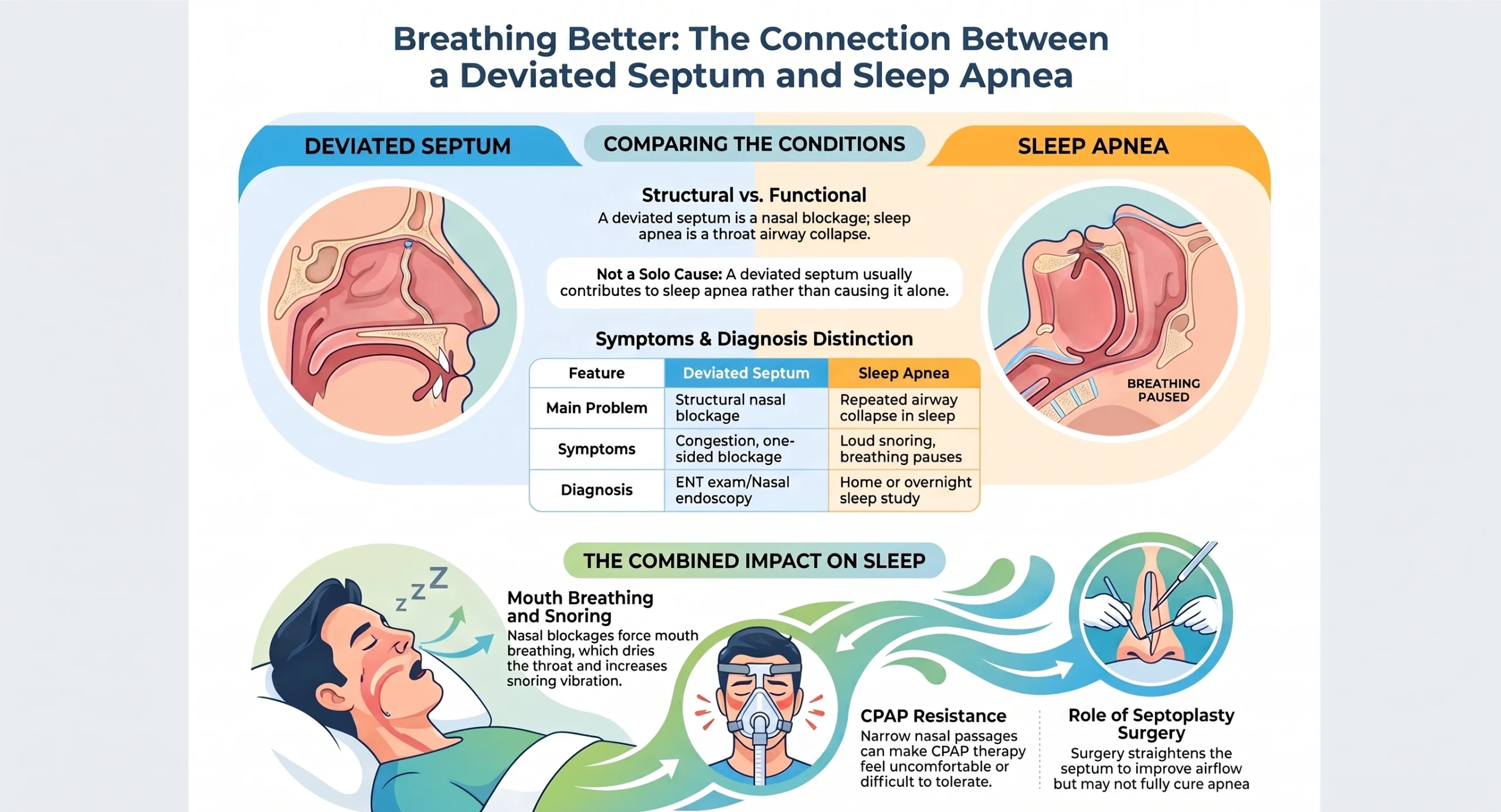
The connection between a deviated septum and sleep apnea is often misunderstood. A deviated septum does not usually cause sleep apnea on its own, but it can make breathing more difficult and may worsen symptoms in people who already have obstructive sleep apnea.
Understanding the relationship between a deviated septum and sleep apnea is important because restricted nasal airflow can increase breathing resistance during sleep. When the nose is partially blocked, the upper airway may become more vulnerable to narrowing, contributing to louder snoring, fragmented sleep, and increased daytime fatigue.
The key point is that a deviated septum is usually one contributing factor rather than the sole cause of sleep apnea. Many people have both structural nasal obstruction and obstructive sleep apnea, which is why a proper evaluation and personalized treatment plan are important for improving sleep and breathing.
Can a Deviated Septum Cause Sleep Apnea?
Many people ask, can deviated septum cause sleep apnea. The most accurate answer is that it usually does not cause it on its own, but it can contribute to the problem or make existing sleep apnea worse.
Sleep apnea is most commonly linked to airway collapse in the throat, not just the nose. Still, if the nose is blocked, the body has to work harder to move air, which can increase snoring and reduce overall sleep quality. In some people, that extra resistance may make the condition more noticeable or more difficult to manage.
So while the nose is not always the main source of sleep apnea, it can absolutely be part of the reason someone sleeps poorly, wakes unrefreshed, or struggles with treatment.
Deviated Septum vs Sleep Apnea: Understanding the Difference
The table below highlights the key differences between a deviated septum and obstructive sleep apnea, including their symptoms, diagnosis, and treatment options.
Feature | Deviated Septum | Sleep Apnea |
Main problem | Structural blockage inside the nose | Repeated airway collapse during sleep |
Common symptoms | Nasal congestion, one-sided breathing difficulty, nosebleeds | Loud snoring, breathing pauses, daytime fatigue |
Can it affect sleep? | Yes | Yes |
Can it cause sleep apnea? | May contribute but usually not alone | Yes |
Diagnosis | ENT examination, nasal endoscopy | Home sleep test or overnight sleep study |
Treatment | Medication or septoplasty | CPAP therapy, oral appliance, lifestyle changes |
Why Nasal Breathing Matters During Sleep
The nasal obstruction sleep apnea connection becomes clearer when you look at how the body sleeps. During sleep, muscles relax, airflow naturally slows, and the airway becomes more vulnerable to narrowing. If the nose is already congested or structurally restricted, the problem can feel much worse.
Good nasal airflow helps support steadier breathing, less mouth dryness, and better tolerance of sleep therapy. That is why patients with nasal blockage often report poor sleep even before a formal diagnosis. Breathing through the nose is not just about comfort; it can affect how well a person adapts to treatment and how rested they feel in the morning.
Septoplasty for Sleep Apnea: Can Surgery Help?
For some patients, surgery becomes part of the conversation. Septoplasty surgery for sleep apnea improvement may help when a deviated septum is significantly limiting airflow, especially if nasal blockage is making CPAP therapy harder to tolerate.
Septoplasty straightens the septum so air can move more freely through the nose. It may reduce congestion-related discomfort, improve nasal breathing, and make sleep therapy easier to use consistently. However, it is important to remember that septoplasty is not a guaranteed cure for sleep apnea. It may improve symptoms and treatment comfort, but it does not replace a full sleep evaluation or the need for CPAP in many cases.
Using CPAP With a Deviated Septum: Tips for Better Comfort
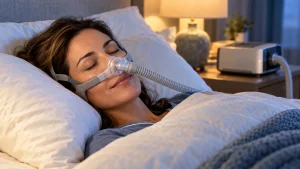
For patients already diagnosed, using CPAP machine with deviated septum can be frustrating at first. Nasal pressure, dryness, and discomfort can make it harder to wear the mask all night. Still, many people do well once the right mask style, humidification setting, and pressure adjustments are in place.
A nasal mask may work for some, while others feel better with a full-face mask if they breathe through their mouth. Heated humidification can also reduce dryness and irritation. If CPAP feels uncomfortable, the solution is often not to give up — it is to fine-tune the setup so the therapy fits the person, not the other way around.
When Should You See a Doctor for Sleep Problems?
If you snore loudly, wake up tired, breathe mostly through your mouth, or feel congested most nights, it may be worth speaking with a sleep specialist or ENT. When nasal blockage and sleep symptoms happen together, both the nose and the airway should be evaluated.
The goal is not just to treat snoring. It is to understand whether structural nasal issues are making sleep apnea harder to detect, harder to tolerate, or harder to treat. In many cases, a combined approach leads to better long-term results.
Deciding whether to see an ENT or a sleep specialist gets easier once you understand the full range of what sleep apnea actually involves — not just the nasal piece. Our sleep apnea complete guide walks through the symptoms, causes, and treatment options in full, so you know exactly what to bring up at your appointment.
Frequently Asked Questions About Deviated Septum and Sleep Apnea
Can a deviated septum cause sleep apnea?
A deviated septum usually does not cause sleep apnea by itself, but it can contribute to breathing difficulties and make symptoms more noticeable. When the nasal airway is narrowed, airflow may become less efficient, which can lead to more disrupted sleep and increased snoring. This may be especially important for people who already have a tendency toward airway collapse during sleep.
Is sleep apnea always caused by the throat and not the nose?
Sleep apnea is most often related to airway collapse in the throat, but the nose still matters. A blocked or narrow nose can make breathing less comfortable and may worsen snoring, dryness, and sleep disruption. In other words, the nose may not be the only problem, but it can still make the condition harder to manage.
Does septoplasty fix sleep apnea?
Septoplasty can improve nasal breathing, but it does not always fix sleep apnea. It may help reduce obstruction, improve comfort, and make CPAP easier to use. For some patients, that leads to better sleep quality, but a full sleep study is still needed to decide whether ongoing therapy is required.
Can a deviated septum be cured without surgery?
Most mild cases can be managed with treatments such as saline sprays, nasal steroid sprays, or allergy management if inflammation is contributing to symptoms. However, if the septum is significantly crooked and causing persistent breathing problems, septoplasty is the only procedure that permanently corrects the structural deviation. An ENT specialist can determine the most appropriate treatment based on your symptoms.
Can a home sleep test detect sleep apnea if I have a deviated septum?
Yes. A home sleep test can help identify obstructive sleep apnea even if you have a deviated septum. While the test does not diagnose the nasal blockage itself, it measures breathing patterns during sleep and helps determine whether sleep apnea is contributing to your symptoms. Your healthcare provider may also recommend an ENT evaluation if nasal obstruction is significant.
Why does CPAP feel harder with a deviated septum?
CPAP can feel harder when the nose is already blocked because air has to pass through a narrower passage. That can lead to pressure discomfort, dryness, or a sense of resistance. Mask selection, humidification, and pressure settings often make a big difference in comfort.
Should I use a full-face mask if I have nasal blockage?
A full-face mask may help if you breathe through your mouth or if nasal breathing is difficult. It is not the right choice for everyone, but many patients with congestion or septal deviation find it more comfortable than a nasal mask. The best option depends on breathing pattern, comfort, and sleep therapy goals.
Can nasal obstruction make snoring worse?
Yes, nasal obstruction can make snoring worse because it increases resistance to airflow. When breathing becomes harder through the nose, the body may shift to mouth breathing, which can dry the throat and increase vibration in the airway. That often leads to louder or more frequent snoring.
When should I see a doctor?
You should see a doctor if you snore loudly, wake up tired, struggle to breathe through your nose, or have trouble tolerating CPAP. Persistent symptoms usually mean there is more than simple congestion going on, and both sleep apnea and nasal structure may need to be checked.
Is nasal surgery enough without CPAP?
Nasal surgery alone is not enough for many people with sleep apnea. It may improve airflow and comfort, but it does not always stop airway collapse during sleep. A proper diagnosis is important so treatment matches the actual cause and severity of the condition.
Explore Sleep Apnea Testing and CPAP Support Options
If nasal blockage is making sleep therapy more difficult, the right support can improve both comfort and treatment success. CPAPRx offers Home Sleep Testing, CPAP therapy support, personalized mask fitting, and CPAP supplies to help you breathe more comfortably and stay consistent with your treatment. Whether you’re looking for answers, starting therapy, or improving your current CPAP experience, our team can help you find the solution that’s right for you.
Trusted Medical Resources
- CDC — Sleep Apnea
- NHLBI — Sleep Apnea
- Mayo Clinic — Deviated Septum
- AASM — Sleep Disorders
- PubMed — Research on nasal obstruction and sleep apnea
Medical Disclaimer: This article is for informational and educational purposes only and should not be considered medical advice, diagnosis, or treatment. If you have symptoms of sleep apnea or concerns about your breathing, consult a qualified healthcare provider or sleep specialist for proper evaluation and treatment.