Table of Contents
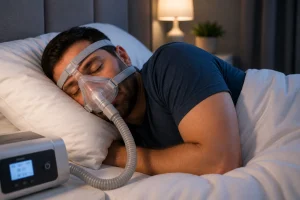
Quick answer: The best CPAP mask for claustrophobia uses minimal facial contact — nasal pillows or under-nose designs that leave the bridge and eyes free. Models like the ResMed AirFit P10, P30i, N30, and N30i reduce the “closed-in” feeling while keeping an effective seal and full CPAP therapy.
If you feel overwhelmed by model numbers, confused between nasal pillow vs. nasal vs. full face, or you just want one clear side-by-side reference, this guide focuses on what actually matters for anxiety and comfort. You’ll see which masks create the most open feel, how they differ in coverage and hose routing, and practical steps to ease that CPAP mask panic feeling — without being told to “just get used to it.”
Why Do CPAP Masks Trigger Claustrophobia?
Before choosing a mask, it helps to understand why this happens — it’s not “in your head,” and it’s not a personal failing. Having something covering your nose or face while pressurized air flows in can trigger a genuine suffocation response in your nervous system, even though your breathing is completely normal. That response releases stress hormones like adrenaline, which is why a mask can spike real panic in seconds, not just mild discomfort.
This reaction is common enough that sleep clinics build entire onboarding programs around it. Knowing that the fear response is a physical, automatic reaction — not something wrong with you — is often the first step to working through it, alongside choosing a mask style that genuinely reduces the trigger in the first place. This same stress-hormone response, when it happens night after night from unmanaged anxiety or unmanaged sleep apnea, is also part of why consistent, comfortable sleep matters so much for long-term heart health — getting the mask right isn’t just about comfort tonight.
Which CPAP Mask Designs Offer the Least Facial Coverage?
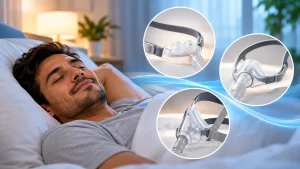
Here’s how the main minimal-contact options stack up before the detail below.
Mask | Coverage | Hose routing | Best for | Openness |
AirFit P10 | Nostrils only | Front | Stomach sleepers, travelers | Highest |
AirFit P30i | Nostrils only | Top-of-head | Side sleepers, active sleepers | Highest |
AirFit N30 | Under-nose | Front | Side sleepers wanting more structure | High |
AirFit N30i | Under-nose | Top-of-head | Active/side sleepers, minimal drag | High |
AirFit F30 / F30i | Under-nose + mouth | Front / Top-of-head | Mouth breathers needing less bulk | Medium |
AirFit X30i | Under-nose + mouth (hybrid) | Top-of-head | Mouth coverage, least confining full option | Medium |
Use this table to shortlist 2–3 candidates, then read the detail below to pick the right one for your breathing and sleep style. Browse these minimal-contact masks now if you already know which style you want to try.
Practical Steps to Ease CPAP Mask Panic
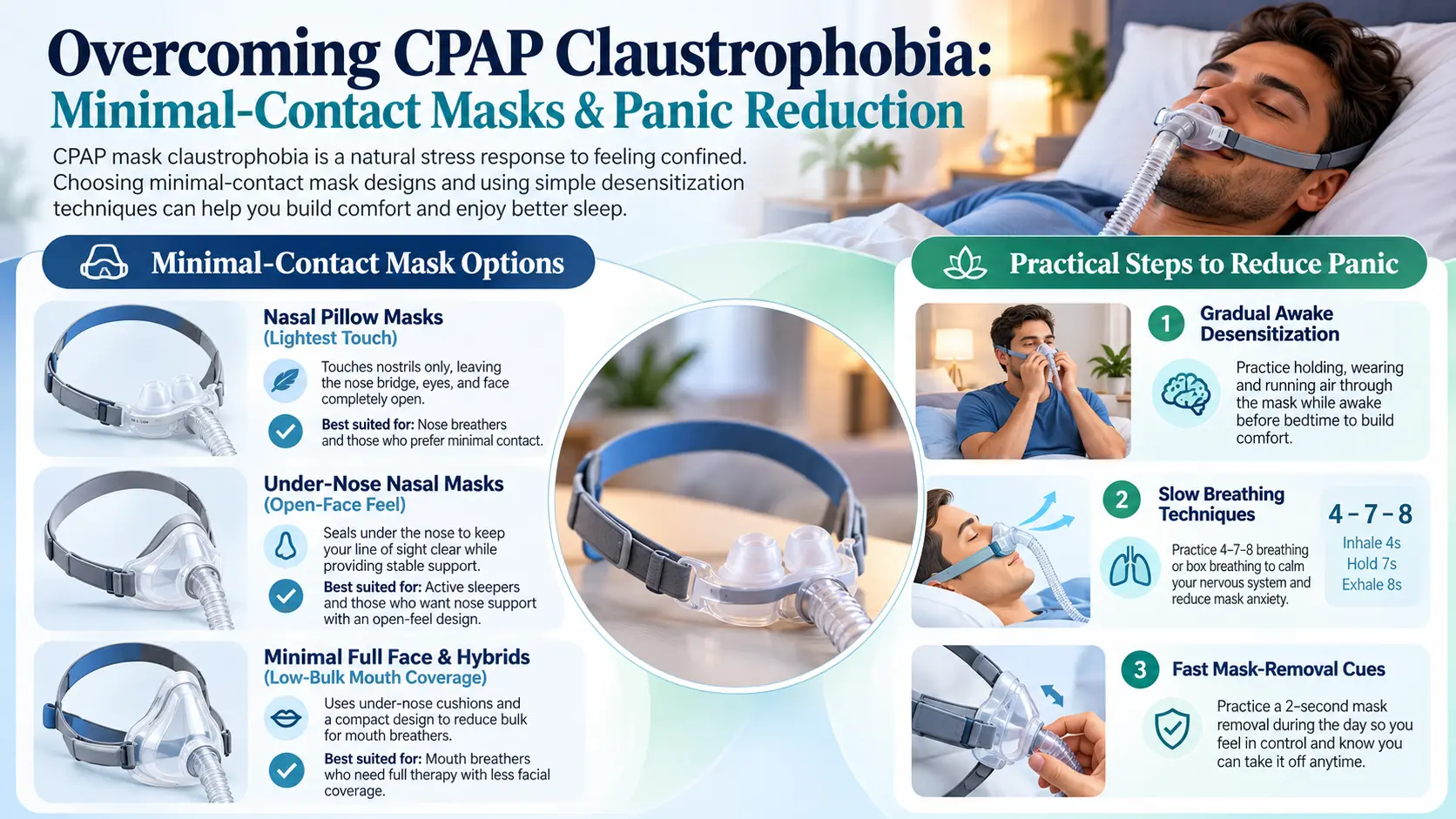
Gradual Desensitization While Awake
CPAP mask claustrophobia is common, and gradual exposure while awake is one of the most effective ways to build tolerance. Try this sequence:
- Hold the mask near your face for a few minutes during the day.
- Wear it without straps for a few sessions.
- Add the straps, still with no air running.
- Turn on airflow while sitting upright, awake.
- Only move to bedtime use once you feel calm during daytime sessions.
Breathing Techniques and Routine
Slow, controlled breathing signals safety to your nervous system and reduces panic in the moment. Two techniques worth trying:
- 4-7-8 breathing — inhale for 4 counts, hold for 7, exhale for 8.
- Box breathing — inhale, hold, exhale, hold, each for 4 counts.
Pair either one with a predictable pre-sleep routine — same steps, same order, every night — to build a sense of control over time.
Environment and Safety Cues
A few small changes make a real difference. Use a nightlight so your surroundings stay visible. Keep the room cool, since heat tends to intensify claustrophobia. And make sure you can remove the mask in under 2 seconds — practicing quick removal during the day proves to your brain that you’re not trapped, which lowers anxiety at night.
Minimal-Contact Mask Styles That Reduce Anxiety
Nasal Pillow Masks: Lightest Feel, Maximum Openness
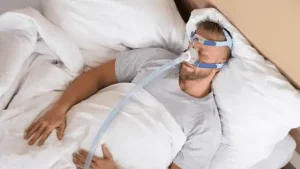
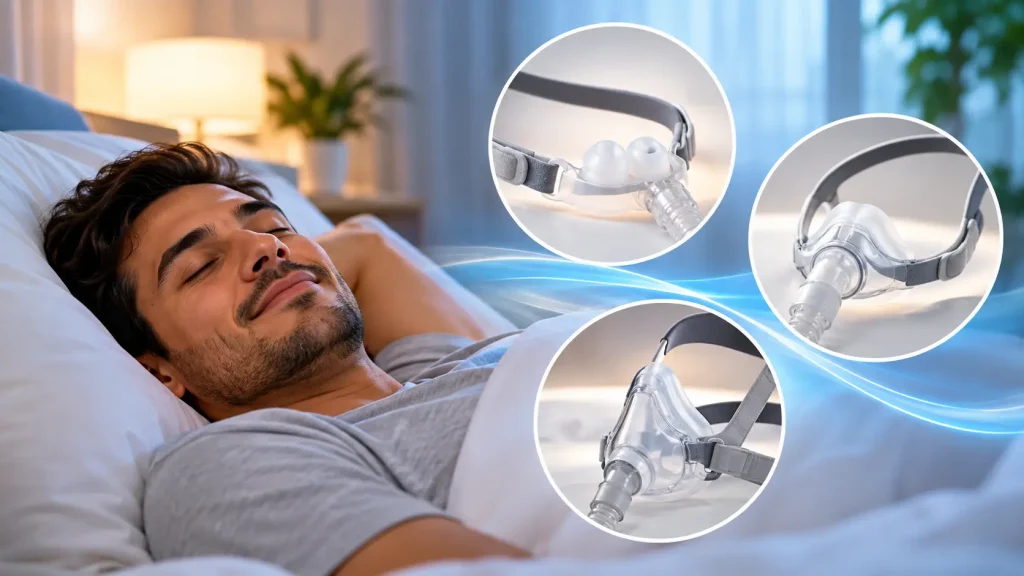
Nasal pillow masks are the top choice for many people with CPAP mask claustrophobia because they touch only the nostril entrance. The small silicone inserts leave your nose bridge, cheeks, and eyes completely uncovered, which helps you feel less confined and keeps your field of vision clear for reading or watching TV.
Popular options include the ResMed AirFit P10 (front hose) and P30i (top-of-head hose). The P10 is ultra-compact — ideal for stomach sleepers or travelers who want the smallest footprint. The P30i routes the tube overhead, which reduces drag across the pillow and face, helpful if you toss and turn or feel trapped by a hose pulling at the mask.
Nasal pillows work best for consistent nose breathers. If your mouth tends to fall open, a chin strap or a different style may help. At very high pressures, some users feel nasal irritation, so fit and pressure tolerance matter.
Under-Nose Nasal Masks: Open-Face Options
Under-nose nasal masks sit below the nostrils instead of covering the whole nose, creating an open-face feel with slightly more coverage than pillows. This design keeps the bridge free for glasses and reduces the “trapped” sensation while still delivering stable nasal therapy.
ResMed AirFit N30 (front hose) and N30i (top hose) are leading examples. They use a low-profile cushion that seals under the nose, leaving most of the face exposed. Many users report less anxiety compared with traditional triangular nasal masks, simply because there’s less material on the face and a clearer line of sight.
These suit side sleepers, active sleepers, and anyone who wants more openness than a full nasal mask but more structure than pillows. They still require reliable nose breathing — heavy mouth leak can reduce effectiveness unless managed with a chin strap.
Minimal-Contact Full Face and Hybrid Masks (When Mouth Coverage Is Needed)
If you must have mouth coverage due to mouth breathing or congestion, minimal-contact full face and hybrid designs still reduce claustrophobia compared with traditional full face masks. These avoid the nose bridge and use low-profile cushions under the nose while sealing the mouth, which feels less confining than covering the entire nose and mouth.
Examples include the ResMed AirFit F30/F30i (minimal-contact full face) and AirFit X30i (oral-nasal hybrid). The F30i and X30i route the hose overhead, further reducing the “closed-in” feeling by keeping tubing off the face and pillow. They’re not as open as pillows or under-nose nasal masks, but they’re often the best compromise for mouth breathers who struggle with anxiety in traditional full face designs.
How to Choose a CPAP Mask If You Feel Confined
Work through these questions in order — they’ll narrow your options fast:
- Do you breathe through your nose consistently, or does your mouth fall open at night? Nose breathers can go straight to pillows or under-nose nasal. Mouth breathers need a minimal-contact full face or hybrid, or a chin strap paired with a nasal design.
- Do you sleep on your side or move a lot? Prioritize a top-of-head “i” model (P30i, N30i, F30i, X30i) to cut hose drag.
- How severe is your anxiety with anything on your face? Start with the least contact you can tolerate — pillows first, under-nose second, minimal-contact full face last.
- Do you wear glasses or read/watch TV before sleep? Pillows and under-nose nasal masks leave the clearest field of vision.
- What pressure are you prescribed? Higher pressures are generally more stable in full face or hybrid designs; pillows can feel less secure at very high settings.
Matching Mask Style to Your Breathing, Sleep Position, and Comfort
Mouth breather, needs coverage without heavy confinement — A minimal-contact full face or hybrid mask is usually most effective, since it seals both airways while reducing facial coverage. The F30/F30i and X30i are strong options, with the “i” versions offering overhead hose routing for less drag and a more open feel.
Side sleeper, wants minimal hose drag and a stable seal — Masks with top-of-head hose connections reduce drag and leaks when turning. The P30i, N30i, and F30i are built for exactly this, and their low-profile cushions catch less on the pillow, helping you maintain a secure seal without over-tightening straps.
Current AirFit mask feels uncomfortable or triggers anxiety — Consider switching to a style with less facial contact and a different hose route. Moving from a traditional nasal mask (N20) to an under-nose nasal (N30/N30i), or from a standard full face (F20) to a minimal-contact full face (F30/F30i), can significantly reduce the closed-in feeling. Testing both cushion materials — silicone AirFit vs. memory foam AirTouch — on the same frame can also help with sensitive skin or pressure marks. For the full material comparison, see our AirFit vs AirTouch guide.
First-time buyer wants one side-by-side reference — Focus on three categories: nasal pillows (P10, P30i), under-nose nasal (N30, N30i), and minimal-contact full face/hybrid (F30/F30i, X30i). Pillows offer the lightest feel, under-nose nasal adds a bit more structure while staying open, and minimal-contact full face/hybrid provides mouth coverage with reduced confinement. If you want the complete model-by-model rundown across the whole AirFit line, our ResMed AirFit masks compared guide covers every option.
Which Brands Make Claustrophobia-Friendly Masks?
ResMed’s AirFit line is the most widely prescribed option for minimal-contact therapy, but it’s not the only one worth knowing about. Philips DreamWear is another well-known nasal and full face line built around the same idea — an under-the-nose cushion with the hose connecting near the forehead instead of the face, which many claustrophobic users find just as open as ResMed’s “i” models. Ask your sleep specialist or supplier which brands they carry, since fit varies by face shape more than by brand name.
What Do These Masks Cost, and Can You Return One That Doesn’t Work?
Two of the biggest hesitations for anyone with claustrophobia buying a mask sight-unseen: price, and “what if I can’t stand it once it arrives.”
Cost varies by style — nasal pillows are typically the least expensive of the group, full face and hybrid designs cost more, and exact pricing depends on current promotions and insurance coverage. Rather than quote a number that goes stale, check current pricing here before you decide.
Trial and return policies matter even more for claustrophobia specifically, since comfort is so personal and hard to judge from a photo. Always confirm the return window and any restocking terms before ordering, especially if you’re switching styles for the first time to manage anxiety — a real trial period is what lets you test minimal-contact options without the pressure of a final decision on the first try.
If you’re weighing your options and want a second opinion before buying, our team can walk you through current stock, pricing, and return terms so you’re not guessing.
Keeping Your Mask Comfortable Night After Night
A minimal-contact mask only stays comfortable if it’s cared for properly. Wash the cushion and frame with mild soap and warm water daily, rinse well, and let it air-dry fully before reassembly — buildup on the cushion is a common, overlooked cause of skin irritation and a worse seal over time. Check your CPAP hose regularly for cracks or stiffness, since a compromised hose can create leaks that undermine an otherwise good mask fit. And keep your CPAP machine’s filter clean, since a clogged filter can affect airflow and, indirectly, how the pressure feels at the mask.
If you’re not sure whether your mask style or your breathing pattern is causing your therapy to feel less effective — including ongoing snoring despite treatment — reviewing the mask styles side by side often reveals a simple fix. Our guide to full face vs. nasal vs. nasal pillow masks breaks down which style fits which breathing pattern in more depth.
FAQ's
Will I still get effective CPAP therapy with a minimal-contact mask?
Yes. Minimal-contact masks like nasal pillows and under-nose nasal designs deliver the same prescribed pressure and therapy as any other mask style, as long as the seal is good and your breathing route matches the mask (mostly nose breathing for these styles). Less material on the face doesn’t mean less effective treatment.
How quickly do most users adapt to minimal-contact interfaces?
Most people notice reduced anxiety within one to two weeks of consistent, gradual use, especially when combined with daytime desensitization and breathing techniques. Full comfort and habit formation can take three to four weeks; going slowly generally speeds up adaptation rather than slowing it down.
What are all the current ResMed AirFit mask models?
Current ResMed AirFit models include nasal pillows (P10, P30i), nasal masks (N20, N30, N30i), full face masks (F20, F30, F30i, F40), and the oral-nasal hybrid (X30i). The “i” suffix means top-of-head hose routing for reduced drag, which many people with claustrophobia find less confining.
Which AirFit mask is quietest?
Nasal pillows and under-nose nasal designs (P10, P30i, N30, N30i) tend to run quietest due to their smaller cushions and minimal contact. Full face masks like F20 and F30/F30i are also engineered for low noise, though larger surface area can slightly amplify airflow sound. Top-of-head “i” models often feel quieter thanks to reduced hose drag and vibration.
Which AirFit mask is best for side sleepers?
Masks with top-of-head hose routing and low-profile cushions — P30i, N30i, F30i, and F40 — work best for side sleepers, since they minimize hose drag and reduce leaks and pressure marks when turning.
Are AirFit cushions interchangeable across different models?
No. AirFit cushions are designed for specific frames — a P10 cushion only fits a P10 frame, and an N20 cushion only fits an N20 frame. Within the same model line, AirFit (silicone) and AirTouch (memory foam) cushions are often cross-compatible, letting you test materials without buying a new mask, but cushions don’t swap between different model families.
How much do claustrophobia-friendly CPAP masks cost?
Cost varies by style — nasal pillows are typically the least expensive minimal-contact option, while full face and hybrid designs cost more due to their larger cushion and frame. Insurance coverage and current promotions also affect the price, so check current listings for exact numbers rather than relying on a fixed figure.
Can I return a CPAP mask if it doesn’t work for my claustrophobia?
Most suppliers offer a trial or return window, but terms vary, so confirm the specific policy before ordering — this matters more for claustrophobia than for most other reasons to switch masks, since comfort is hard to judge without actually wearing it. Ask specifically about restocking fees and how long you have to decide.
Are there other brands besides ResMed for claustrophobia-friendly masks?
Yes. Philips DreamWear is another well-known line built around the same minimal-contact idea, with cushions that sit under the nose and hose routing away from the face. Brand matters less than finding the right fit for your face shape, so it’s worth trying more than one if the first doesn’t feel right.
Which AirFit mask is best for mouth breathers?
Full face or hybrid designs that seal both the nose and mouth — F20, F30, F30i, F40, and X30i — work best for mouth breathers. Minimal-contact options like F30/F30i and the X30i hybrid reduce facial coverage while still sealing both airways effectively.
Where to Buy CPAP Masks for Claustrophobia
If you’re searching for the best CPAP mask for claustrophobia, cpapRX carries a curated selection of minimal-contact masks, accessories, and replacement parts from ResMed and other leading brands, plus support from real people if you’re not sure which style fits.
Browse minimal-contact CPAP masks to compare pillows, under-nose nasal, and minimal-contact full face styles, and find one that keeps therapy effective without the anxiety.
Resources & Further Reading
- American Academy of Sleep Medicine
- National Heart, Lung, and Blood Institute — Sleep Apnea Treatment
- Adapting to CPAP — Overcoming CPAP Claustrophobia and Anxiety
Medical Disclaimer: This article is for general education only and is not medical advice. CPAP masks are part of prescription therapy — your pressure settings and mask fit should be confirmed with a qualified sleep specialist. If claustrophobia or anxiety around your mask feels severe or unmanageable, talk to your provider about additional support options.