Table of Contents
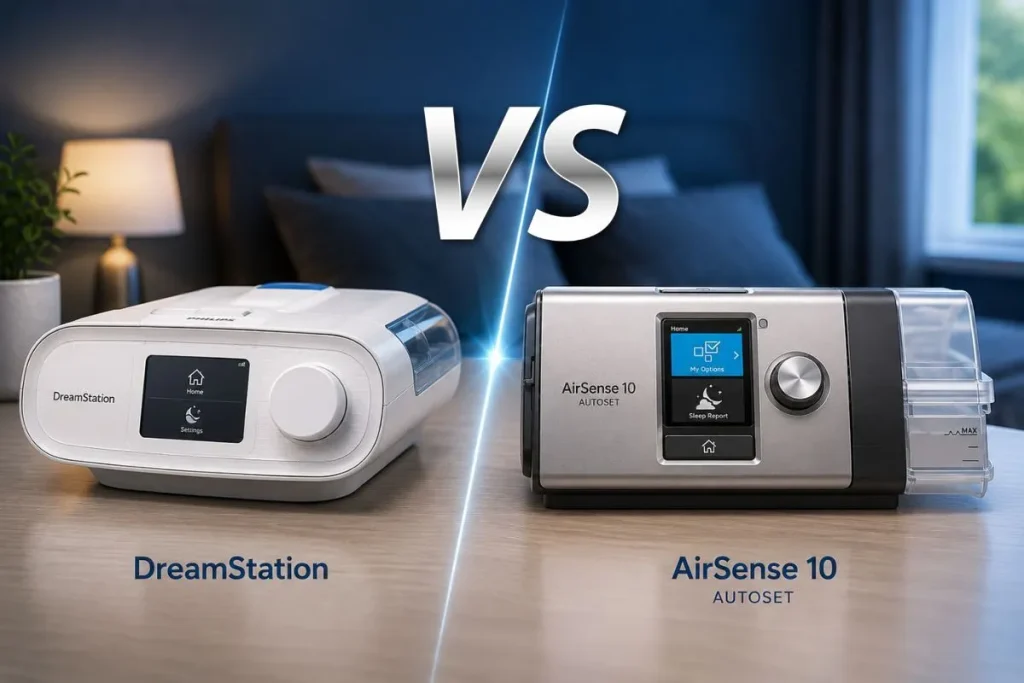
Comparing dreamstation vs airsense 10 really comes down to one clear pattern: the AirSense 10 stands out as the stronger pick for anyone buying new today, while the DreamStation mostly makes sense for people who already own one and get along with it fine. The biggest gaps between the two show up in recall status, app and data support, humidification, and how much backup support you get long-term.
What Each Machine Actually Is
This comparison covers two widely known Auto CPAP machines: the Philips DreamStation and the ResMed AirSense 10. Both offered automatic pressure adjustment, comfort features, and therapy tracking, which made them two of the most commonly prescribed machines for years.
If you’re new to any of this, our guide to continuous positive airway pressure therapy explains what CPAP does, and our full CPAP machine buyer’s guide walks through every machine type before you narrow down to two specific models.
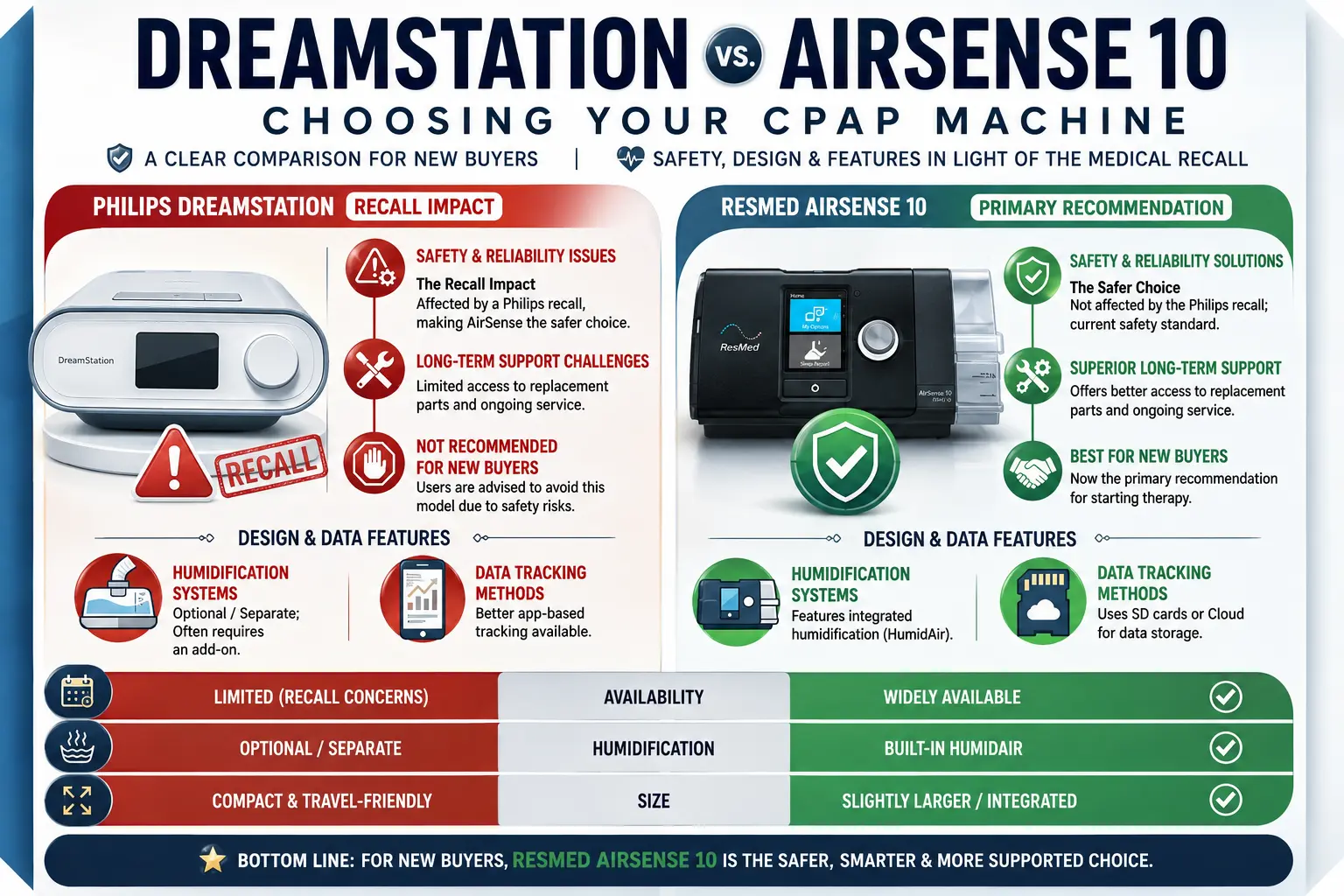
The key point in any philips dreamstation vs resmed airsense 10 comparison: the DreamStation line was affected by a Philips medical device recall, searchable on FDA’s recalls database, while the AirSense 10 remains the safer, more practical option for most buyers today. That one fact changes the entire buying decision more than any comfort feature does.
Side-by-Side: Where the Two Machines Actually Differ
The debate usually comes down to three things: design, data access, and support. The DreamStation is lighter and more compact. The AirSense 10 is known for its integrated humidifier and wide user familiarity.
Feature | DreamStation | AirSense 10 |
Availability | Limited due to recall concerns | Still widely used and available |
Humidification | Optional in some versions | Built-in HumidAir humidification |
Data tracking | App-based in some models | Card-to-Cloud on newer versions, SD card tracking |
Size | More compact, travel-friendly | Slightly larger, still portable |
Noise | Similar range | Similar range |
Which Is Better — For Most Buyers, It’s Clear
For most people shopping right now, the AirSense 10 is the more dependable pick. Clinicians and buyers largely shifted their view of Philips devices after the recall, which makes ResMed the safer recommendation today.
The DreamStation can still make sense for someone who already owns one and tolerates it well. For a fresh purchase, though, long-term support and peace of mind matter just as much as comfort features — and that favors the AirSense 10.
Data and Apps — Where DreamStation Still Wins on Paper
For anyone who cares about therapy reports, this is one of the biggest deciding factors. The AirSense 10 Card-to-Cloud version relies more on SD card data, while DreamStation systems have offered Bluetooth or app-based tracking in some models.
Better app support might sound like a point in DreamStation’s favor at first. In real-world use, though, most buyers care more about reliable device support, available replacement parts, and easier long-term ownership — and that still favors ResMed for the majority of users.
What to Do If Your DME Offers Both
If a DME provider offers both options, the safest move is asking three specific questions: which unit is newer, what humidifier setup is included, and how service support works after purchase. That matters more than brand loyalty or online arguments.
If you’re switching after the recall, the AirSense 10 is the simpler path since it’s stayed the more trusted recommendation. Struggling with adjustment after switching machines? Our guide to CPAP machine side effects covers exactly what’s normal in the first few weeks and how to fix common discomfort.
FAQ's
Which CPAP machine is better, DreamStation or AirSense 10?
The AirSense 10 is better for most new buyers. It’s the safer overall pick because the DreamStation line was affected by a Philips recall, while the AirSense 10 has kept strong support and a familiar setup.
If a DME offers both DreamStation and AirSense 10, how should I choose?
Choose based on support, humidification, and data handling rather than brand loyalty. The DreamStation is lighter, but the AirSense 10 includes built-in humidification and is the more stable long-term choice for most people.
Should I switch from Philips to ResMed after the recall?
Yes, switching to ResMed is a reasonable decision after the Philips recall. The recall changed how many patients and clinicians view the brand, while the AirSense 10 has stayed the more trusted recommendation for new buyers.
How do I know which CPAP machine reviews to trust online?
Ignore extreme opinions and compare the basics instead. Reviews often focus on personal comfort or travel preference, but reliability, humidification, and ongoing support matter more — and the AirSense 10 usually has the edge on those three.
Does DreamStation or AirSense 10 have better app and data support?
DreamStation has historically been stronger for app-based tracking in some models, while the AirSense 10 Card-to-Cloud leans more on SD card data. For most users, though, the better overall ownership experience still comes from the AirSense 10 ecosystem.
Conclusion
The dreamstation vs airsense 10 decision usually isn’t close for a fresh purchase: the AirSense 10 wins on safety, availability, and long-term support, while the DreamStation only makes sense for existing owners who already tolerate it well. Focus on comfort, support, and data access — in that order of what actually affects your daily therapy — and the right choice becomes obvious.
Ready to Choose Your CPAP Machine?
Browse Auto CPAP machines to compare current options, including the AirSense 10, with free shipping over $100 and a 60-night trial.
Resources & Further Reading
Medical Disclaimer
Disclaimer: This content is for informational purposes only and is not medical advice. Always consult a qualified healthcare provider or your prescribing physician before switching CPAP equipment.