Table of Contents
Continuous positive airway pressure therapy is a treatment that keeps your airway open with steady air pressure during sleep, helping prevent breathing pauses, reduce snoring, and improve sleep quality for people with sleep apnea.
Overview
This treatment is usually called CPAP. It uses a machine, a tube, and a mask to deliver a constant flow of air that keeps the throat open while you sleep — which is why it remains the most common treatment for obstructive sleep apnea.
Many people who search for how does CPAP therapy work for sleep apnea are picturing something complicated, but the actual mechanism is simple: pressurized air acts like a gentle splint, holding the airway open so it can’t collapse. The machine doesn’t force you to breathe — it just removes the blockage that was interrupting your breathing in the first place.
CPAP isn’t a cure, and it doesn’t need to be marketed as one to be worth using. What it reliably does is reduce breathing pauses while you’re wearing it — which for most patients translates into real, noticeable changes in how they feel and function the next day.
If you’re still working out whether your symptoms point to sleep apnea in the first place, our sleep apnea complete guide covers the full picture — symptoms, causes, diagnosis, and how CPAP fits alongside other treatment options.
How It Works — The Simple Mechanics Behind the Machine
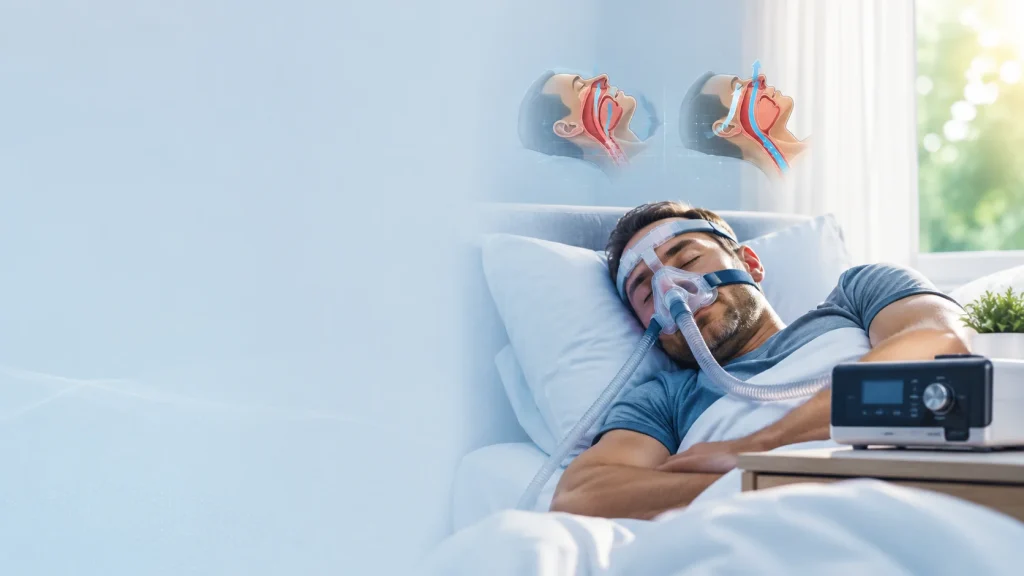
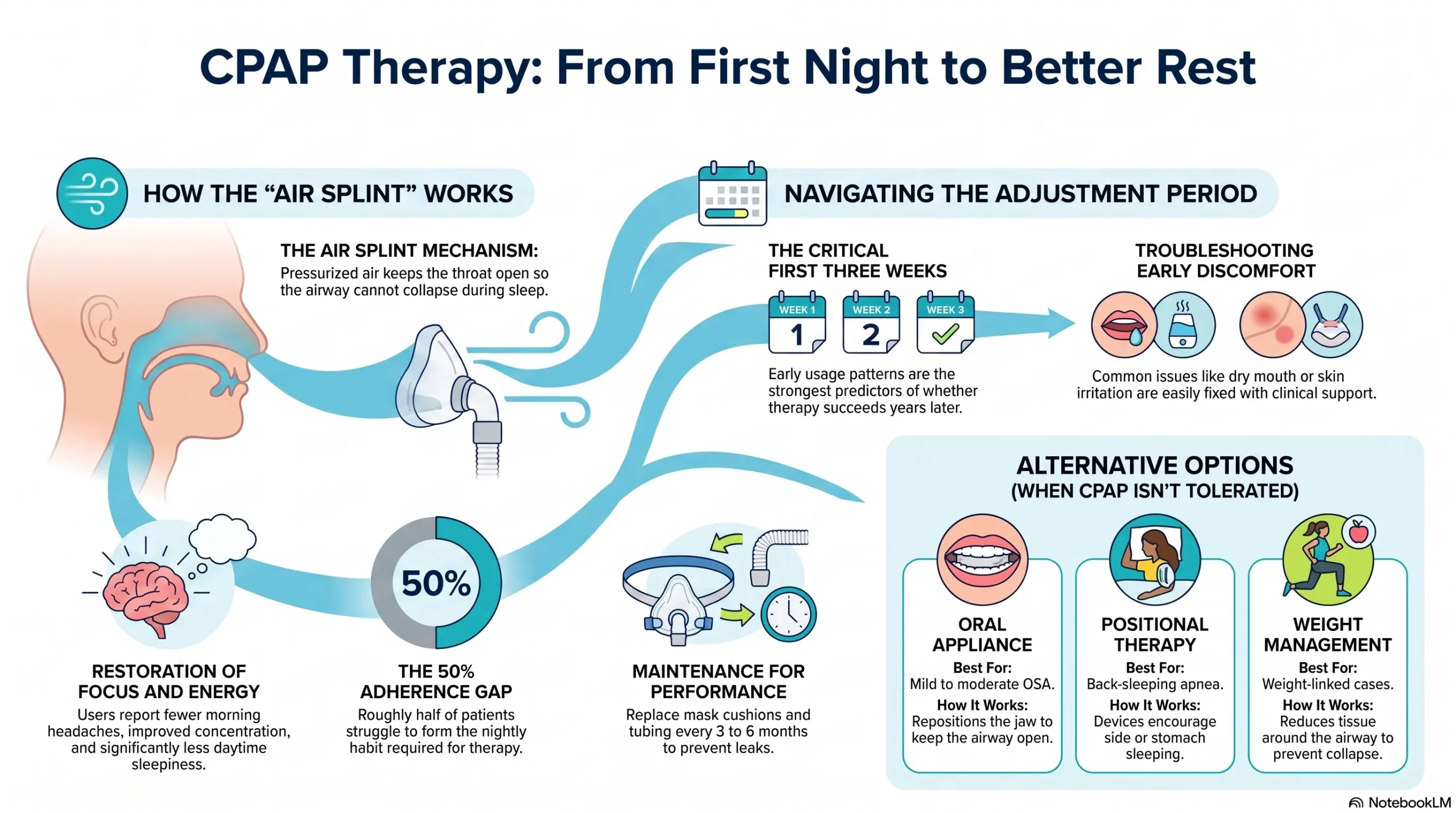
CPAP works by pushing pressurized air through the mask into the upper airway. That air pressure acts like a splint, which stops the airway from narrowing or collapsing during sleep.
This matters because airway collapse is the main reason many people with sleep apnea snore, gasp, or wake up unrefreshed. By keeping the airway open, CPAP improves airflow and helps restore more stable, uninterrupted sleep.
If you’re at the point of choosing a device, our complete CPAP machine buying guide breaks down the types, features, and costs to look for.
Most modern machines also record usage data automatically, which is why nightly consistency shows up so clearly to both patients and clinicians — it makes it easy to see whether the treatment is actually being used enough to work, and to adjust the mask or pressure if it isn’t.
That consistency only counts, though, if the machine actually has power to run. A blackout, a camping trip, or a long flight can interrupt therapy just as easily as a bad mask fit — our guide on why CPAP batteries are necessary covers exactly when backup power matters and how to plan for it.
Benefits for Patients — What Actually Changes Once You Start
Think of this section as a CPAP therapy benefits new patient guide — because for someone brand new to treatment, a benefits list means far less until you understand where those benefits actually come from: nightly consistency. Many people report less daytime sleepiness, improved concentration, fewer morning headaches, and better overall energy when they use CPAP consistently.
Consistency isn’t a minor detail — it’s the difference between therapy working and therapy sitting unused in a closet. A 2021 systematic review found CPAP adherence rates commonly fall around 50% across studied populations. (CPAP adherence systematic review, 2021) That statistic matters because it means roughly half of prescribed patients aren’t using their machine enough to get the benefit — not because the treatment failed them, but because the habit never fully formed.
There are safety benefits too. Since untreated sleep apnea affects alertness and reaction time, effective treatment can meaningfully reduce driving risk and other problems caused by daytime tiredness.
Starting Treatment — What the First Few Weeks Really Look Like
If you’re searching starting CPAP therapy what to expect, here’s the honest version: a sleep study result review, a mask fitting, and a short adjustment period at home are the three things that happen first. Many patients need time to get used to wearing the mask and sleeping with pressurized air, and that’s normal, not a sign of failure.
Common early issues include dry mouth, mask discomfort, and the feeling that the airflow is strange at first. These problems are common for new users and are often improved by changing the mask style, fit, or pressure settings with clinical support.
The first few weeks genuinely matter more than people expect. Research tracking long-term CPAP adherence found that early compliance patterns are a strong predictor of whether someone stays on therapy years later — in other words, how the first weeks go often shapes the outcome. (5-year APAP adherence study) That’s exactly why getting clear setup guidance and fast follow-up in those early weeks is worth prioritizing, not skipping.
Downsides and Side Effects — What’s Normal and What Isn’t
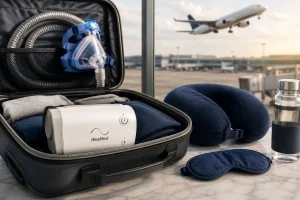
The first few nights on CPAP can be genuinely difficult. Many people initially find the mask uncomfortable, claustrophobic, or even a little embarrassing — and it can be harder to fall asleep at first. It can also be cumbersome to travel with the equipment. None of this means the treatment isn’t working; it usually just means you’re still in the adjustment window.
Common side effects include congestion, a runny nose, dry mouth, and occasional nosebleeds — most of these ease with proper humidification settings. Masks can also cause skin irritation or redness, which correct sizing and adequate padding usually prevent. Less commonly, some people experience abdominal bloating from swallowed air, which easing the pressure setting typically resolves.
To keep side effects manageable long-term, mask cushions and tubing should be cleaned regularly and replaced roughly every 3 to 6 months — worn-out parts are a common, overlooked cause of leaks and skin irritation that people mistake for a treatment problem.
Are There Alternatives to CPAP Therapy?
Yes. CPAP is the most common and most studied treatment for obstructive sleep apnea, but it isn’t the only option — and knowing the alternatives helps you have a more informed conversation with your provider if CPAP isn’t the right fit for you.
Alternative | Best For | How It Works |
Oral appliance therapy | Mild to moderate OSA | A dentist-fitted device repositions the jaw to keep the airway open |
Positional therapy | Apnea that’s worse on the back | Devices or techniques encourage side or stomach sleeping |
Weight management | Cases linked to excess weight | Reduces tissue around the airway that contributes to collapse |
Surgery | Structural blockages or CPAP intolerance | Procedures address specific anatomical causes of airway collapse |
Weight management and positional strategies specifically are covered in more depth in our lifestyle changes guide, including the actual research behind how much difference each one makes.
Who Should Not Use CPAP?
CPAP isn’t appropriate for everyone. It requires a patient who is breathing on their own — people with a poor respiratory drive typically need a different form of ventilation support instead. There are also situations where a provider may avoid or delay CPAP, including:
- Reduced consciousness or an inability to protect the airway
- Unstable cardiorespiratory status
- Recent facial trauma, burns, or facial/esophageal/gastric surgery
- Certain lung conditions, such as a pneumothorax with air leakage
- Significant anxiety or inability to tolerate the mask despite support
None of this is something to self-assess — it’s exactly why a proper sleep evaluation and physician review come before treatment starts, not after.
When Should You Call Your Doctor?
Reach out to your provider if you’re having ongoing difficulty tolerating the mask, if side effects aren’t improving after a few weeks, or if you want to try a different mask style — adjustment problems are common and usually fixable, not a sign to quit quietly. You’ll also need to check in periodically to renew your prescription for new masks and tubing.
Who It Helps Most
CPAP is most commonly used for obstructive sleep apnea, though providers sometimes prescribe it for other sleep-related breathing problems. It’s especially useful when symptoms include loud snoring, gasping, choking, or repeated pauses in breathing during sleep — and it’s typically the first treatment discussed after a sleep apnea diagnosis because it’s the most widely studied option available.
Common Mistakes
- Expecting it to feel perfect on night one. Most people need an adjustment period, and needing time doesn’t mean the treatment is failing.
- Using it inconsistently and expecting full results. Like most treatment routines, CPAP works best when it becomes a genuine nightly habit rather than an occasional tool.
- Waiting too long to report discomfort. Small issues like a poor mask seal or dry mouth are usually easy to fix once they’re mentioned early instead of endured for weeks.
So, What Is Continuous Positive Airway Pressure Therapy, in Practice?
Strip away the equipment and the clinical language, and continuous positive airway pressure therapy comes down to one simple job: keeping your airway open long enough, night after night, for your body to actually rest. Everything else — the mask style, the pressure setting, the data tracking — exists to make that one job easier to sustain.
FAQ's
What is continuous positive airway pressure therapy, and who is it actually for?
It’s a treatment that uses steady air pressure to keep your airway open while you sleep. It’s made for people who’ve been diagnosed with sleep apnea, not just people who snore sometimes. A sleep test is what actually confirms if you need it.
How does CPAP therapy work for sleep apnea if you also have a heart condition?
It works the same way for everyone — steady air keeps your airway open all night. For someone with heart problems, this matters even more, since each breathing pause puts extra strain on the heart. Ask your doctor to check your blood pressure a few months after starting.
New patients often get a CPAP therapy benefits guide — how soon do those benefits actually show up?
Most people feel more awake within two weeks of nightly use. Full benefits usually build over the first month or two, not overnight. Give it a fair month before deciding whether it’s working.
Starting CPAP therapy — what should truck drivers expect before a DOT exam?
Expect a short adjustment period, then usage data your medical examiner can check directly. Most drivers keep their certification once therapy is properly underway. Start early so you have a solid track record by exam day, not a last-minute scramble.
Will CPAP therapy actually stop my partner's snoring, or just make it quieter?
For most people, the loud snoring stops almost completely once the airway stays open. There might be a little mask noise left, but nothing like before. Most partners notice the difference in the first week.
Can frequent travelers realistically stay consistent with CPAP therapy?
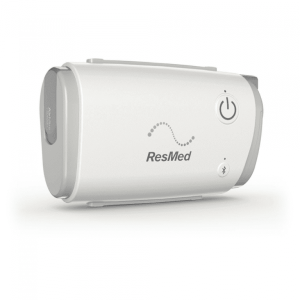
Yes, with the right gear — small travel machines are made exactly for this. The real risk isn’t the trip itself, it’s skipping nights because packing felt like too much effort. Once a travel machine is just part of your bag, staying consistent stops being a choice you have to make each time.
I already tried CPAP therapy once and quit — is it worth trying again?
Usually, yes. Most people who quit had the wrong mask or pressure setting, not a treatment that truly failed them. A refit or pressure change fixes most early complaints. It’s worth one more try with the right support before giving up for good.
Why do some people still feel exhausted even after weeks of using CPAP therapy?
It’s usually a mask leak, the wrong pressure, or another issue happening alongside your sleep apnea — not a sign the treatment failed. A quick check of your machine’s data with your provider almost always finds the cause. Real improvement should show up within a month once it’s set up right.
Conclusion
Continuous positive airway pressure therapy isn’t complicated once you see past the equipment: it keeps your airway open so your body can finally get the sleep it’s been missing. Whether you’re a truck driver protecting your DOT certification, a partner tired of the snoring, or someone starting over after giving up once before, the mechanism and the payoff stay the same — consistent nightly use is what turns this from a machine into real, measurable rest.
Ready to Start CPAP Therapy?
If you haven’t been tested yet, an at-home sleep test is the fastest way to find out whether CPAP therapy is right for you — results reviewed by a board-certified sleep physician, no lab visit required. If you’re already diagnosed and just need the right equipment to make nightly use easier, cpapRX carries a full range of CPAP machines and masks built for consistent, comfortable therapy.
Resources & Further Reading
- Cleveland Clinic: CPAP Machine — Benefits, Risks, and Alternatives
- NCBI Bookshelf: Continuous Positive Airway Pressure (Clinical Reference)
- ResMed: What Is CPAP?
- MedlinePlus: CPAP
- NHLBI: CPAP
- NHLBI: Sleep Apnea Treatment
- NHS: Continuous Positive Airway Pressure (CPAP) Treatment
- University Hospitals Birmingham: Trial of CPAP Therapy
- PubMed: CPAP Therapy for Treating Sleepiness in OSA
- PubMed: CPAP Adherence Systematic Review, 2021
- PubMed: 5-Year APAP Adherence — Do First Impressions Matter?
Medical Disclaimer
Disclaimer: This content is for informational purposes only and is not medical advice. Always consult a qualified healthcare provider before starting or adjusting any sleep apnea treatment.