Table of Contents
A CPAP machine is the most widely prescribed treatment for obstructive sleep apnea. It works by pushing a steady stream of pressurized air through a mask to keep your airway open while you sleep. In the United States, every CPAP machine requires a prescription, so the buying process starts with a diagnosis — usually a home sleep test or an in-lab study.
This CPAP machine buying guide covers the three decisions that actually matter: machine type (fixed CPAP vs. auto-adjusting APAP), comfort features (humidification, pressure relief, noise), and budget — so you can choose with confidence.
Short on time? Talk to a cpapRX sleep coach first — a two-minute conversation usually saves weeks of guessing. Call 833-216-2727 or book a free sleep coach session.
How does a CPAP machine work?
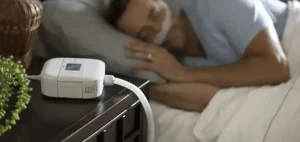
CPAP stands for Continuous Positive Airway Pressure. The machine draws in room air, pressurizes it, and delivers it through a hose and mask. That gentle, constant pressure acts like an “air splint,” holding the soft tissue at the back of your throat open so it can’t collapse and block your breathing.
When the airway stays open, the pauses in breathing (apneas) and the drops in oxygen that come with untreated sleep apnea are reduced. Untreated obstructive sleep apnea is associated with daytime fatigue, loud snoring, morning headaches, and higher long-term health risks, which is why consistent therapy matters more than the specific brand you buy.
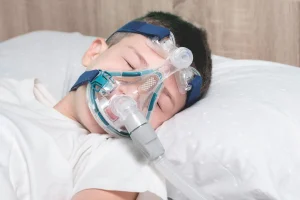
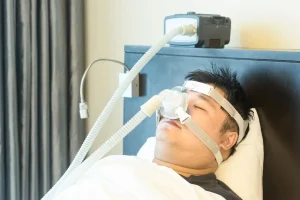
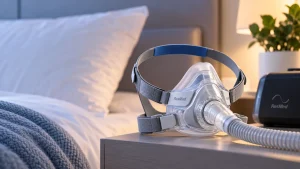
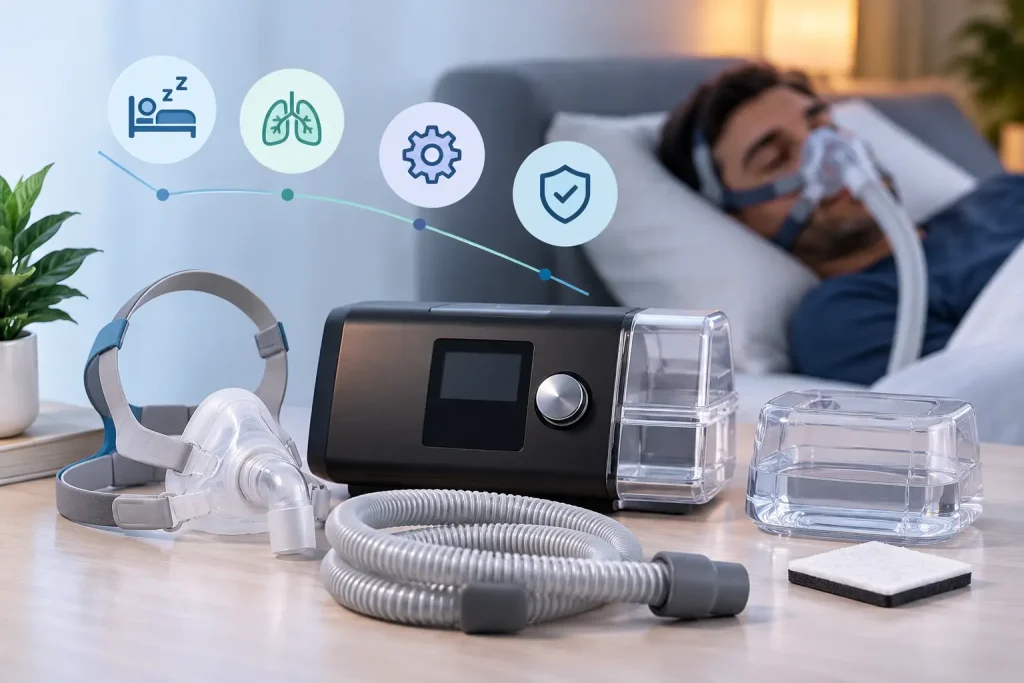
A complete CPAP setup has four parts: the machine (the motor and pressure system), the humidifier (adds moisture so the air isn’t dry), the tubing, and the mask. Each part is replaceable, and each affects comfort.
Go deeper: how does a CPAP machine work and continuous positive airway pressure therapy explained.
Types of CPAP machines
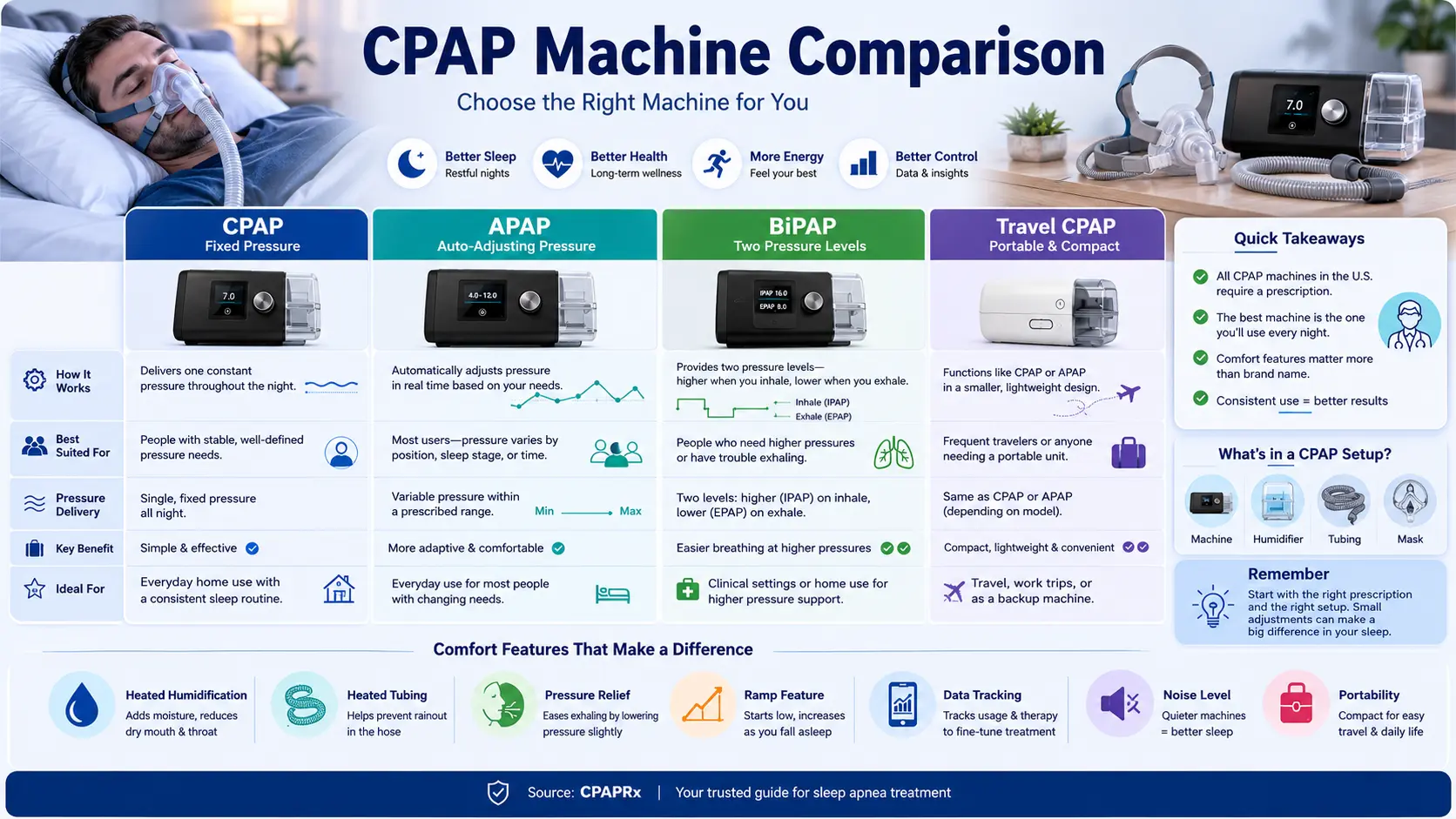
Not every machine delivers pressure the same way. Choosing the right type matters more than the brand name on the box. Here are the four you’ll actually encounter:
| Type | How it delivers pressure | Best suited for |
|---|---|---|
| Fixed CPAP | One constant pressure, set by your prescription | Stable, well-defined pressure needs |
| APAP (Auto-CPAP) | Automatically adjusts pressure breath by breath within a range | Most people; needs that vary by position or sleep stage |
| BiPAP / BiLevel | Two pressures — higher on inhale, lower on exhale | Higher pressure needs, or trouble exhaling against pressure |
| Travel CPAP | Compact, lightweight version of a fixed or auto machine | Frequent travelers, or a portable second unit |
Fixed CPAP is the original design and still works well when a single pressure is right for you. APAP is the most common choice today because it adapts on its own, which many people find more comfortable. BiPAP is a step up usually reserved for specific clinical needs — your provider decides if you need one. Travel CPAP trades some features (like a large water chamber) for portability.
CPAP machine buying guide: what actually matters
Once you know your machine type, the features below are where comfort and long-term use are won or lost. This is the part of the CPAP machine buying guide most people skip — and then regret.
Auto-adjusting vs. fixed pressure. Auto (APAP) machines respond to your breathing in real time. If you’re between options and your prescription allows it, auto tends to be the more forgiving choice.
Integrated heated humidifier. Dry, cold air is the top comfort complaint. A built-in heated humidifier makes a noticeable difference, especially in winter or dry climates.
Heated (climate-control) tubing. Reduces “rainout” — the condensation that collects in the hose and can spit water toward your face. Worth it if your bedroom runs cool.
Pressure relief on exhale. Marketed as EPR, Flex, or similar depending on brand. It drops the pressure slightly when you breathe out, so exhaling feels less like fighting the machine.
Ramp. Starts you at a low, comfortable pressure and slowly builds to your prescribed level, which helps you fall asleep.
Data tracking. Modern machines log your usage and therapy data to an app. This helps you fine-tune comfort, and many insurers require a minimum usage record to keep covering your equipment.
Noise level. Today’s machines are quiet — roughly 25–30 dBA, about the level of a whisper. If a quiet bedroom is non-negotiable, check the spec.
Mask compatibility and portability. The machine is only half the system. The mask makes or breaks comfort, and if you travel, size and weight belong on your checklist.
Not sure which features you actually need? A cpapRX coach will match features to your prescription and sleep habits — no upsell. Start here.
Best CPAP machines in 2026
The “best” CPAP machine is the one you’ll wear every night, and that depends on your prescription, your face, and your sleep style — not a leaderboard. That said, a few categories help most buyers narrow the field:
- Best all-around auto machine — a full-featured APAP with heated humidification, pressure relief, and app-based tracking covers what most people need.
- Best for travel — a compact unit like the ResMed AirMini trades a large humidifier for a bag-friendly footprint.
- Best for comparing head-to-head — the two names you’ll research most are ResMed’s AirSense line and Philips Respironics’ DreamStation line.
Because specs and pricing change through the year, confirm current models and availability before you buy rather than trusting a static list.
Full breakdowns: best CPAP machines 2026 and the side-by-side DreamStation vs. AirSense 10 comparison.
How much does a CPAP machine cost?
A CPAP machine typically runs from a few hundred dollars to around a thousand for the machine alone, with auto-adjusting (APAP) models usually costing more than fixed CPAP. A full setup — machine, humidifier, mask, and tubing — costs more than the machine by itself.
Insurance changes the math significantly. With coverage, your out-of-pocket amount depends on your plan, your deductible, and whether the supplier is in-network. Without insurance, buying cash-pay is straightforward but you’ll pay the full setup cost upfront.
Ongoing costs matter too: masks, cushions, filters, and tubing are replaced on a schedule, so the real cost of therapy is the setup plus routine supplies over time.
Full pricing breakdown, insurance vs. cash-pay, and replacement-supply costs: how much does a CPAP machine cost.
Do you need a prescription to buy a CPAP machine?
Yes. In the United States, a CPAP machine is an FDA-regulated medical device and requires a valid prescription. That prescription comes from a diagnosis, which usually means a sleep study — either an at-home sleep test or an in-lab evaluation.
This is the easiest place to start, not the hardest. cpapRX makes the path simple: a board-certified sleep medicine specialist, Dr. Danny Yaish, oversees care, and a home sleep test can often be arranged without a trip to a lab. Once you’re diagnosed and have a prescription, choosing the right machine is the fun part.
Ready to get diagnosed? Book your consult or call 833-216-2727.
CPAP side effects and how to manage them
Most CPAP side effects are minor and fixable — they’re usually a fit or setup issue, not a reason to quit. Common ones include dry mouth or nose, nasal congestion, mask marks on the face, swallowing air (aerophagia), a feeling of claustrophobia, and dry eyes from mask leaks.
The good news: nearly all of these respond to small adjustments — turning on the humidifier, resizing or restyling the mask, using the ramp feature, or switching cushion type. The people who succeed with CPAP are rarely the ones who never had side effects; they’re the ones who got the setup dialed in early.
Full troubleshooting guide: CPAP machine side effects and fixes.
CPAP machine recalls and safety
Device recalls happen, and it’s smart to check before you buy. The most widely known example is the Philips Respironics recall affecting certain CPAP and BiLevel devices, tied to concerns about the sound-abatement foam used inside some models.
Before purchasing any machine — new or used — confirm the specific model and serial number are not part of an active recall, and buy from a supplier that only sells current, unaffected devices.
What was recalled, how to check your device, and safe alternatives: CPAP machine recall guide.
FAQ's
How to choose a CPAP machine for sleep apnea treatment
Start with your prescription, which sets your pressure and machine type, then compare comfort features like humidification, pressure relief, and noise. Match those to how you sleep and travel. For beginners, a cpapRX sleep coach can narrow it to the right fit in one conversation.
How does insurance coverage work for CPAP machine purchases?
Coverage depends on your plan, deductible, and whether the supplier is in-network, so your out-of-pocket amount varies. Many insurers also require documented nightly usage to keep covering the equipment. Our cost guide breaks down insurance vs. cash-pay in detail.
What are the essential features to look for in a new CPAP device?
The features that affect daily comfort most are an integrated heated humidifier, exhale pressure relief, a ramp setting, quiet operation, and app-based data tracking. Mask compatibility matters too, since the mask makes or breaks the seal. Prioritize comfort over brand name.
Which CPAP machines are recommended for frequent travelers?
Travelers usually do best with a compact travel unit such as the ResMed AirMini, which trades a large water chamber for a bag-friendly size and often runs on battery power. A travel model works well as a second unit alongside a full-size home machine.
What are the differences between various types of CPAP masks?
The three main styles are nasal masks that cover the nose, nasal pillow masks that rest at the nostrils, and full-face masks that cover the nose and mouth. Your choice depends on whether you breathe through your mouth, get congested easily, or sleep on your side.
Best CPAP machines for beginners buying guide
Beginners do best starting with an auto-adjusting (APAP) machine that has built-in humidification and pressure relief, since it adapts on its own and is more forgiving early on. Our best CPAP machines 2026 guide compares top beginner-friendly picks.
Do you need a prescription to buy a sleep apnea machine in the US?
Yes. In the United States a CPAP machine is an FDA-regulated device, so you need a valid prescription from a sleep study — either an at-home sleep test or an in-lab study. cpapRX can help arrange the test and the prescription.
How long does the device last before it needs replacing?
A well-maintained machine typically lasts several years, while consumables like masks, cushions, filters, and tubing are replaced far more often. Insurance often supports replacement on a set schedule, so check your plan’s timeline.
Can you take sleep apnea equipment on a plane?
Yes. CPAP machines are recognized medical devices and can be carried on in addition to your normal carry-on allowance. A compact travel model packs easier, and many run on battery power during flights — keep your prescription or a doctor’s note handy just in case.
Get set up the easy way
Buying a CPAP machine is simpler than it looks once someone walks you through your prescription, your options, and your budget. That’s exactly what a cpapRX sleep coach does — no pressure, no upselling, just a clear next step.
Talk to a coach: book a free sleep coach session or call 833-216-2727.
In-depth guides in this series
- How does a CPAP machine work
- Continuous positive airway pressure therapy
- Best CPAP machines 2026
- DreamStation vs. AirSense 10
- How much does a CPAP machine cost
- CPAP machine side effects
- CPAP machine recall
Medical Disclaimer: This content is for general education only — not medical advice. Always consult a qualified healthcare professional before starting or changing CPAP treatment. Individual results may vary. In an emergency, call 911.