Table of Contents
CPAP machine side effects usually show up as dry mouth, congestion, mask leaks, or pressure discomfort in the first few weeks of therapy — and most of these problems improve with the right mask fit, humidification, and gradual adjustment.
What This Guide Covers
- The most common CPAP side effects and why each one happens
- Practical, step-by-step ways to reduce discomfort
- A clear breakdown of normal symptoms vs. symptoms that need a doctor
- Quick tips you can try tonight
For the full picture on how CPAP therapy works day to day, see our continuous positive airway pressure therapy guide, or read our complete CPAP machine buying guide covering every machine type, feature, and cost.
Is This Normal, or Should You Be Worried? — What to Expect Early On
CPAP therapy helps keep the airway open during sleep, but the first few days or weeks can feel unusual. Some people notice dryness, air leaking around the mask, skin irritation, bloating, or trouble falling asleep with the mask on. These reactions are common and do not usually mean the therapy is failing.
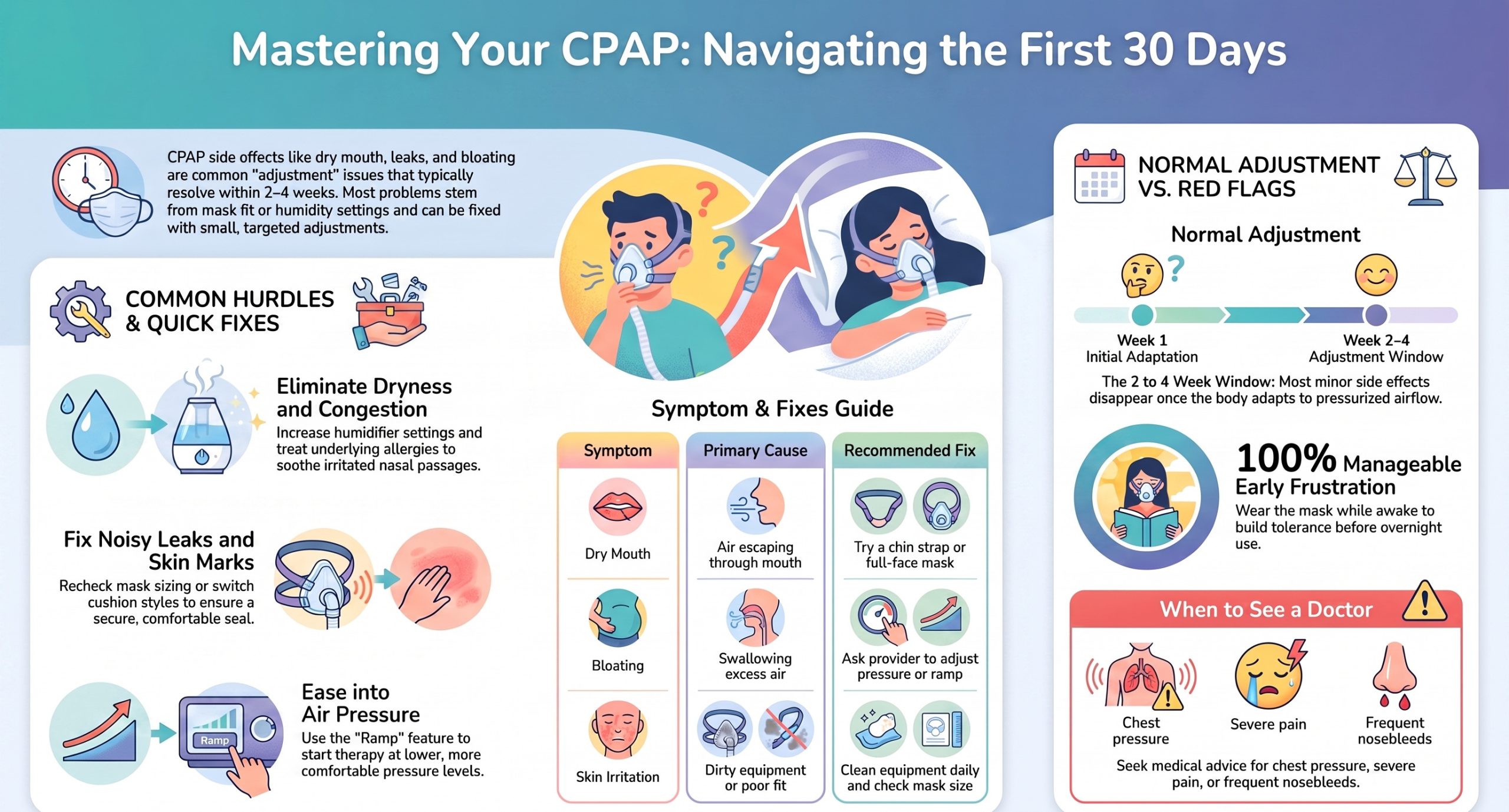
Most CPAP machine side effects happen because the body is adapting to pressurized airflow and a new sleep setup, not because the machine itself is defective. In many cases, the issue is the fit, the settings, or the routine around it. Most people see these early symptoms ease within about 2 to 4 weeks of consistent use, once small adjustments are made to the mask, humidity, or pressure ramp.
If you’re still working out whether your symptoms point to sleep apnea itself rather than just a mask-adjustment issue, our sleep apnea complete guide covers diagnosis and treatment in full.
Common Problems — And Exactly Why Each One Happens
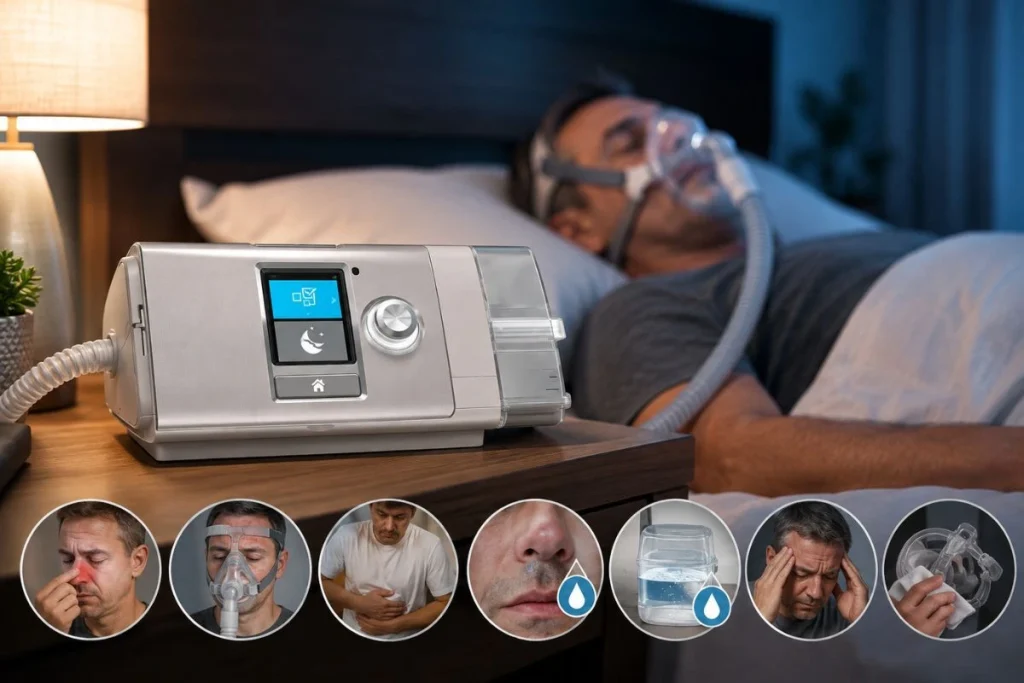
The most common issues are dry nose or mouth, nasal congestion, mask pressure marks, noisy leaks, and a feeling of swallowing air — a symptom called aerophagia, usually caused by pressure that’s set slightly too high for how you breathe. These are often part of CPAP side effects in the first week, and they tend to be more noticeable while someone is still adjusting.
Most of these trace back to one of three things: the air is too dry (irritating the nose and mouth), the mask seal is poor (letting air escape and waking you up), or the pressure feels stronger than expected at bedtime. Mouth breathing, side-sleeping, allergies, and nasal blockage can all make any of these three worse.
Quick Reference: Symptom, Cause, and Fix
Symptom | Likely Cause | Quick Fix |
Dry mouth or nose | Low humidity setting, or air escaping through the mouth | Raise humidifier level; try a chin strap or full-face mask |
Nasal congestion | Dry airflow, allergies, or nasal irritation | Increase humidity; treat underlying allergies |
Mask pressure marks | Wrong size or cushion style | Recheck sizing; try a different cushion type |
Noisy air leaks | Poor mask seal | Adjust straps; replace worn cushion |
Bloating (aerophagia) | Pressure set higher than needed | Ask your provider about a pressure or ramp adjustment |
6 Ways to Reduce CPAP Side Effects — Fixes That Actually Work
Here are practical ways to improve comfort and stay consistent with treatment:
- Adjust humidifier settings — increasing humidity reduces dryness in the nose and mouth.
- Check mask size and cushion style — a poor fit is the most common cause of leaks and pressure marks.
- Try a different mask type — nasal, full-face, or pillow styles suit different sleep positions and breathing patterns.
- Clean the equipment regularly — reduces odor, skin irritation, and bacterial buildup.
- Wear the mask while awake for a few minutes each day early on to build tolerance before relying on it overnight.
- Ask your provider about the ramp feature — this starts therapy at a lower pressure and gradually increases it as you fall asleep, which directly helps if airflow feels too strong at bedtime.
If you’re wondering how to reduce CPAP side effects, start with one change at a time so you can tell what’s actually helping. Small fixes often make a noticeable difference within a few nights.
When to Get Help — Signs It’s More Than Just Adjustment
Mild discomfort is common at the beginning, but strong pain, severe bloating, repeated nosebleeds, chest pressure, or worsening breathing should be discussed with a clinician. If you feel like quitting because the mask is unbearable, that’s also a good reason to reach out rather than stop on your own.
A partner may notice the struggle before the patient does, especially during the first week. That early frustration is normal, but therapy shouldn’t remain painful or impossible. If problems continue past the typical adjustment window, contact your sleep specialist or DME (durable medical equipment) provider — they can check whether pressure, humidity, or mask style needs to change.
FAQ's
Is dry mouth and congestion normal when you just started CPAP?
Yes — dry mouth often happens when air escapes through the mouth or humidity is set too low, while congestion can come from dry airflow, allergies, or nasal irritation. Both usually improve once mask fit and humidifier settings are adjusted.
Should you quit CPAP therapy because of early side effects?
No — most early discomfort improves with a better mask fit, humidity changes, ramp settings, or a different mask style. If therapy still feels intolerable after those changes, talk to a sleep professional before stopping rather than stopping on your own.
Is it normal to feel discouraged by a partner's early struggles with CPAP?
Yes — early struggles are common and don’t mean therapy will fail long-term. A partner can help most by encouraging consistent use and checking mask fit, without pressure or criticism during the adjustment period.
Why didn't your doctor warn you about common CPAP side effects?
This happens more often than it should. Many patients aren’t fully prepared for the first-week adjustment period, even though dryness, leaks, pressure sensitivity, and sleep disruption are common. The important part is that these issues are usually manageable once identified.
What CPAP symptoms are normal versus symptoms that need a doctor?
Normal symptoms include mild dryness, light pressure marks, small leaks, or brief adjustment discomfort. See a doctor for chest pain, severe air swallowing, frequent nosebleeds, major skin injury, or breathing that feels worse instead of better over time.
Conclusion
Most CPAP machine side effects are temporary and fixable — dryness, leaks, and pressure discomfort almost always trace back to fit, humidity, or settings rather than a failing therapy. Give small adjustments a real chance over a few weeks, and reach out to your provider if symptoms don’t ease or feel severe.
Shop Related Products
If you’re still adjusting to a new setup, browsing CPAP machines with built-in humidifiers and adjustable ramp settings can make it easier to manage the side effects covered in this guide from the start.
Resources & Further Reading
Medical Disclaimer
Disclaimer: This content is for informational purposes only and is not medical advice. Always consult a qualified healthcare provider about CPAP side effects that don’t improve or feel severe.