Table of Contents
If your doctor just prescribed a CPAP and you’re asking yourself how does a CPAP machine work, here’s the short answer: it pulls in room air, filters it, pressurizes it, and sends a steady stream through a tube and mask to keep your airway open while you sleep. It doesn’t breathe for you, and once you see what each part actually does, it’s a lot less intimidating than it looks sitting in the box.
How Does a CPAP Machine Work?
During sleep, the muscles in your throat naturally relax. For some people, that relaxation causes the soft tissues at the back of the throat to move inward and narrow or block the airway. When air cannot move normally, breathing may stop for several seconds before the brain briefly wakes the body to restore airflow.
This is exactly the problem a CPAP machine is built to solve. Understanding how a CPAP machine works starts with one idea: it creates a gentle, steady stream of pressurized air and sends it through a mask worn over the nose, mouth, or both. The pressure acts like an invisible support inside the airway. It does not force oxygen into the lungs or breathe for you — it simply holds the passage open so you keep breathing on your own.
Explaining it to a partner or parent? Try this one-liner: “It’s a gentle machine that keeps my airway open all night — it doesn’t breathe for me, it just stops my throat from collapsing.”
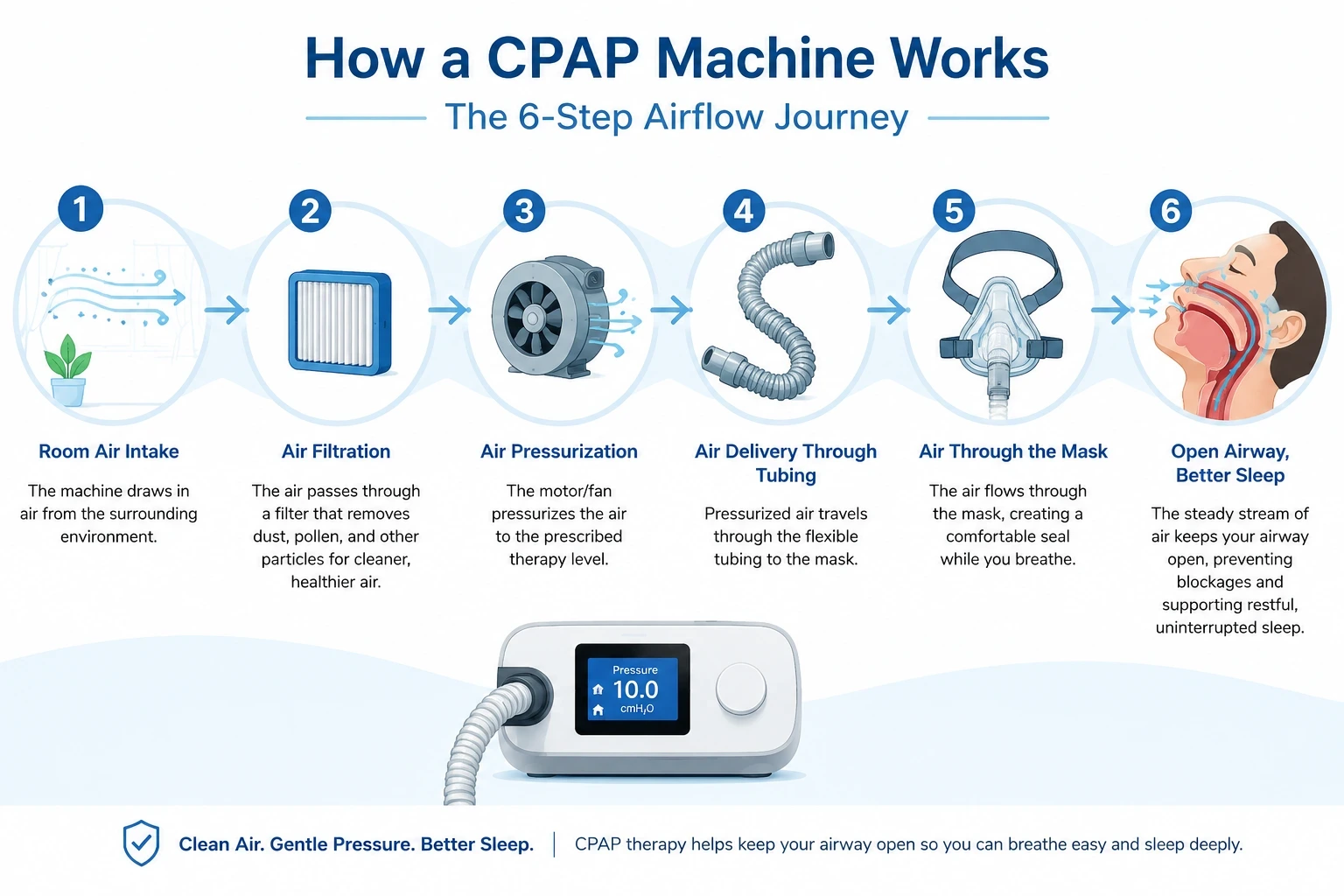
Here’s the quick version of the path the air takes. The full breakdown is a few sections down.
- Pulls in air from the room.
- A filter removes dust and small particles.
- A motor pressurizes the air.
- The air travels through flexible tubing.
- The mask delivers the airflow to your airway.
- The pressure helps stop the throat from closing during sleep.
This is why CPAP therapy is called “continuous positive airway pressure.” The device provides a continuous flow of air at a pressure prescribed for your treatment.
The airflow may feel strange when you first use it, but it should not feel painful. The pressure is normally adjusted to keep the airway open without making breathing uncomfortable. A sleep specialist may determine the correct pressure through a sleep study, titration test, or other clinical assessment.
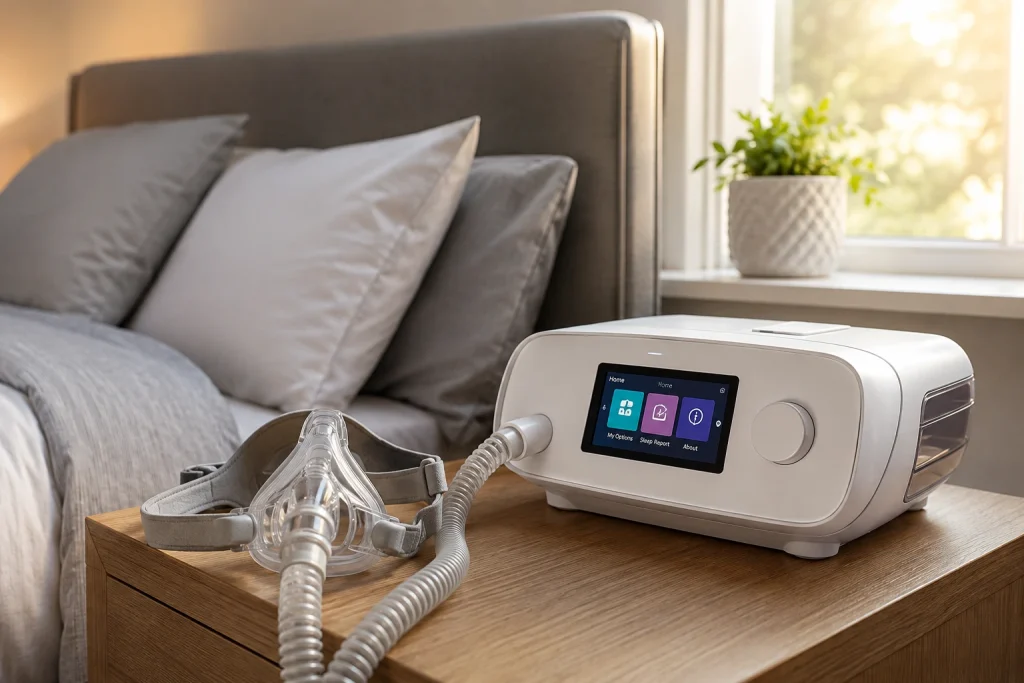
A PAP system commonly has three main parts: the machine, the flexible hose, and the mask or nasal interface. The American Academy of Sleep Medicine describes the device as an air pump that draws in filtered air and delivers adjustable pressure through an interface.
Why the Airway Closes During Sleep
To understand the treatment, it helps to understand the problem it is designed to manage.
When you are awake, muscles around the throat help keep the airway open. During sleep, these muscles relax. In some people, the tongue, soft palate, uvula, or surrounding tissue moves backward and reduces the space available for air.
The airway may become:
- Partly narrowed, causing loud snoring or shallow breathing.
- Completely blocked for a short period.
- Narrow enough to reduce airflow and oxygen levels.
- Unstable, opening and closing repeatedly through the night.
These events are called apneas when breathing stops and hypopneas when breathing becomes unusually shallow. The body may respond with a brief arousal, a gasp, a change in heart rate, or a movement that the person does not remember the next morning.
Repeated interruptions can affect sleep quality even when the person appears to sleep for several hours. Some people wake with a dry mouth, headache, tiredness, poor concentration, or an uncomfortable feeling that they did not rest properly.
The CPAP Machine Science Behind Pressure Support
The CPAP machine science behind this is simple pneumatics, not medication. Continuous airflow acts like an invisible splint, holding soft tissue in place the same way air pressure holds open an inflatable structure. CPAP therapy does not remove the physical features that make the airway narrow — it uses steady pressure to provide support while you sleep.
CPAP Machine Explained: The Airflow Journey
A CPAP device does not use a tank of oxygen. It takes ordinary room air and moves it through a controlled system.
Step 1: Room air enters
The machine draws air through an intake area. This is usually located near the back or side of the device.
Keep the intake area clear. Do not place clothing, bedding, books, or other objects over it, because blocked airflow can affect performance and cause the machine to work harder.
Step 2: The filter catches particles
A filter helps remove dust and other particles before the air reaches the motor and your mask. Different machines use different filter types, so it is important to use the correct replacement.
A filter that looks dirty or clogged may restrict airflow. Replace it according to the manufacturer’s instructions, and check it more often if you live with pets, smoke, dust, or construction activity. Due for a replacement filter or cushion? Browse mask parts and replacement supplies.
Step 3: The motor builds pressure
Inside the device is a motorized blower or turbine. It spins at a controlled speed to create the prescribed pressure.
The machine does not simply push air at maximum force. Its software regulates the motor and airflow so the pressure stays within the treatment range. A standard device may maintain one pressure, while an automatic model can adjust within a prescribed range.
Step 4: Air travels through the hose
The pressurized air leaves the machine through an outlet and moves along the tubing. The hose needs to remain connected firmly at both ends.
A twisted, crushed, or damaged hose can interfere with the airflow. Water droplets inside the tubing can also become uncomfortable. This is sometimes called rainout, and it may occur when warm, humid air meets a cooler tube.
Step 5: The mask delivers the air
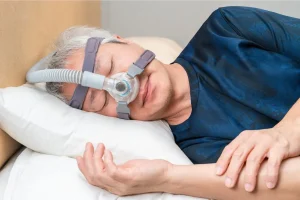
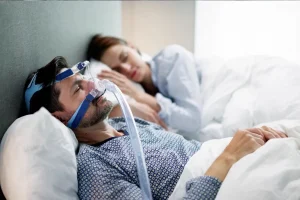
The mask creates the connection between the hose and your airway. Depending on the style, it may cover the nose, sit beneath the nostrils, or cover both the nose and mouth.
The mask should be secure but not painfully tight. Tightening the straps too much can cause pressure marks and may actually worsen leaks by distorting the cushion.
Step 6: Pressure supports the throat
Once the air reaches the mask, it flows into the airway. The pressure helps prevent the soft tissues from moving together and blocking the passage.
The device is not pushing the throat open like a solid object. It is creating enough pressure to stabilize the airway while you sleep.
Does a CPAP Machine Know When You Stop Breathing?
A standard CPAP does not sense individual breathing pauses — it delivers one steady pressure all night, whether or not an event is happening. An auto-adjusting machine (APAP) works differently: its software continuously monitors airflow patterns, and when it detects signs the airway is narrowing, it responds by raising pressure within the range your clinician prescribed.
It isn’t reading your mind or diagnosing you in real time — it’s reacting to airflow resistance. That distinction matters if you’re comparing a standard CPAP to an APAP or BiPAP: the “smarts” are in how the pressure adjusts, not in the machine deciding your treatment for you.
How CPAP Works for Sleep Apnea
The main purpose of treatment is to reduce interruptions in breathing. When the airway remains open, air can move more consistently between the nose, mouth, throat, and lungs.
A well-adjusted machine may help reduce:
- Breathing pauses.
- Gasping during sleep.
- Loud snoring.
- Repeated nighttime awakenings.
- Morning headaches.
- Daytime sleepiness.
- Poor concentration caused by broken sleep.
The American Academy of Sleep Medicine explains that a PAP system includes a pressure device, an interface held against the face with headgear, and flexible tubing. MedlinePlus similarly describes PAP therapy as pressurized air delivered through a mask to help keep the airway open.
Therapy only works while the machine is being used. If you sleep without it, the airway may become narrow again. For this reason, many clinicians recommend using the device every time you sleep, including naps and overnight travel.
CPAP is commonly used for obstructive sleep apnea. It is not a general cure for every sleep or breathing disorder. Central sleep apnea, complex respiratory conditions, and certain other problems may require a different therapy approach.
CPAP Air Pressure Explained
Pressure is one of the most important settings on the device. It is usually measured in centimeters of water, written as cmH₂O.
You do not need to calculate the pressure yourself. Your clinician determines the appropriate setting based on your diagnosis, sleep-study results, symptoms, body position, oxygen levels, and response to therapy.
Fixed pressure
A fixed-pressure device delivers one selected pressure throughout the night. For example, if the prescribed setting is 9 cmH₂O, the machine aims to maintain that level during inhalation and exhalation.
The pressure may feel stronger when you first turn the machine on, particularly if you are not used to breathing against airflow. Many devices include a ramp feature that begins at a lower pressure and gradually increases to the prescribed setting while you fall asleep.
Automatic pressure
An APAP device operates within a prescribed minimum and maximum range. It monitors airflow patterns and may increase or decrease pressure when it detects signs of airway narrowing.
Automatic adjustment does not mean the machine can diagnose your condition or choose any setting without limits. The clinician still needs to prescribe the range and review the therapy data. If your prescription calls for an auto-adjusting device, browse CPAP and automatic machines built for a range of pressure needs.
Pressure relief
Some machines reduce pressure slightly during exhalation. This may make breathing feel more natural for people who find it difficult to breathe out against continuous airflow.
The name and operation of this feature vary by manufacturer. It should be used according to the device instructions and professional guidance.
Why changing the setting yourself is risky
Increasing the pressure does not always improve therapy. It may cause more leaks, discomfort, swallowed air, nasal dryness, or disturbed sleep. A setting that is too low may fail to control airway obstruction.
If you feel that the pressure is too strong or too weak, speak with your clinician. Do not copy settings from another person’s machine or change the prescribed range based only on an online suggestion.
Parts of a CPAP Machine
Understanding the equipment can make daily use less confusing.
Component | What it does |
Main device | Creates and controls the airflow |
Air filter | Helps remove dust and particles |
Tubing | Carries air from the device to the mask |
Mask or nasal interface | Delivers air to the nose, mouth, or both |
Headgear | Holds the mask in place |
Cushion or nasal pillows | Creates the seal against the face |
Humidifier chamber | Adds moisture to the airflow |
Power supply | Provides electricity to the device |
Display or controls | Allows access to basic settings and information |
Data system | Records therapy information on supported models |
Not every model includes a built-in humidifier. Some machines use a separate humidifier accessory, while travel models may use a compact or optional humidification system.
The machine body
The main unit contains the blower, electronics, controls, and data system. It is usually placed on a stable surface near the bed.
Keep it lower than or level with your head when possible. This can help reduce the chance of water moving toward the mask if condensation develops in the tubing.
The mask
The mask is the part you wear while sleeping. A good mask needs to be comfortable and form a reliable seal.
Common designs include:
- Nasal masks that cover the nose.
- Nasal pillow masks that rest at the nostrils.
- Full-face masks that cover the nose and mouth.
Your choice may depend on whether you breathe through your nose, experience congestion, sleep on your side, or move frequently during sleep.
The headgear
Headgear uses adjustable straps to hold the mask in position. It should keep the mask stable without causing painful pressure.
If you need to tighten it constantly, the mask may be the wrong size or the cushion may be worn. Replacing the cushion or trying another design may solve the problem.
The tubing
The hose carries air from the machine to the mask. Keep it as straight as practical and avoid placing it under heavy bedding.
A hose lift or overhead support may help people who move around during sleep. Check the tubing for small holes, cracks, and loose connections.
The humidifier
A humidifier adds moisture to the airflow. It may help with dryness in the nose, throat, or mouth.
Use only the water recommended in the device instructions. Empty and clean the chamber regularly. Do not fill it above the maximum line.
The filter
The filter protects the airflow path from dust and particles. A dirty filter may reduce airflow and put additional strain on the device.
Disposable and reusable filters are not interchangeable. Follow the instructions for your model.
What Happens When You Put On the Mask?
The machine can be switched on before or after the mask is placed on your face. Many people find it easier to sit comfortably, connect the mask, and then start the airflow.
Once the machine begins operating:
- Air leaves the device through the outlet.
- It moves through the connected hose.
- The mask receives the airflow.
- The cushion creates a seal around the nose, mouth, or nostrils.
- The pressurized air enters the airway.
- The pressure helps stabilize the throat.
You should feel airflow, but you should not feel as though the machine is choking you. If the mask leaks, air may blow toward your eyes or make a noticeable hissing sound.
Some leakage is normal, especially when you move. Large or continuous leaks may reduce comfort and affect therapy. Check the mask position, cushion condition, tubing connection, and headgear adjustment before tightening everything further.
What Is the Difference Between CPAP, APAP, and BiPAP?
If you’re comparing basic mechanics before choosing between the three, here’s the core difference in plain terms: they all use positive airway pressure, but they don’t operate the same way.
Device | Pressure pattern | Common use |
CPAP | One steady pressure | Obstructive sleep apnea |
APAP | Adjusts within a prescribed range | Changing pressure needs |
BiPAP | Separate inhalation and exhalation pressures | Selected advanced therapy needs |
A CPAP device maintains one set pressure. An APAP responds to airflow changes within a range. A BiPAP device provides different pressures for breathing in and breathing out.
The names are sometimes used casually, but they describe different therapy functions. Your diagnosis and prescription should guide the choice.
Do not assume that an APAP is automatically better than a fixed-pressure device, or that BiPAP is appropriate for anyone who finds regular therapy uncomfortable. A clinician needs to evaluate the reason for the difficulty.
Why Some Machines Have Humidifiers
Airflow can dry the nose, mouth, and throat, especially when the pressure is higher or the bedroom air is dry. A humidifier adds moisture to the air before it reaches the tubing.
A heated humidifier usually contains a water chamber placed on a warming plate. As air passes over the water, it collects moisture and carries it through the hose.
Humidification may help with:
- Dry throat.
- Nasal irritation.
- Stuffy nose.
- Cracked lips.
- Burning or dryness inside the nostrils.
Too much humidity can create condensation in the hose or mask. You may need to adjust the humidifier level, room temperature, tube temperature, or bedroom conditions.
Do not use fragrance oils or household additives in the chamber. They can damage components and may irritate the airway.
How the Machine Tracks Therapy
Many modern devices record information about nightly use. Depending on the model, the data may include:
- Hours of use.
- Mask leak.
- Pressure levels.
- Breathing events.
- Apnea-hypopnea index estimates.
- Warnings or equipment status.
- Flow limitations.
Some machines store data on an internal memory card. Others send information through cellular or wireless connectivity.
The data can help your healthcare provider understand whether the therapy is being used and whether it appears to be controlling breathing events. It should not be treated as a substitute for medical evaluation.
A single night of data may not explain how you feel. Look for patterns over time and discuss concerns with your clinician.
What Happens to Your Body When You Start CPAP Therapy?
The first few nights may require patience. You are adjusting to a mask, airflow, machine sounds, and a new bedtime routine.
Try these steps:
- Wear the mask for short periods while awake.
- Practice breathing normally with the machine running.
- Use the ramp feature if your clinician or device instructions recommend it.
- Keep the mask clean and dry.
- Check the fit before tightening the straps.
- Use humidification if dryness is a problem.
- Place the device on a stable surface near the bed.
- Contact your provider if discomfort continues.
Common early complaints include air leaks, dry mouth, nasal stuffiness, skin marks, claustrophobia, and difficulty exhaling. These problems often have practical solutions, such as a different mask, adjusted humidification, improved fit, or a professional setting review.
Do not stop therapy permanently because the first mask feels uncomfortable. Many people need to try a different size or style.
Is There a Downside to Using a CPAP Machine?
CPAP therapy is highly effective, but it isn’t effortless for everyone. Common downsides include an adjustment period with mask discomfort or dryness, the need to travel with equipment, and the fact that benefits stop as soon as you stop using the device — CPAP manages sleep apnea, it doesn’t cure it. Most of these issues have practical fixes: a different mask style, adjusted humidification, or a professional settings review. If mask discomfort is what’s holding you back, browsing mask styles built for different sleep positions is often the fastest fix.
Common Problems and Simple Checks
Air leaking around the mask
First, remove the mask and refit it according to the manufacturer’s instructions. Check whether the cushion is damaged or worn.
Avoid pulling the straps as tight as possible. Excessive tension may push the cushion out of shape.
Dry mouth
Dry mouth may be related to mouth breathing, low humidity, or a mask leak. Ask your clinician whether a full-face mask, humidification adjustment, or other approach is appropriate.
Water in the tubing
Condensation can develop when humidified air cools inside the hose. Lowering the humidity slightly, raising the room temperature, or using heated tubing may help.
Feeling unable to breathe out
Some people need time to adjust to pressure during exhalation. Your device may have a comfort feature that reduces pressure slightly while breathing out. Speak with your clinician before changing settings.
Skin irritation
Clean the mask regularly and check the fit. A soft liner or different mask design may reduce contact with sensitive skin. Persistent irritation should be discussed with a healthcare professional.
Noise
Modern machines are generally designed to operate quietly, but noise may come from a loose connection, damaged tubing, a dirty filter, or the machine vibrating against furniture.
Cleaning and Maintenance
Regular maintenance helps keep the equipment comfortable and functioning properly.
Daily care
- Empty leftover water from the chamber.
- Allow the chamber to air-dry.
- Wipe the mask cushion according to the instructions.
- Check the hose for visible damage.
- Keep the machine intake area clear.
Weekly care
- Wash the tubing if the manufacturer permits it.
- Clean the water chamber.
- Inspect the mask frame and headgear.
- Check the filter condition.
- Look for cracks, discolouration, or loose parts.
Do not submerge the main machine unless the manufacturer specifically states that it is safe. Use mild soap and clean water for washable components unless the instructions say otherwise.
Who Should Use CPAP Therapy?
CPAP therapy is commonly prescribed for people with obstructive sleep apnea. A healthcare professional may recommend it after reviewing symptoms, medical history, and sleep-study results.
Possible signs of sleep apnea include:
- Loud, frequent snoring.
- Waking up gasping or choking.
- Witnessed pauses in breathing.
- Morning headaches.
- Excessive daytime sleepiness.
- Difficulty concentrating.
- Dry mouth after sleeping.
- Restless or unrefreshing sleep.
These symptoms can have other causes, so they do not confirm sleep apnea by themselves. A proper evaluation is important before starting treatment.
When to Contact Your Healthcare Provider
Speak with your clinician if:
- You cannot keep the mask on.
- You have persistent chest discomfort.
- You feel short of breath while awake.
- Air leaks remain severe.
- You experience ongoing nasal bleeding.
- Your symptoms do not improve.
- You are changing or avoiding treatment.
- The pressure feels consistently wrong.
- You are using a machine that was not prescribed for you.
Do not adjust advanced therapy settings without medical advice. The correct treatment depends on more than how strong the airflow feels.
The Bottom Line
If you started this page wondering how does a CPAP machine work, the core answer is simple: steady, gentle pressure keeps your airway open so you can breathe normally through the night. It’s not breathing for you, it’s not medicating you, and once you understand the mechanics, it’s far less intimidating than it looks in the box. Give yourself a few nights to adjust, keep the mask fitted and the filter clean, and loop in your clinician if something feels off — that’s really all there is to it.
FAQ's
Does a CPAP machine breathe for you?
No, a CPAP machine does not breathe for you. It provides pressurized airflow that helps keep the upper airway open while you breathe naturally. The device does not replace your breathing muscles or push air into your lungs on a timed schedule. People who need breathing assistance beyond airway support may require a different type of respiratory device.
What happens if I stop breathing while wearing the mask?
If an obstructive event begins, the pressure may help prevent the throat from closing completely. On automatic models, the device may respond to airflow changes within the prescribed range. However, no machine eliminates every event. If you continue to experience frequent pauses, gasping, or poor sleep, ask your healthcare provider to review the therapy data.
Can I use a CPAP machine without a sleep study?
A sleep study or clinical evaluation is normally recommended before starting treatment, because symptoms can have different causes. A diagnosis helps determine whether PAP therapy is appropriate and which settings are needed. In the United States, a prescription is generally required for a new device. Do not select pressure settings based only on an online calculator.
How long does it take to notice a difference?
Some people notice less snoring, fewer awakenings, or better morning alertness within the first few nights. Others need several weeks to adjust to the mask and airflow. Improvement can depend on consistent use, correct settings, mask seal, sleep habits, and other health conditions. Contact your provider if symptoms continue despite regular use.
What is the 4-hour rule for CPAP machines?
The 4-hour rule usually refers to an insurance compliance requirement, not a medical limit. Many insurers require use for at least 4 hours per night on 70% of nights within a 30-day window to keep covering the device. Using it more consistently — ideally all night, every night — gives you the full treatment benefit, not just the minimum required for coverage.
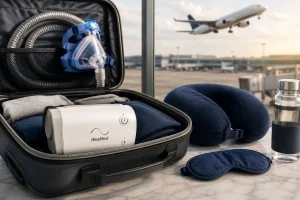
Can I use a CPAP machine while travelling?
Yes, most people can continue therapy while travelling, provided they bring the correct power supply, tubing, mask, and accessories. A travel device may be more compact, but it is not automatically suitable for every prescription. Plan for electricity, battery needs, airline rules, water requirements, and replacement supplies before leaving home.
Why does my mask leak during the night?
A mask may leak because it is the wrong size, the cushion is worn, the straps are too loose, the straps are too tight, or you move while sleeping. Refit the mask while lying in your usual sleep position and check the tubing connection. If leaks continue, ask about another mask style or size.
Is there a better alternative to a CPAP machine?
For obstructive sleep apnea, CPAP remains the most studied and effective first-line treatment. Alternatives such as oral appliances, positional therapy, or surgery may suit specific cases, but they are generally considered after CPAP isn’t tolerated or isn’t a fit — not as an automatic first choice. Your sleep specialist can tell you whether an alternative applies to your diagnosis.
Explore Our Range
Once you understand how CPAP therapy actually works, choosing equipment gets a lot less overwhelming. Our complete guide to CPAP machines walks through every machine type, feature, and cost so you can pick the right one. cpapRX carries:.
CPAP and automatic machines — browse machines
Nasal, nasal-pillow, and full-face masks — browse masks
Mask parts and replacement supplies — browse supplies
Not sure what a machine actually costs before you commit? Our CPAP machine cost guide breaks down real 2026 pricing by machine type.
Review each product page for prescription requirements, warranty information, return terms, and included accessories. A qualified healthcare professional should guide your therapy mode and pressure settings.
Resources & Further Reading
MedlinePlus: Positive airway pressure treatment
Cleveland Clinic: CPAP machine overview
NHLBI: CPAP treatment information
American Academy of Sleep Medicine: PAP titration guidelines
Medical Disclaimer
This article is for general educational purposes only and does not replace professional medical advice, diagnosis, or treatment. CPAP, APAP, and BiPAP therapy should only be started, adjusted, or stopped under the guidance of a qualified healthcare provider following a proper sleep evaluation. Individual results vary, and information here should not be used to self-diagnose sleep apnea or any other condition.
Always consult your physician or sleep specialist with questions about your diagnosis, prescribed pressure settings, or equipment. If you experience chest pain, severe shortness of breath, or any medical emergency, seek immediate medical attention or call your local emergency number — do not rely on this page for urgent care decisions.