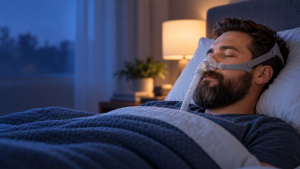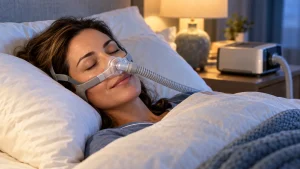
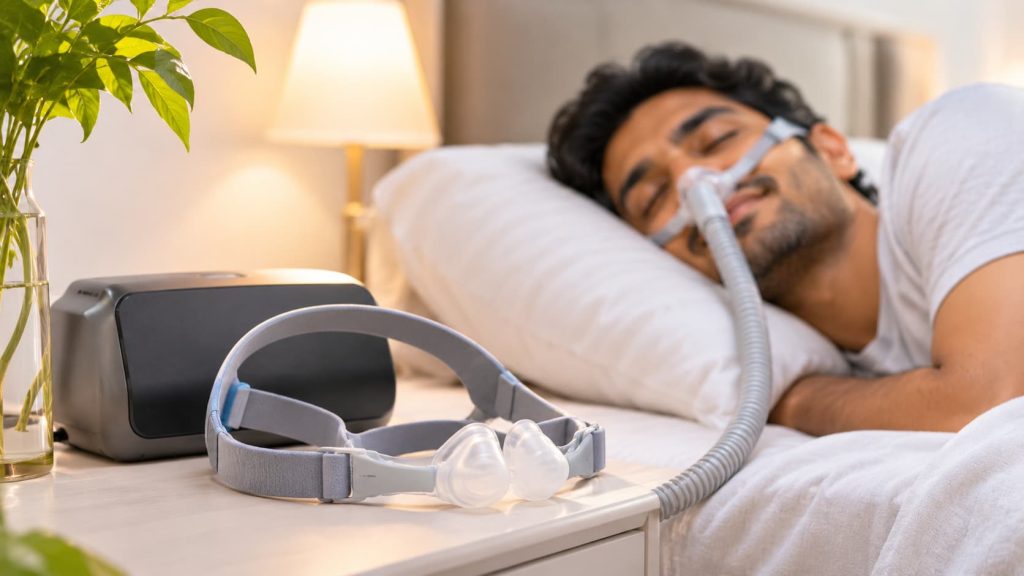
Quick answer: Learning how to breathe with CPAP nasal pillows comes down to one habit: relaxing into slow, steady nasal breathing instead of fighting the airflow. Many beginners become more comfortable over the first days or weeks as mask fit and breathing comfort improve.
Key Takeaways: The Short Version
If you only have a minute, here’s what actually matters for your first nights — these are the key takeaways for beginners:
- Breathe slowly through your nose — don’t clench your jaw or hold your breath against the airflow
- Get your cushion size right before you troubleshoot anything else
- Use the ramp setting so pressure builds gradually instead of hitting you all at once
- Keep your lips gently together when comfortable, and check for mouth leaks
- Allow time to adjust, but get help promptly if breathing feels difficult or discomfort persists
Why Do Nasal Pillows Feel Different From Other Masks?
Short answer: Nasal pillows rest at the nostril openings rather than covering the whole nose or both the nose and mouth.
If you’ve used a full face or standard nasal mask before, nasal pillows take some recalibrating. There’s no cushion resting against your face to distribute the sensation of airflow — the pressure lands directly at the entrance of your nostrils instead, which some people describe as more noticeable at first, even though the actual pressure setting hasn’t changed. That directness is also what makes nasal pillows feel so much lighter once you’re used to them; there’s simply less mask between you and the feeling of normal, unassisted breathing.
This is also why beginners may notice their breathing more with nasal pillows than with bulkier mask styles. The smaller contact area makes airflow around the nostrils feel more noticeable. How relaxed you feel, whether your nose is clear, and how well the pillows seal can all affect comfort.
What Should You Expect in Your First Nights?
Short answer: The airflow may feel unfamiliar at first, and some beginners need time to adjust to the mask and pressure.
Nasal pillows feel strange before they feel normal, and that gap catches a lot of new users off guard. Air pressure inside your nostrils is a sensation your body has never had to process before, so it’s common to feel like you’re fighting the machine for the first few nights even though nothing is actually wrong. Some people also notice their own breathing more than usual simply because they’re paying attention to it — a kind of hyperawareness that fades once the mask stops feeling like a novelty.
This is also where a lot of people start second-guessing their therapy entirely. You’ve been wearing the mask every night like you’re supposed to, and yet it still feels like something’s off — so it’s natural to wonder if the CPAP itself isn’t working. In most cases, adjusting to nasal pillow CPAP is just your airway, your nose, and your breathing pattern learning to cooperate with a new sensation, not a sign of failure. CPAP remains one of the most common treatments for obstructive sleep apnea, as the National Heart, Lung, and Blood Institute explains in its sleep apnea treatment overview, so a slow start is far more likely to be a learning curve than a problem with the therapy. It’s also worth remembering that your body has spent years breathing without CPAP pressure; asking it to adapt to steady pressure overnight is a bigger adjustment than it sounds like on paper.
Your AHI and leak data can look a little rough during this stretch too. A mask you’re still learning to seat properly leaks more than one you’ve worn for a month, and significant leaks can affect therapy delivery and how reliably your machine reports breathing events, so review unusual AHI or leak readings with your provider. That said, “give it time” isn’t the answer if something feels genuinely wrong — ongoing gasping, chest discomfort, or numbers that don’t improve after a couple of weeks are worth a call to your sleep coach or prescribing doctor rather than something to wait out.
How to Breathe With CPAP Nasal Pillows: A Step-by-Step Start
Start here: Check your nose and cushion fit, turn on the machine, and practice relaxed breathing while awake.
Follow these roughly in order on your first few nights, and revisit whichever step is giving you trouble.
1. Clear your nose before you put the mask on. A dry blow of your nose, or a quick saline rinse if you’re prone to congestion, gives the air an open path before pressure ever starts. Trying to breathe pressurized air through a partially blocked nostril is the single fastest way to feel like you can’t get enough air, and it’s an easy step to forget when you’re focused on the mask itself rather than what’s happening inside your nose.
2. Confirm your cushion size while you’re still awake. Hold the sizing template that came with your mask up to your face in good lighting — don’t trust the size that worked in a different mask brand, since sizing isn’t standardized across manufacturers. A cushion that’s even slightly off makes every other step in this list harder than it needs to be, because no amount of good breathing technique compensates for a seal that’s fighting your face shape from the start.
3. Turn on the ramp feature if your machine has one. Ramp starts you at a low, easy pressure and builds up gradually while you fall asleep, instead of hitting your nose with full pressure the second you turn the machine on. Most people find the first few minutes far less jarring with ramp enabled, and it’s usually a setting you can adjust yourself through the machine’s menu or a companion app rather than something that requires a call to your provider.
4. Breathe slowly, and let your exhale be longer than your inhale. Fighting the airflow — holding your breath, breathing shallow and fast, clenching your jaw — is what makes CPAP feel uncomfortable. A gentle, unforced rhythm can help you relax; there is no need to follow a strict breathing count. This is worth practicing sitting up and awake for a minute or two before you ever put the mask on, so your body already knows the rhythm you’re aiming for once the air pressure is added on top of it.
5. Keep your lips gently together, not clamped shut. Nasal pillows are sealing your nostrils, not your mouth, so air needs somewhere to go besides out through parted lips. A loose, relaxed closure is enough — you’re not holding your breath, just keeping your mouth from becoming a second leak point. If you know you tend to sleep with your mouth open, a soft CPAP chin strap alongside the nasal pillows can help keep this in check while you’re still building the habit.
6. Build up wear time instead of forcing a full eight hours on night one. If lying still with the mask on feels overwhelming, try wearing it for twenty or thirty minutes while watching TV or reading before you actually try to sleep in it. That low-stakes practice time does more for the adjustment than white-knuckling through a full night too early, since it lets your nervous system get comfortable with the sensation without the added pressure of also needing to fall asleep at the same time. For more adjustment strategies, see the Sleep Foundation’s guide to getting used to CPAP.
7. Resist the urge to rip the mask off at the first uncomfortable moment. If the mask feels mildly uncomfortable, pause and check the fit before deciding whether to continue. Do not push through gasping, chest pain, or significant breathing difficulty; stop and seek appropriate medical advice.
Getting Used to a Nasal Pillow Mask: What’s Normal?
Short answer: It can take several days or weeks to feel comfortable; improving sleep and fewer mask adjustments can be signs of progress.
Getting used to a nasal pillow mask may take several nights or a few weeks, and the adjustment period varies from person to person. What “adjusted” actually feels like is simple: you stop noticing the mask is there. You’re not fighting it, thinking about your breathing, or waking up aware of the pressure — it just becomes background.
A few markers that you’re on track, even if it doesn’t feel like it yet: you’re falling asleep faster than the first night, you’re waking up fewer times to adjust the mask, and the sensation of pressurized air feels neutral instead of alarming. Some people also notice they’ve stopped mentally narrating the experience — no longer thinking “this feels weird” every time they settle in for the night, just putting the mask on the way they’d put on a seatbelt. If two weeks pass with zero improvement on any of those fronts, that’s a reasonable point to stop assuming it just needs more time and start troubleshooting fit or mask type instead.
Nasal Pillow Mask Discomfort: What Actually Helps?
Short answer: Check cushion sizing and strap tension first, then consider dryness, congestion, and air leaks.
The instinct when something feels off is to crank the headgear tighter, but nasal pillow mask discomfort is almost never solved by more tension — it usually gets worse, since over-tightening distorts the cushion instead of letting it seal the way it’s designed to. If your nose feels sore, pinched, or pressured, loosening the straps and reseating the pillows first is nearly always the right move before you touch anything else. If soreness keeps coming back, our guide on how to prevent nose sores from a CPAP mask covers more fixes.
Dryness and mild nasal irritation are the other common complaints, especially in the first couple of weeks. Reviewing your humidifier settings may help, since nasal pillows direct airflow toward the nostril openings. Ask your provider about humidity adjustments if dryness continues. If dryness continues past the first couple of weeks despite a higher humidity setting, it’s worth mentioning at your next sleep coach check-in rather than just living with it.
Nasal Pillow Mask Tips for Beginners
A handful of nasal pillow mask tips beginners can use make the first month noticeably easier:
- Don’t skip the replacement schedule. Cushions lose their shape well before they look worn, and a stretched-out or degraded pillow will undo good technique every time. Replacement intervals vary by manufacturer and insurance plan, so follow the instructions for your particular mask and replace worn or damaged cushions.
- Practice during the day, not just at bedtime. A few minutes of wearing the mask while doing something relaxing builds familiarity without the added pressure of also trying to fall asleep, and it means your first real attempt at sleeping in it isn’t also your first attempt at wearing it at all.
- Don’t judge night one. The first night is almost always the hardest and the least representative of what your experience will actually be once your nose and breathing pattern catch up. Judging the whole mask style off one rough night is a common reason people give up earlier than they need to.
- Track how you feel, not just your app data. Numbers matter, but so does whether you’re waking up rested — both are worth mentioning if you check in with a sleep coach, since a good-looking report and a genuinely bad night’s sleep aren’t mutually exclusive during the adjustment period.
What If Breathing Still Feels Hard?
Short answer: Check nasal blockage, the mask seal, mouth leaks, and comfort settings; contact your CPAP provider if breathing remains difficult.
If you’ve worked through everything above and breathing with CPAP nasal pillows still feels like a losing battle, mouth leaking is one possible hidden cause — air escaping out an open mouth can make it feel like you’re not getting enough pressure even when the machine is working exactly as intended. It’s a surprisingly easy thing to miss, since you’re asleep for most of the night and have no direct way to observe your own mouth position. A dry mouth or sore throat by morning, even with a well-adjusted humidifier, is usually the clearest tell.
Adjusting to nasal pillow CPAP therapy assumes your mouth stays closed for most of the night, and if that’s not realistic for you, no amount of practice fixes a mismatch between the mask type and how you actually breathe. Comparing full face, nasal, and nasal pillow masks can help you figure out whether a different style might suit you better. Chronic congestion is worth ruling out too — if one side of your nose never seems to clear no matter what you try, a clinician can help assess whether a structural nasal issue is contributing.
Beginner Nasal Pillow FAQ
How do I breathe with CPAP nasal pillows when it feels like I’m not getting enough air?
Slow your breathing down rather than speeding it up — a longer, relaxed exhale gives the pressure-sensing software time to work with you instead of against you. Confirm your mouth is gently closed, since an open mouth lets pressure escape and can create exactly this sensation. If it persists past the first week, check cushion size and consider whether mouth breathing is the actual cause.
How long does it take to get used to a nasal pillow mask?
Some people adjust in a few nights while others take a few weeks. You’ll know you’re adjusting when you stop consciously thinking about the mask and start falling asleep faster than you did on night one. If two full weeks pass with no improvement at all, it’s worth troubleshooting fit rather than waiting longer.
Is it normal to feel discomfort during the first few nights of using nasal pillows?
Yes, mild discomfort in the first few nights is common and doesn’t necessarily mean anything is wrong with the mask. New pressure against nostril tissue, an unfamiliar headgear feel, and simply not being used to sleeping with something on your face all fade with repetition. Discomfort that’s sharp, sudden, or gets worse instead of better is different and worth addressing directly rather than waiting out.
Why does my nose feel dry or sore after switching to nasal pillows?
Dryness usually comes from humidifier settings that haven’t been adjusted for how directly nasal pillows push air against nostril tissue compared to a full cushion mask. Soreness is more often a sign of an overtightened fit than the mask style itself. Reviewing humidification and headgear fit may help; persistent soreness should be assessed by your provider.
Can I still use nasal pillows if I have a stuffy nose or seasonal allergies?
Yes, in most cases, though temporary congestion makes nasal pillows harder to tolerate since they depend entirely on a clear nasal airway. A saline rinse before bed and treating the underlying congestion often restores comfort during flare-ups, and many users keep a backup full face or nasal mask on hand specifically for bad allergy weeks. If congestion is a near-constant issue rather than occasional, that’s worth discussing with your doctor, since it may point to something worth addressing separately from your CPAP therapy.
Why do I feel like I’m gasping for air the moment the mask turns on?
Sudden airflow can feel unfamiliar, but gasping should not automatically be dismissed as a startle response. Check the mask and contact your CPAP provider promptly to review fit and pressure settings. Seek urgent care for severe breathing difficulty or chest pain.
What size should a first-time nasal pillow user start with?
There’s no universal starting size — it depends entirely on your nostril spacing and face shape, which is why manufacturers include printable sizing templates rather than a single recommended default. Measuring against the template before your first use prevents the most common early frustration, which is a cushion that’s simply the wrong size rather than a mask that doesn’t work for you. Several popular nasal pillow masks come packaged with more than one cushion size, letting you test the fit yourself instead of guessing from a chart alone.
What’s the one thing that helps most new nasal pillow users adjust faster?
Practicing with the mask on while awake, doing something relaxing like reading or watching television, builds familiarity without the added pressure of also trying to fall asleep at the same time. Beginners who skip straight to wearing it overnight tend to have a rougher first week than those who spend a few daytime sessions getting comfortable first. It’s a small habit with an outsized effect on how fast the adjustment period actually goes.
Shop Related Products
Already dialed in on a size and ready to order, or want a spare for your current setup? cpapRX’s nasal pillow CPAP masks and cushions has current sizing and pricing across the lineup. Check cpapRX’s current shipping, mask guarantee, return, and FSA/HSA terms before ordering. If you’d rather have someone walk through fit, sizing, and breathing technique with you directly, a paid sleep coach session covers all three in one conversation, which can shortcut weeks of trial and error into a single call.
Final Takeaway
Bottom line: Comfortable CPAP nasal pillow breathing starts with an appropriately sized cushion, a gentle seal, clear nasal passages, and relaxed nasal breathing. If pressure, leaks, or discomfort continue, ask your CPAP provider to review your setup rather than forcing yourself to tolerate it.
Medical note: This article provides general information and does not replace advice from your sleep specialist. Do not change prescribed therapy pressure without guidance.