Table of Contents
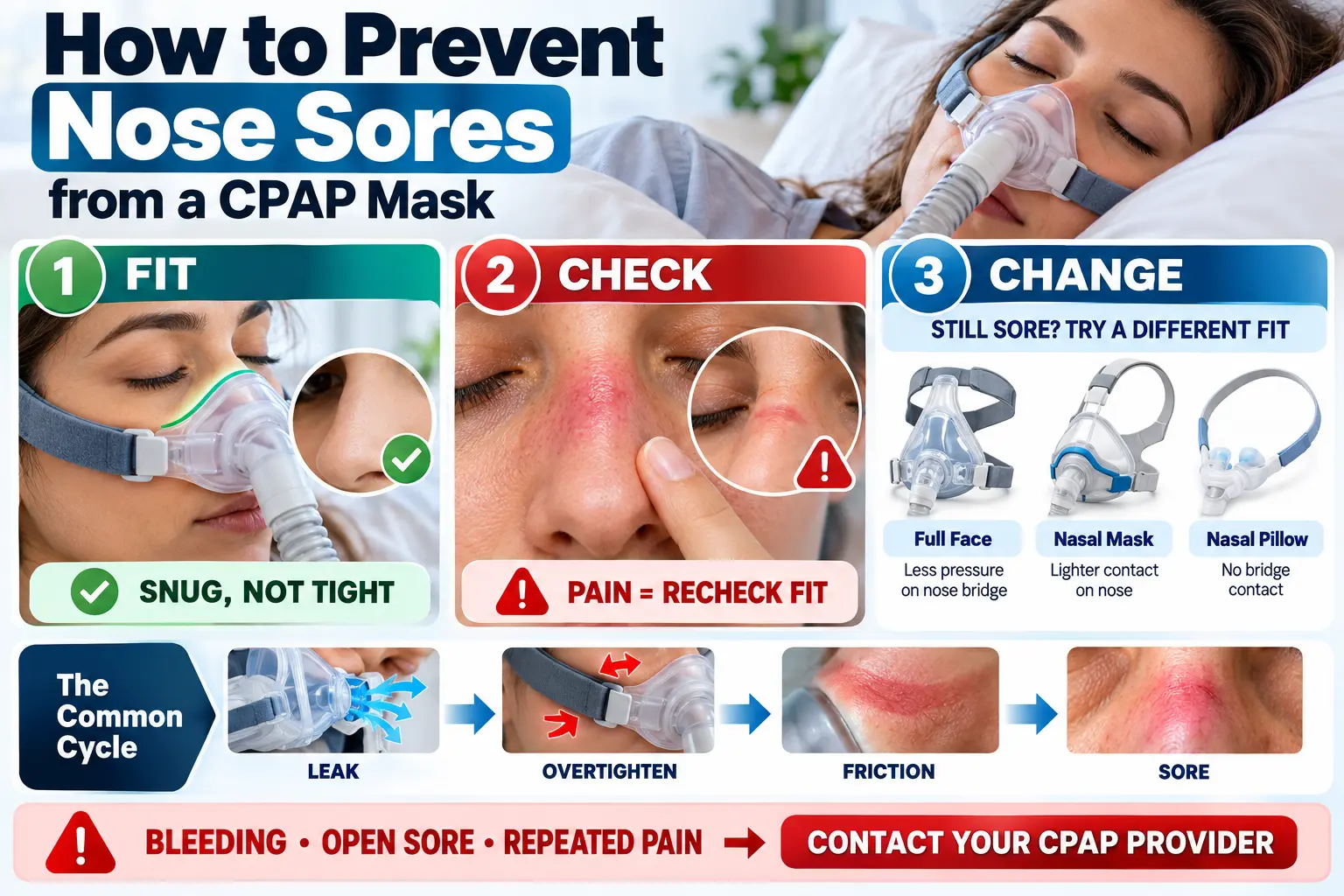
Quick answer: To prevent nose sores from a CPAP mask, tighten the straps only until the leak stops, wash your face and mask cushion daily, add a liner or nose bridge pad, and switch sizes or styles if one spot keeps getting sore. Most sores come from pressure, friction, or moisture.
If you’re searching for how to prevent nose sores from a CPAP mask, you’re probably already sore — or worried you’re about to be. That matters more than it sounds. According to the American Sleep Apnea Association, about half of people prescribed CPAP either stop using it or use it less than recommended, and discomfort is one of the reasons. A sore nose is a fixable problem. Quitting therapy over it is the outcome worth avoiding.
This guide shows you how to find the cause, fix it tonight, and keep it from coming back.
Why Your CPAP Mask Hurts Your Nose
Almost every CPAP nose sore comes from one of three causes — often two at once.
Pressure
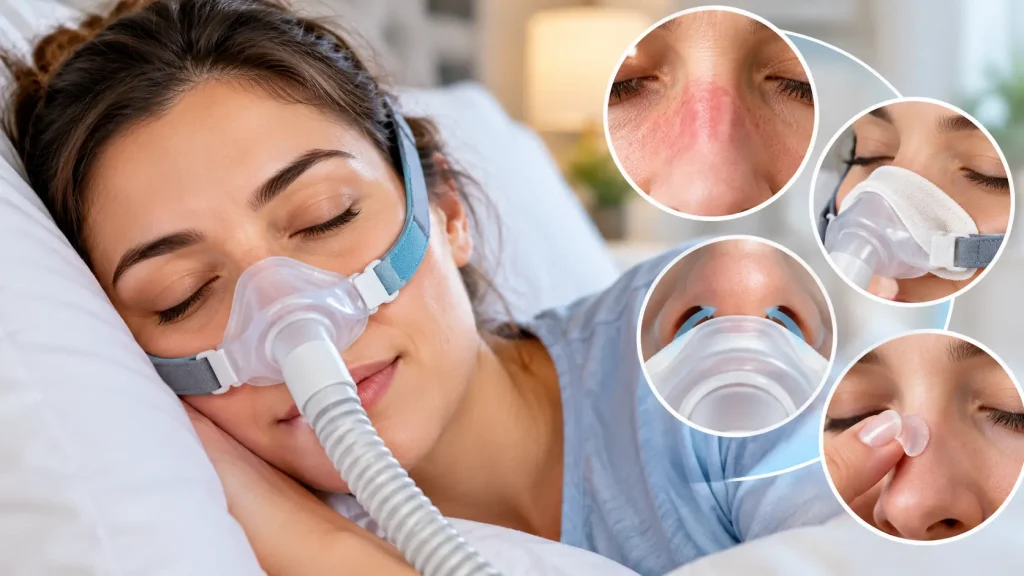
The nose bridge has very little soft tissue between skin and bone. Hold a mask cushion against it for seven hours a night, and even a little extra pressure cuts off blood flow to the skin. That’s why the area looks pale or dented when the mask comes off. Left unchanged, it can break down into a pressure sore.
Friction
Every time you roll over, the cushion shifts against your skin. The American Sleep Apnea Association notes that a mask rubbing against the skin — especially when it’s too tight or you move a lot during sleep — irritates the skin. Gentle rubbing, repeated all night, wears the skin down like new shoes cause a blister.
Moisture and material sensitivity
Sweat, facial oils, soap residue, and condensation inside the mask all irritate skin on their own. In rare cases, the cushion material itself — such as silicone — can trigger a reaction. That’s contact dermatitis, and it looks different from a pressure sore.
Where the Sore Is Tells You What’s Wrong
This is the fastest way to stop guessing. Find your sore’s location below.
Where it hurts | Most likely cause | First fix to try |
Nose bridge | Too much pressure, overtightened straps, or cushion too small | Loosen straps, add a gel nose bridge pad, or check sizing |
Tip of the nose | Cushion too small, or mask pushed down by the pillow | Try the next size up; adjust the top strap |
Inside the nostrils | Nasal pillows too large, too small, or pushed in too far | Re-size the pillows; loosen the headgear |
Nasal septum | Nasal pillows pressing on the center wall | Re-size the pillows; try a nasal cushion |
Under the nose / upper lip | Under-nose cushion too tight, or friction from movement | Loosen slightly; add a liner |
Cheeks or whole face | Full-face cushion oversized, or a skin reaction | Check size; watch for itching and rash |
If the sore keeps coming back in the exact same spot, something in your setup is hitting that spot every night — usually the size, a worn cushion, or one strap pulled tighter than the other.
How Tight Should a CPAP Mask Be?
Snug, not clamped. The Sleep Foundation advises adjusting mask straps so they aren’t too tight but are still tight enough to prevent air leaks. Most people wear their mask far too tight, because the natural reaction to a leak is to pull harder.
Use this method:
- Put the mask on with the CPAP pressure running, lying in your normal sleep position.
- Loosen the headgear until you feel a small leak.
- Tighten each side a little at a time, evenly, until the leak just stops.
- Stop there.
If you see a deep red line or dent in your skin after taking the mask off, it’s too tight.
What if loosening the mask makes it leak?
A small leak that your machine compensates for is normal. A loud leak blowing into your eyes isn’t. If you can only stop a big leak by cranking the straps down, tightness isn’t the real problem — fit is. The cushion is likely the wrong size, worn out, or the wrong style for your face. Tightening further just trades a leak for a sore.
Is Your CPAP Mask the Wrong Size?
The wrong size causes more nose sores than almost anything else. Watch for these signs:
- You need very tight straps to stop leaks
- The cushion presses hard on one spot every night
- Air leaks toward your eyes from the top of the mask (often too large)
- The cushion pinches your nostrils or sits on your nose tip (often too small)
- Nasal pillows sit loosely or feel jammed inside your nostrils
Your CPAP supplier can check the fit with you. cpapRX also offers a 3D face scan to match you to the right mask and size.
How to Prevent Nose Sores From a CPAP Mask: Step by Step
Start these habits from night one, before a sore has a chance to form.
- Fit it correctly. Use the leak-then-tighten method above. Fit it lying down, not sitting up — your face and the mask shift on a pillow.
- Wash your face before bed. Use a mild, fragrance-free cleanser and let your skin dry fully. Skip lotion right before the mask goes on; it makes the cushion slide.
- Clean the cushion daily. Facial oils break down silicone and make it grip unevenly. Our guide on how to clean a CPAP machine covers the full routine.
- Protect pressure points early. If your nose bridge is sensitive, put a gel pad or liner on before soreness starts, not after.
- Replace worn parts. A worn cushion has to be pressed harder to seal. The Sleep Foundation suggests replacing your mask about every three months, and many supply schedules allow cushions and pillows to be replaced more often because they wear faster. Check your mask’s instructions.
- Check your skin every morning. Light redness that fades within an hour is normal. Redness in the same spot that doesn’t fade means something needs adjusting now.
Nasal Pillows Hurting Your Nostrils?
Nasal pillows avoid the nose bridge completely, which makes them great for bridge sores. But they can cause soreness inside the nostrils and on the septum.
It’s usually the size. Pillows that are too large stretch the nostrils. Pillows that are too small get pushed in too deep to seal. Most nasal pillow masks include several sizes — try one up or down before giving up on the style.
Then check the tension. If the headgear pulls the pillows up into your nose, loosen it. Pillows should rest at the nostril opening, not inside it.
Dryness makes it worse. Air blowing straight into the nostrils can dry and crack the skin. Turning up your CPAP humidifier often helps.
Should you switch from nasal pillows to a nasal cushion?
If the right size and gentle tension haven’t fixed your nostril or septum soreness, switching is reasonable. A nasal cushion moves contact outside the nose, though it puts some pressure back on the bridge or upper lip. Our full face vs. nasal vs. nasal pillow guide explains which style suits which breathing and sleep pattern.
Side Sleeping, Movement, and Friction
Side sleeping pushes one side of the mask into the pillow. That creates uneven pressure and makes the cushion slide every time you move — a common reason sores appear on only one side of the nose.
- Use a CPAP pillow with cut-outs, so the mask isn’t pressed into the bed
- Choose a low-profile mask with top-of-head tubing, which shifts less when you turn
- Secure the hose so it doesn’t tug on the mask
- Tighten both sides evenly — uneven straps cause one-sided marks
Pressure Sore or Skin Reaction? How to Tell
These look similar at first but need different fixes.
| Pressure or friction sore | Skin reaction (contact dermatitis) |
Where | Exactly where the cushion presses hardest | Across the whole area the cushion touches |
What it looks like | Defined red spot, dent, blister, or open sore | Widespread redness, rash, small bumps, flaking |
How it feels | Tender or sore | Itchy or burning |
What helps | Less pressure, a liner, a better size | Thorough cleaning, a liner as a barrier, possibly a different cushion material |
According to the American Sleep Apnea Association, a true allergic reaction to the mask material is rare — most irritation comes from fit, friction, and moisture. If itching and rash cover the whole contact area, ask your provider about a different cushion material, such as memory foam. See our AirFit vs. AirTouch comparison for how silicone and memory foam differ.
Do CPAP Liners and Nose Pads Actually Work?
Yes. The Sleep Foundation lists mask liners alongside regular cleaning and proper fit as ways to reduce the risk of pressure sores coming back. They’re often the fastest relief, because they work tonight instead of after a new mask arrives.
- Fabric mask liners sit between the cushion and your skin. They cut friction, absorb oil and sweat, and reduce direct pressure.
- Gel nose bridge pads go on the bridge before the mask, cushioning the spot that takes the most pressure.
Choose fragrance-free products, and avoid petroleum-based creams where the cushion touches your skin — they can break down silicone and weaken the seal.
What if a liner makes the mask leak?
Make sure the liner is made for your mask type, lies flat with no wrinkles, and is centered under the cushion. If it still leaks, try a gel nose bridge pad instead of a full liner. You can browse CPAP comfort accessories, including liners and pads, matched to your mask.
Already Have a Sore? What to Do Tonight
- Take the pressure off that spot. Loosen the straps, add a gel pad or liner, or change the contact point. Pressing on an open sore stops it from healing.
- Keep it clean. Wash gently with mild soap and water and let it dry fully before the mask goes on.
- Skip petroleum-based creams under the cushion. Ask your provider or pharmacist which product is safe to use with your mask.
- Try not to skip therapy. A liner or pad usually lets you keep using CPAP while the skin heals.
If the sore is cracked, blistered, bleeding, or scabbing, the skin is broken. Relieve the pressure right away and contact your sleep doctor or CPAP provider. Get it checked promptly if you notice increasing redness, warmth, swelling, pus, or fever.
How Long Does It Take for Your Nose to Adjust?
Some mild redness in the first week or two with a new mask is common. It should fade within an hour of taking the mask off and get less noticeable over time.
What isn’t normal at any stage: broken skin, pain that’s getting worse, or a mark that’s still there by midday. Those mean the setup needs to change — not that you need to wait longer.
When to Stop Troubleshooting and Call Your Provider
Give fit, cleaning, and a liner one to two weeks. Then contact your sleep specialist, sleep physician, respiratory therapist, or CPAP supplier if:
- The skin is broken, bleeding, cracked, blistered, or scabbed
- You see swelling, warmth, pus, or have a fever
- Sores keep coming back in the same spot despite every fix
- You’re skipping nights of therapy because of the pain
Who can help with fit? Your CPAP supplier or medical equipment provider can re-size you, and a respiratory therapist can check how the mask sits on your face. Your sleep physician can change your mask prescription if needed. Not sure where to start? Talk to a cpapRX sleep specialist.
Choosing a Mask That Won’t Keep Hurting Your Nose
If sores keep coming back after fixing fit, hygiene, and adding a liner, the mask design itself may be the problem.
Mask style | Main contact points | Best if your sores are on… |
Nasal pillow | Nostril openings only | The nose bridge or tip |
Under-nose nasal | Below the nose | The bridge, but pillows hurt your nostrils |
Nasal cushion | Bridge and upper lip | Inside the nostrils or septum |
Minimal-contact full face | Under the nose and around the mouth | You need mouth coverage but want less bridge contact |
Nasal pillow masks are often the first switch for bridge sores. Browse nasal pillow masks at cpapRX if that’s your next step.
FAQ's
Why does my CPAP mask hurt my nose?
Usually because the mask is too tight or the wrong size, pressing on your nose bridge all night. Friction from moving in your sleep and oil or moisture under the cushion make it worse.
How do I stop my CPAP mask from giving me nose sores?
Loosen the straps until the leak just stops, wash your face and cushion every day, and use a liner or nose pad. If the same spot keeps getting sore, switch your mask size or style.
Is it normal for a CPAP mask to make my nose sore?
Mild redness that fades within an hour is normal for the first week or two. Broken skin, worsening pain, or marks that don’t fade are not normal and mean your mask needs adjusting.
How tight should a CPAP mask be?
Just tight enough to stop the leak — snug, not clamped. Loosen the straps until you feel a small leak, then tighten evenly until it stops. A deep dent or red line after removal means it’s too tight.
How do I know if my CPAP mask is the wrong size?
Warning signs include needing very tight straps to stop leaks, air blowing toward your eyes, pinching on the nose tip or nostrils, or pressure on the same spot every night. Your CPAP supplier or a face-scan fitting can confirm the right size.
What should I do if my CPAP mask leaks when I loosen it?
A small leak is normal. If you can only stop a big leak by overtightening, the size or style is wrong — refit or resize rather than pulling the straps harder, which causes sores.
Can sleeping on my side cause CPAP nose sores?
Yes. Side sleeping pushes one side of the mask into the pillow, creating uneven pressure and friction. A CPAP pillow, a low-profile mask, and evenly tightened straps all help.
Why do CPAP nasal pillows hurt my nostrils?
Most often the pillows are the wrong size or pushed in too far by tight headgear. Dry air can also crack the skin inside the nostrils — turning up the humidifier often helps.
Should I change my nasal pillow size?
Yes, if your nostrils feel stretched (too large) or the pillows sit too deep to seal (too small). Most nasal pillow masks include several sizes, so try one size up or down before switching styles.
Should I switch from nasal pillows to a nasal cushion?
If the right size and gentle tension haven’t fixed nostril or septum soreness, switching is reasonable. A nasal cushion moves contact outside the nose, though it puts some pressure back on the bridge or upper lip.
Can CPAP mask liners prevent nose sores?
Yes. Fabric liners reduce friction and absorb oil, and gel pads cushion the nose bridge. They’re often the fastest relief because you can use them tonight with your current mask.
What if a CPAP liner causes air leaks?
Make sure the liner is made for your mask type, lies flat, and is centered. If it still leaks, try a gel nose bridge pad instead of a full liner, or a different liner brand.
Can CPAP mask silicone cause skin irritation?
It can, but a true allergic reaction is rare — most irritation comes from fit, friction, and moisture. A rash, itching, or bumps across the whole contact area may point to a material sensitivity, so ask your provider about a different cushion material.
How can I tell a pressure sore from a skin reaction?
A pressure sore is a defined, tender spot where the cushion presses hardest. A skin reaction is usually itchy, spread across the whole contact area, and looks like a rash, bumps, or flaking.
How long does it take for CPAP nose irritation to improve?
Mild redness usually clears within a day once pressure is relieved. A true sore can take several days to a couple of weeks — and won’t heal if the same spot keeps getting pressed every night.
What should I do if my CPAP nose sore is bleeding?
Relieve pressure on that spot immediately, keep it clean with mild soap and water, and contact your sleep doctor or CPAP provider. Get checked promptly if you notice swelling, warmth, pus, or fever.
Should I change my CPAP mask if sores keep coming back?
Yes, if fit, cleaning, and liners haven’t stopped them after one to two weeks. A sore that keeps returning in the same spot usually means the mask’s shape or size doesn’t suit your face.
When should I contact my doctor about a CPAP nose sore?
Contact them if the skin is broken, bleeding, or blistered, if you see signs of infection, if sores keep returning, or if pain is making you skip therapy.
Who can help me properly fit a CPAP mask?
Your CPAP supplier or medical equipment provider, a respiratory therapist, or your sleep specialist. They can re-size you, check how the mask sits, and recommend a different style if needed.
Which CPAP mask is best if my current mask keeps causing nose sores?
It depends on where the sores are. Nasal pillows avoid the nose bridge, nasal cushions avoid the inside of the nostrils, and minimal-contact full-face masks reduce bridge contact for mouth breathers. Match the mask to the spot that hurts.
The Bottom Line
Learning how to prevent nose sores from a CPAP mask comes down to three things working together: a fit that’s snug but not clamped, clean skin and a clean cushion every night, and a barrier like a liner or nose pad on the spots that take the most pressure. Use the sore’s location to find the cause. And if the same spot keeps breaking down, change the mask — don’t change your mind about therapy.
Resources & Further Reading
- Sleep Foundation: How to Treat CPAP Pressure Sores
- Sleep Foundation: CPAP Side Effects
- American Sleep Apnea Association: CPAP Dermatitis
- NHLBI: What Are the Risks of CPAP?
Medical Disclaimer: This article is for general education only and is not medical advice. CPAP masks are part of prescription therapy. If you have broken skin, bleeding, or signs of infection, contact your sleep physician or healthcare provider.