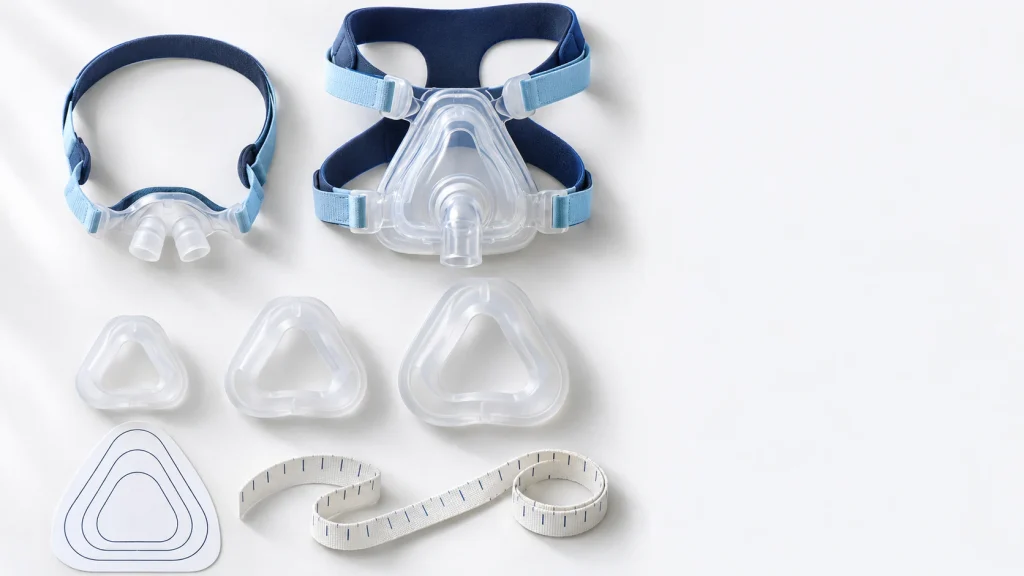
Quick Answer
This CPAP mask sizing guide comes down to three steps: measure your face with the manufacturer’s printed sizing template, choose the size that seals without touching your eyes or pressing hard on your nose, and recheck the fit lying down with your machine running. Sizes are not standardized between brands, so always size each new mask on its own template.
Key Takeaways
- Every brand and mask model uses its own sizing; a “Medium” in one mask is not a “Medium” in another.
- Measure in good light, in front of a mirror, using the template printed at 100% scale.
- A mask that is too small pinches and leaks at the edges; one that is too big leaks near the eyes or slides when you move.
- Always check fit while lying in your sleep position with pressure on, not just sitting up.
- If leaks, sores or discomfort continue after adjusting size and straps, talk to your sleep provider.
A mask that fits well is one of the biggest factors in whether CPAP feels comfortable night after night. A poor fit causes air leaks, noise, dry eyes, red marks and pressure sores, and it can lower the effectiveness of your therapy. The good news is that most fit problems come down to size, and this CPAP mask sizing guide shows you how to check it at home in a few minutes.
Why CPAP Mask Size Matters
The seal between your face and the cushion is what keeps prescribed pressure going into your airway instead of escaping around the edges. When the size is wrong, people often tighten the headgear to stop leaks, which usually makes things worse: the cushion folds out of shape, leaks move to a new spot, and pressure marks appear on the nose bridge or cheeks. Getting the size right first means the straps can stay loose and the cushion can do its job.
Fit also affects how well your therapy works. Large ongoing leaks can make it harder for your machine to deliver the pressure your provider set, which is one reason consistent mask fit is part of standard CPAP treatment for sleep apnea.
CPAP Mask Size Chart: What to Measure for Each Mask Type
Each mask style seals in a different place, so you measure a different part of your face. Use this general CPAP mask size chart to know what the template is checking, then follow the exact instructions printed on your mask’s own sizing guide.
| Mask Type | What You Measure | Where It Should Sit | Common Size Labels |
|---|---|---|---|
| Nasal pillows | Size of your nostril openings | Pillows rest at the nostril openings and seal without stretching them | XS, S, M, L (varies by brand) |
| Nasal (over-the-nose) | Width of your nose and height from nose bridge to just above upper lip | From the bridge of the nose to above the upper lip, clear of the eyes | S, M, L, sometimes Wide |
| Under-the-nose nasal | Width of the base of your nose | Under the nose, cradling the nostrils, not touching the bridge | S, M, L, sometimes Medium Wide |
| Full face | Height from nose bridge to below the lower lip, and mouth width | Over the nose bridge and around the mouth, below the eyes | S, M, L, plus women’s sizes in some models |
| Under-the-nose full face | Nostril base to below the lower lip, and mouth width | Under the nose and around the mouth, no contact with the bridge | S, M, L (varies by brand) |
If you are still deciding which style suits you, our guide on full face vs nasal vs nasal pillow CPAP masks explains who each type works best for.
How to Measure for a CPAP Mask (Step by Step)
- Get the official sizing template. Download it from the manufacturer or the product page and print it at 100% scale (turn off “fit to page”). Many printed guides include a reference line so you can confirm the scale.
- Cut out the template carefully along the marked lines.
- Stand in front of a mirror in good light, with your face relaxed and your mouth closed unless the template says otherwise.
- Hold each size against your face in the exact spot the template shows, such as the bridge of the nose or under the lower lip.
- Pick the smallest size that fits fully. It should cover the area the template marks without crossing into your eyes or pressing on your nostrils.
- If you fall between two sizes, many people start with the larger size for full face and nasal masks, but the fit check below matters more than the template alone.
- Write down the size and mask model, since your size in one model may not carry over to another.
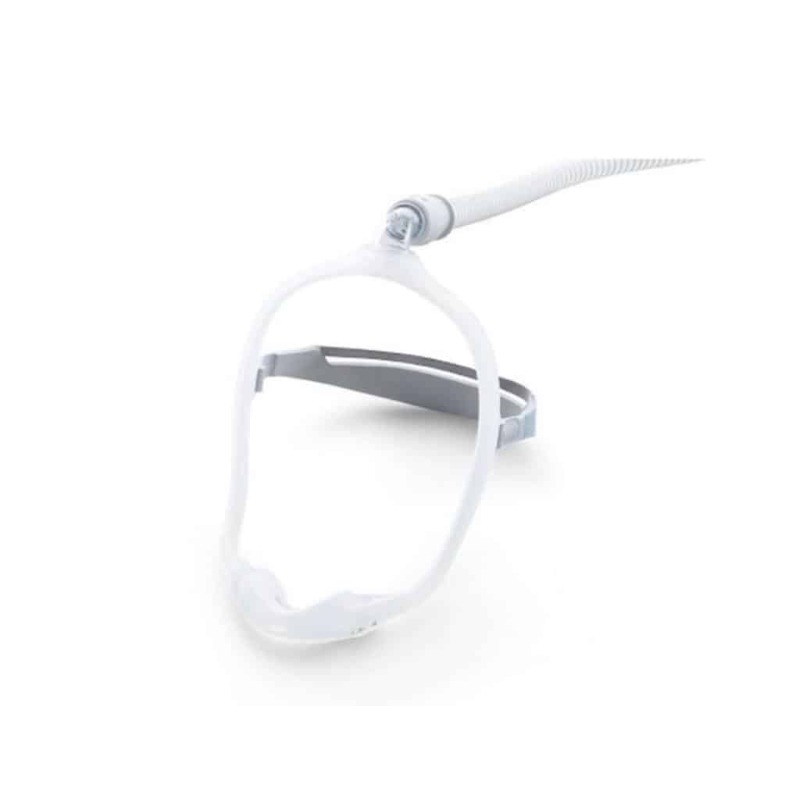
Can’t decide between sizes?
Philips DreamWear Nasal FitPack
Includes under-the-nose cushions in small, medium, large and medium wide on a medium frame with headgear, so you can compare sizes at home and keep the one that seals best.
Shop the DreamWear FitPackA valid prescription is required to buy a complete CPAP mask in the US.
CPAP Mask Fit Guide: How to Check the Fit Once It’s On
Measuring gets you close. This CPAP mask fit guide confirms the size works in real conditions:
- Put the mask on loosely first, then tighten straps just until the cushion seals. You should be able to slide a finger under the headgear.
- Turn the machine on at your prescribed pressure (ramp can be on) so the cushion inflates the way it will at night.
- Lie down in your usual sleep position, including on your side if you are a side sleeper. Many masks fit well sitting up and leak once your face touches the pillow.
- Feel and listen for leaks, especially near the eyes, the bridge of the nose and the corners of the mouth.
- Check your face in the morning. Light marks that fade within an hour or so are common; deep marks, redness that lasts, or broken skin are not.
Signs Your CPAP Mask Is Too Small or Too Big
Most fit problems point clearly one way. Use these signs to tell if your CPAP mask is too small or too big.
| Too Small | Too Big |
|---|---|
| Pinching or pressure on the sides of the nose or nostrils | Air leaking toward the eyes, causing dry or irritated eyes |
| Cushion edges sitting inside the face’s natural seal line | Cushion touching the lower eyelids or extending past the chin |
| Leaks at the corners of the mouth (full face) | Mask shifting or lifting when you turn your head |
| Nasal pillows stretching the nostrils or feeling tight | Nasal pillows sitting loosely and whistling |
| Red marks in a small, concentrated area | Needing very tight straps to stop leaks |
If leaks continue even with the right size, the cause may be strap tension, cushion wear or mouth breathing. Our guide to fixing air leaking from a CPAP mask walks through each cause.
CPAP Mask Sizing Guide: Common Mistakes to Avoid
- Assuming your old size carries over to a new brand or model.
- Printing the template at the wrong scale, which makes every size look off.
- Sizing only while sitting up instead of lying down with pressure on.
- Overtightening straps to fix a leak caused by the wrong size.
- Using a worn cushion. Silicone loses its shape over time, so an old cushion can leak even in the right size. Follow the manufacturer’s replacement schedule and your insurer’s resupply timeline.
- Ignoring changes to your face. Weight changes, new dentures or growing a beard can all change how a mask fits.
When to Talk to Your Sleep Provider
Sizing at home works for most people, but check in with your provider or sleep specialist if leaks or discomfort continue after trying another size, if you develop skin breakdown or sores, if you wake up gasping or with headaches, or if your machine data shows high leak numbers night after night. Your provider may suggest a different mask type, a pressure review or a professional mask fitting.
The Sleep Foundation’s CPAP guide is also a helpful overview of common CPAP comfort issues.