
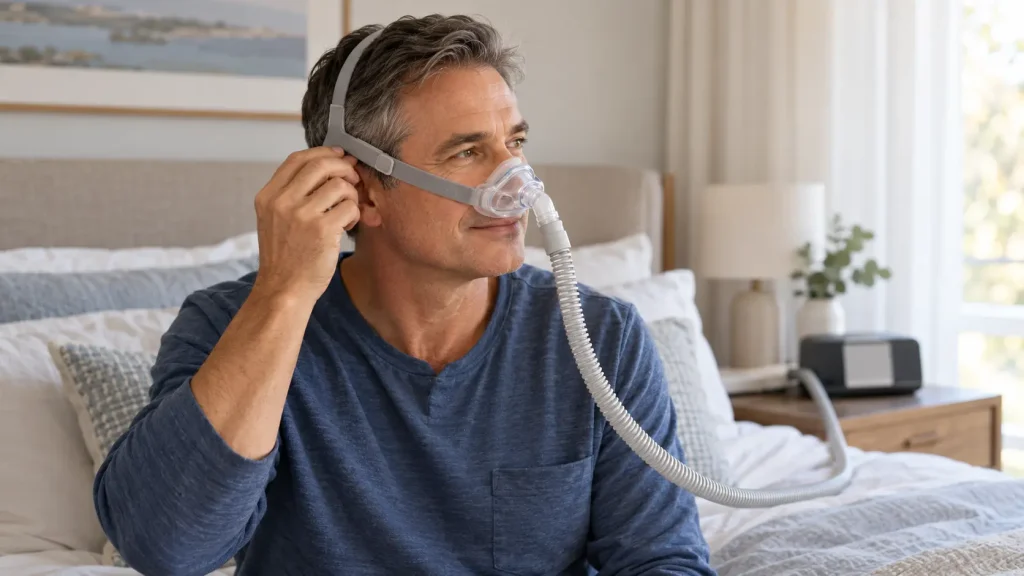
Common CPAP mask mistakes include overtightening the straps, guessing your cushion size, checking the fit only while sitting up, and overlooking worn parts. These habits can contribute to leaks, discomfort, and interrupted sleep—even when you use your machine consistently.
The answer is not always a new mask. Sometimes your current setup needs a careful adjustment, correct reassembly, or a replacement component. This guide focuses on everyday habits that can prevent problems before they become part of your nightly routine.
Quick Answer: What Should You Check First?
Before replacing your mask, check that:
- The cushion is the correct size for your specific model.
- The headgear is adjusted comfortably without excessive tension.
- The seal remains comfortable in your usual sleeping position.
- The cushion, frame, and connections are assembled correctly.
- The hose can move without pulling on your face.
- The cushion is maintained according to its instructions.
- The mask’s ventilation openings remain clear.
If problems persist, ask your equipment provider to review your fit. Do not change prescribed pressure settings to compensate for an uncomfortable mask.
1. Tightening the Straps Before Checking the Cushion
Wearing your CPAP mask too tight can create pressure points and distort the cushion instead of improving its seal. If you find yourself pulling harder every night, stop and check what has changed.
A cushion may be folded, positioned unevenly, dirty, or worn. More tension will not correct every one of those problems.
What to do instead: Follow your mask’s fitting instructions, reposition the cushion, and make small, even adjustments to the headgear. Aim for a comfortable seal rather than the tightest possible fit.
If pressure marks or recurring soreness are your main concern, our guide to preventing nose sores and skin irritation explores that problem in more detail.
2. CPAP Mask Wrong Size? Guessing Instead of Checking
The size printed on your previous mask is not a reliable guide to your next one. A medium cushion in one model may fit differently from a medium in another, even within the same brand.
The cushion and frame may also have separate sizing options. Choosing one correctly does not automatically mean the entire mask fits.
What to do instead:
- Use the sizing guide for the exact model you are considering.
- Follow the printing instructions if the guide uses a printable template.
- Check which component the size refers to.
- Ask for fitting assistance if you fall between sizes or cannot achieve a comfortable seal.
ResMed’s mask troubleshooting guidance specifically notes that sizing varies across masks and recommends checking fit with a clinician.
3. Checking the Fit Only While Sitting Upright
One of the easiest CPAP mask fitting mistakes to overlook is adjusting everything at the edge of the bed and assuming it will feel the same once you lie down.
Your pillow, head position, and hose can all change how the mask rests against your face. A fit check should reflect how you actually sleep.
What to do instead: With your equipment running as instructed, lie in your usual position and gently turn your head. Notice whether the cushion shifts, the pillow presses against the frame, or the hose pulls at the connection.
For example, a mask that feels comfortable on your back may need repositioning when you turn onto your side. That does not automatically mean you need a different model.
4. Choosing a Mask Without Considering How You Breathe
A small mask may look appealing, but appearance alone should not decide which interface you use.
Nasal and nasal pillow masks deliver air through the nose. If you regularly open your mouth during sleep or have difficulty breathing through your nose, discuss those concerns before choosing an interface.
What to do instead: Tell your provider about congestion, waking with a dry mouth, and any mouth leakage you notice. These clues can help guide the conversation, but none confirms the cause by itself.
Our comparison of full face, nasal, and nasal pillow masks explains how the designs differ so you can prepare useful questions for your fitting appointment.
5. Letting the Hose Pull on the Mask
A good fit can become uncomfortable when the hose catches on bedding or hangs heavily from the edge of the bed.
Before blaming the cushion, watch what happens when you roll over. If the hose becomes taut, it may be pulling the mask away from its intended position.
What to do instead: Arrange enough slack for normal movement and keep tubing away from places where it can become trapped. If needed, ask about a suitable hose-management accessory.
An overhead connection may suit some sleepers, while others do well with front-connected tubing. The useful question is whether your setup allows comfortable movement.
6. Reassembling the Mask Without Checking the Connections
Cleaning often involves taking parts apart. If a cushion, elbow, or connector is not seated correctly afterward, the mask may behave differently the next time you wear it.
A new noise immediately after cleaning is a reason to check assembly before changing strap tension.
What to do instead: Compare the assembled mask with its user-guide illustrations. Check for twisted headgear, an uneven cushion, and connections that have not clicked or seated fully into place.
Avoid forcing parts together. If something no longer fits securely, ask your supplier whether the component is damaged or incorrectly positioned.
7. Using the Same Cleaning Routine for Every Cushion
Different materials can require different care. A routine that suits a silicone cushion may damage a foam cushion.
For applicable ResMed silicone masks, the manufacturer recommends daily cushion cleaning and weekly cleaning of the headgear and frame. Follow the instructions for your exact model rather than treating a quick wipe as a universal substitute.
The manufacturer’s CPAP equipment cleaning guide explains the routine and identifies product exceptions.
Some memory-foam cushions need to remain dry and should not be washed or submerged. ResMed’s material-specific mask care instructions explain how care differs for these cushions.
What to do instead: Keep your mask manual accessible and check its cleaning method, approved products, and drying instructions before starting a new routine.
8. Waiting Until a Part Breaks Before Replacing It
A stretched strap or deteriorating cushion may affect the fit before it becomes unusable. Gradually tightening the headgear can hide the change for a while.
At the same time, replacement schedules should not be treated as identical for every component and every user.
What to do instead: Inspect parts regularly for cracks, tears, stiffness, loss of elasticity, or difficulty maintaining the fit. Follow the product’s replacement guidance and ask your supplier about persistent changes.
ResMed’s mask maintenance and replacement guidance recommends inspecting components and considering the condition of the individual mask.
9. Mistaking Normal Vent Airflow for a Leak
A CPAP mask includes ventilation openings that allow exhaled air to escape. Feeling airflow near those openings does not necessarily mean the seal has failed.
Never cover, tape, or block the vents to make the mask quieter.
Your mask’s instructions identify where ventilation occurs. For example, the ResMed AirFit N30 user guide describes expected airflow near the vent and warns against blocking it.
What to do instead: Learn where your model vents air. If you notice a new hiss around the cushion or airflow toward your eyes, check the fit separately from the intentional ventilation.
For a more detailed troubleshooting process, see our guide to air leaking from a CPAP mask.
10. Assuming Every Therapy Problem Comes From the Mask
A mask deserves attention when treatment feels uncomfortable, but it is only one part of your therapy.
If you are thinking, “CPAP therapy not working,” mask issues are worth checking—but persistent tiredness or worsening treatment data should not be dismissed as a fitting problem.
What to do instead: Note when the problem started, what you changed, and whether symptoms occur throughout the night or only in certain positions. Share those observations and your device reports with your sleep team.
Mayo Clinic’s CPAP troubleshooting advice emphasizes working with your healthcare professional to address ongoing problems and adjust treatment when necessary.
A Simple Bedtime Mask Check
Use this short routine to catch avoidable problems:
- Look: Check the cushion and connections for visible damage or incorrect assembly.
- Fit: Position the mask according to its instructions without excessive strap tension.
- Lie down: Check comfort in your usual sleeping position.
- Move: Turn gently and confirm that the tubing has enough slack.
- Listen: Identify unfamiliar noise while leaving the vents unobstructed.
If you cannot get a comfortable fit after reasonable adjustments, arrange a fitting review rather than repeating the same adjustment every night.
Watch: CPAP Mask Leaks or Discomfort? 10 Mistakes to Check First
Frequently Asked Questions
Should I adjust my mask with the machine running?
Generally, yes—follow your model’s fitting instructions and use the device’s mask-fit feature if available. Checking the mask under airflow helps you assess how it behaves during use.
Should I automatically buy a smaller cushion if my mask leaks?
No. Leaks can result from positioning, assembly, worn components, hose pull, or incorrect sizing. Check the model-specific sizing guide before deciding whether to size up or down.
Can I use my old headgear with a new cushion?
Only if the components are compatible and the headgear remains in good condition. A new cushion may not resolve problems caused by stretched straps or an unsuitable frame.
Do I need an overhead hose connection to sleep on my side?
No. Some side sleepers prefer overhead tubing, while others use front-connected masks comfortably. Check how your pillow and hose affect the seal before deciding to switch.
Should my mask leave painful marks?
Pain, broken skin, or recurring pressure marks warrant a fit review. Do not keep tightening the mask or assume discomfort is something you must tolerate.
Do I need to recheck the fit after my prescribed pressure changes?
Yes. Reassess comfort and sealing after a prescribed change, and contact your provider if problems develop. Do not lower or otherwise change the prescription yourself to control leaks.
Can I judge treatment success from the mask-fit score alone?
No. A fit score provides useful information about leakage, but it does not explain every symptom or establish that your treatment is optimal. Your clinician can interpret it alongside usage, other device data, and how you feel.
When should I ask for professional fitting help?
Ask when you cannot maintain a comfortable seal, need excessive strap tension, develop recurring irritation, or remain uncertain about sizing. Persistent sleepiness, worsening symptoms, or concerning device reports also deserve a clinical review.
Build a Routine That Supports Comfortable Therapy
Avoiding common CPAP mask mistakes starts with checking the basics consistently: correct sizing, careful assembly, comfortable adjustment, appropriate cleaning, and enough freedom to move.
You do not need to solve every problem by buying something new. If your current mask still feels unsuitable after a fitting review, CPAPRx’s mask finder can help you explore alternatives to discuss with your provider.
This article provides general education and does not replace individualized advice from your healthcare professional. Follow your equipment instructions and prescribed treatment plan.