Table of Contents
How long do CPAP machines last? Most last about three to five years with regular nightly use. You should consider replacing yours when performance drops, unusual noises appear, error messages persist, or your insurance and warranty timelines allow a new device. This guide covers what to expect by device type, the warning signs to watch for, and how to time a replacement so you don’t overspend.
Quick answer by device type:
CPAP device type | Typical lifespan | Consider replacing sooner if… |
Standard home CPAP / APAP | 4–5 years | Rising AHI, new noise, or persistent error codes |
Travel CPAP | 3–5 years | Used nightly as your only machine |
BiPAP / advanced PAP | ~5 years | Recurring error codes or calibration failures |
If your machine is already in this window, you can browse current CPAP machines to see today’s options, or read on to check whether it’s actually time to replace.
How Long Do CPAP Machines Last by Device Type?
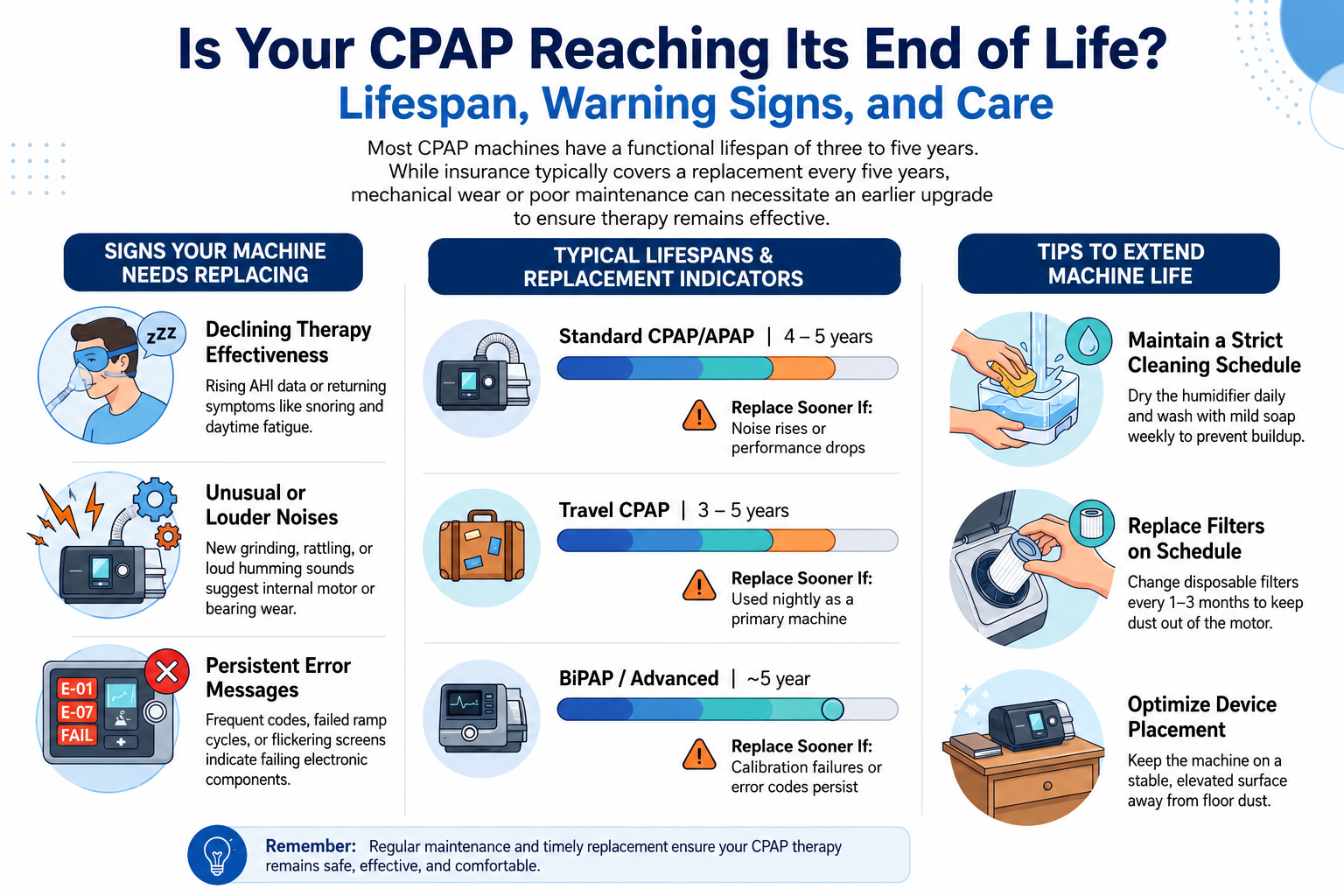
The average CPAP machine lifespan falls between three and five years for standard home units, while travel models often trend toward the shorter end of that range.
Standard home CPAP and APAP machines
For most people using a bedside auto-CPAP (APAP) or fixed-pressure CPAP every night, expect reliable performance for roughly four to five years before wear becomes noticeable. Manufacturers design motors, sensors, and electronics with this timeframe in mind, and insurers commonly align replacement policies around it.
With careful maintenance — regular filter changes, clean humidifier chambers, and avoiding dust or smoke exposure — some units keep working well into year six or seven. But performance can gradually decline even when the machine still powers on, which is why monitoring your symptoms and data matters as much as the calendar.
Travel CPAP machines
Travel devices like the ResMed AirMini are built for portability, not decades of nightly operation. Their life expectancy typically lands around three to five years, depending on how often they’re used as a primary machine versus an occasional trip companion.
Frequent travelers who rely on a compact unit every night may see earlier motor wear, battery degradation, or connector issues than they would with a full-size bedside device. If your travel CPAP is your only machine, plan for replacement closer to the three-to-four-year mark, especially if you notice pressure inconsistencies or rising noise.
BiPAP and advanced therapy devices
BiPAP (bilevel) and other advanced PAP devices often carry similar five-year replacement expectations from insurers, though some models are rated for slightly longer service under ideal conditions. Because these machines run more complex pressure algorithms, any recurring error codes or calibration failures should prompt an earlier evaluation.
Signs Your CPAP Machine Needs Replacing
Even if your device is under five years old, certain warning signs suggest it’s nearing the end of reliable service. In practice, how long do CPAP machines last depends as much on these signals as on the calendar — focus on changes in therapy quality, mechanical behavior, and electronic stability.
Declining therapy effectiveness
If you used to sleep well on CPAP but now wake up groggy, feel daytime fatigue, or notice snoring returning, your machine may no longer deliver the prescribed pressure consistently. This can happen as internal components wear, seals degrade, or sensors drift out of calibration.
Check your usage and AHI data through the device’s app or SD card. A rising AHI despite good mask fit and consistent use often points to machine performance rather than user error.
Unusual or louder noises
A suddenly noisy machine — especially grinding, rattling, or louder humming during inhalation — is a classic red flag. The motor and fan are precision parts; when bearings wear or housings crack, noise rises and pressure stability can suffer. If cleaning the filters and checking for obstructions doesn’t quiet it down, suspect internal wear. Persistent unusual sounds often come before complete failure.
Frequent error messages or display issues
Modern CPAPs run self-checks and show error codes when sensors, heaters, or boards malfunction. Repeated errors, failed ramp cycles, or a blank or flickering screen point to electronic problems that tend to worsen over time. When power cycling, checking connections, and firmware updates don’t resolve them, the device is likely reaching its functional end of life — and continued use risks inconsistent therapy.
Physical wear and air leaks
Cracked housing, loose air outlets, damaged power ports, or leaks that aren’t mask-related can all signal structural deterioration. Over years of nightly use, plastic becomes brittle, seals harden, and connectors loosen. If you’ve ruled out mask fit and tubing but still detect leaks or pressure drops at the machine itself, internal seals may be failing — wear that often accelerates once the CPAP machine warranty has expired and repairs come out of pocket.
When to Replace a CPAP Machine: Warranty and Insurance
Deciding when to replace a CPAP machine isn’t only about performance — it’s also about warranties, insurance rules, and cost.
Manufacturer warranties and expiration
Most CPAP manufacturers provide a one- to two-year warranty covering defects in materials and workmanship, with shorter coverage for accessories like masks and tubing. Once your CPAP machine warranty has expired, repairs or replacements come out of pocket unless you have a separate protection plan.
If your machine develops major issues in year three or four, weigh repair quotes against the price of a new unit. Often, a newer model with updated features and a fresh warranty makes more sense than repeatedly fixing an aging device.
Insurance replacement cycles
Private insurers, Medicare, and Medicaid typically cover a new CPAP machine once every five years, assuming continuous use and medical necessity (Sleep Foundation). Some plans allow earlier replacement if the device is lost, irreparably damaged, or no longer meets your medical needs after a change in condition.
If your machine is approaching the five-year mark and showing any decline, coordinate with your provider and DME supplier to start the process. Timing your upgrade with your insurance cycle helps avoid coverage gaps and unnecessary out-of-pocket costs. For a full breakdown of what a new setup runs, see our CPAP machine cost guide.
Repair vs. replace
When your device is under three years old and still under warranty, manufacturer repairs or replacements are usually straightforward. Beyond that, weigh the cost of repair versus a new machine, the availability of parts for older models, and whether newer features (quieter operation, better humidification, improved algorithms) would meaningfully improve therapy. If repair costs approach half a new unit’s price and your machine is already four or more years old, replacement is usually the smarter long-term choice. When you reach that point, you can shop CPAP machines and compare current models side by side.
How to Extend Your CPAP Machine’s Lifespan
Proper care can help your device reach — or exceed — its expected service life while keeping therapy consistent.
- Clean on a schedule. Wipe the exterior with a soft, slightly damp cloth (never submerge it), empty and air-dry the humidifier chamber daily, and wash it with mild soap a few times a week.
- Replace filters on time. Follow your manufacturer’s schedule — often every one to three months for disposable filters, every six months for reusable ones. Clean equipment keeps dust out of the motor and sensors.
- Place it well. Keep the machine on a stable, elevated surface away from floor dust, pet hair, and direct sunlight, with the air intake clear. Don’t tuck it into an enclosed nightstand — overheating accelerates electronic wear and shortens the overall CPAP machine lifespan.
- Protect the power. Use a surge protector against voltage spikes, and when traveling, pack the device in a padded case away from extreme temperatures.
When Replacing Makes Sense — and When It Doesn’t
No one wants to replace a CPAP prematurely, but clinging to a failing device can cost more in poor sleep and repeated repairs. If your machine is under four years old, passes self-checks, delivers stable pressure, and your symptoms stay controlled, there’s usually no urgent need to upgrade for features alone — just keep up with worn accessories. But if you’re seeing recurring noise, errors, or returning symptoms despite good maintenance, the hidden cost of suboptimal therapy usually outweighs the price of a new device.
What to Do With Your Old CPAP Machine
Once you replace a device, don’t just toss it in a drawer. A used CPAP is still a prescription medical device, so reselling it directly to another person is restricted and generally not allowed. Better options:
- Recycle it. The plastics and electronics can usually go through an e-waste program — check what your local recycler accepts.
- Ask about manufacturer or DME take-back. Some makers and equipment suppliers accept old units for proper disposal.
- Donate through approved channels. A few nonprofit medical-equipment programs accept working machines for supervised redistribution, though rules vary by region.
- Keep it as a backup. If it still passes self-checks, a retired machine makes a useful emergency spare for travel or if your primary unit fails.
Before letting the device go, remove or wipe the SD card if it stored therapy data, so your health information doesn’t leave with it.
FAQ's
How long do CPAP machines last on average?
Most CPAP machines last about three to five years with regular nightly use before performance declines. Standard home units often reach four to five years, while travel CPAPs may trend toward the shorter end. Lifespan varies by brand, model, usage, and how well the device is maintained.
When should I replace my CPAP machine?
Replace it when you notice declining therapy effectiveness, unusual or louder noises, frequent error messages, or physical wear that affects performance. Insurance and manufacturer guidelines commonly suggest replacement around the five-year mark, especially if symptoms return or the device becomes unreliable.
What are the signs a CPAP machine needs replacing?
Watch for returning snoring or daytime fatigue, grinding or rattling noises, persistent error codes, and visible damage like cracked housing or loose connectors. If cleaning and basic troubleshooting don’t resolve these, the machine is likely nearing the end of its useful life.
Is it safe to use a CPAP machine after the warranty expires?
It can be, if the device still delivers stable pressure, passes self-checks, and shows no warning signs. But once the CPAP machine warranty has expired, you’re responsible for repair costs, and older units are more prone to sudden failures that disrupt therapy.
How often does insurance cover a new CPAP machine?
Most private insurers, Medicare, and Medicaid cover a new CPAP machine once every five years, assuming continuous use and medical necessity. Some plans allow earlier replacement if the device is lost, irreparably damaged, or no longer meets your clinical needs.
Can a CPAP machine last longer than five years?
Yes — with excellent maintenance and favorable conditions, some reach six or seven years. However, performance may gradually decline, and many insurers won’t fund repairs or replacements beyond the standard five-year cycle without specific justification.
How can I tell if my CPAP is failing versus just needing new supplies?
If replacing masks, tubing, and filters doesn’t improve pressure stability, noise, or symptom control, the issue is likely the machine itself. Check usage data and error logs — persistent problems despite fresh supplies and proper maintenance point to a failing device.
The Bottom Line
So, how long do CPAP machines last? Plan on three to five years for most devices, then let the warning signs — declining therapy, noise, errors, and physical wear — guide the exact timing rather than the calendar alone. If your machine is aging or your insurance window is opening, a cpapRX sleep coach can confirm whether it’s genuinely time to replace and walk you through the right next machine. Not sure where to start? See how to choose your next CPAP machine, or book a free sleep coach session or call 833-216-2727.
Thinking about an upgrade?
If your device shows signs of wear or your warranty and insurance timelines line up, talk to a cpapRX coach first — they’ll check whether replacement is actually needed and match a machine to your prescription and budget, with no upsell. When you’re ready to compare, our top-rated CPAP machines for 2026 breakdown covers the best picks for everyday use, travel, and value, or you can browse all CPAP machines to see current pricing and availability.
Resources & Further Reading
- ResMed — CPAP life expectancy and replacement timing
- Sleep Apnea Association — How long does a CPAP machine last
- Sleep Foundation — How long does a CPAP machine last
Medical Disclaimer: This content is for general education only and is not medical advice. CPAP machines are prescription medical devices — always consult a qualified healthcare provider or sleep specialist before changing, repairing, or replacing your equipment. In an emergency, call 911.